
It’s Time for Late-Ice and Early River Action
I’ve caught some massive fish in March and sacked up a few for the freezer, too! The hardest part about March fishing is deciding what to do, so I’ll give you some ideas.
Why go ice fishing?
First, by now, most anglers are burned out from ice fishing and are chomping to hit the open water. This always perplexes me, because every year, we seem to have the same problems: quick freeze, warm conditions opening up areas and making it unsafe, a deep freeze, and then the thaw.
Right now, it’s the time of the thaw, and depending on where you live, it’s completed, happening, just starting to happen, or it’s happening in full force. Safety is a big concern; no one wants to die for a fish. So don’t be the only guy still driving your truck on the lake; don’t be the guy needing the recovery service to pull your ATV out of a spot you could have walked to; and don’t be the guy stepping on unsafe ice without a spud bar or a float suit!
I’m that diehard angler driving around with boards in the back of the truck and a packet of maggots in my pocket. I’ve hit some ice fishing spots early this season where I knew I was the first guy to surprise the fish, and I’m gonna’ be the last guy to put a whoopin’ on them again this month.
Ice fishing in March means panfish. Wisconsin and Minnesota gamefish seasons are closed except for specific areas. Bluegills, crappies and perch are what it is all about. If I’ve learned anything new this year, it’s probably that fishing lure profile has a dramatic effect on catching fish. Sometimes they want a spoon, a jig, or a dropper. Also, color is extremely important.
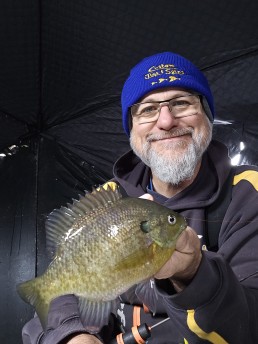
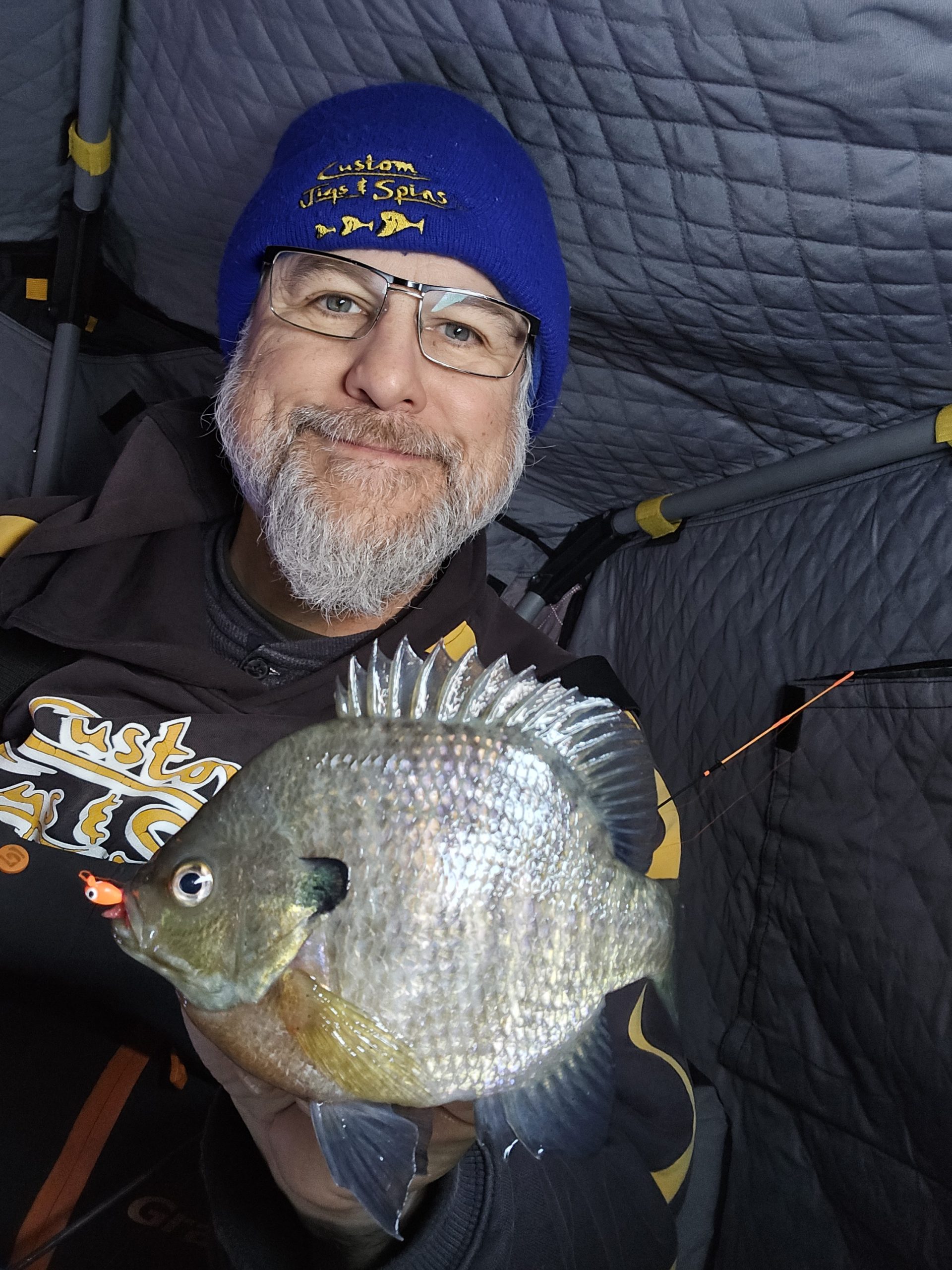
I was out the other day fishing for bluegilla. The size 10 Custom Jigs & Spins Demon spoon was hot. The best color was a pink wonderglow with a couple of smooshed waxworms hooked through the head. As a backup, I had a 3mm tungsten purple glow Chekai jig with two red spikes. I found a good spot in a channel surrounded by weeds and was pulling in some oversized bluegills hand-over-fist.
The next day, I got up early, hit the same spot and tried the same lures. Watching down imaging on the Livescope, I saw fish come right up and then lazily turn away. So, I changed colors, bait… and still nothing. Looking at the 10,000 ice lures that I had in my twenty little tackle boxes, I picked a larger size 8 ‘Gill Pill in clown color and added a few waxworms. After a few minutes, a big bluegill about 10 inches just swam right up and inhaled it. After that, schools of nice-sized ‘gills would swim right up and take it.
I tried switching back to that pink Demon and 3mm Chekai, but it was the same as before: Fish would come right up and then back away. So, the point here is that once you find a spot, which can be an ordeal, you have to find out what they want to eat. Jig profile is important! So, get a broad selection of different shapes, sizes and colors, and don’t just try that same old lure you used last time and then give up when they don’t want it.
You can be among the first to get the latest info on where to go, what to use and how to use it!
Open-water river action
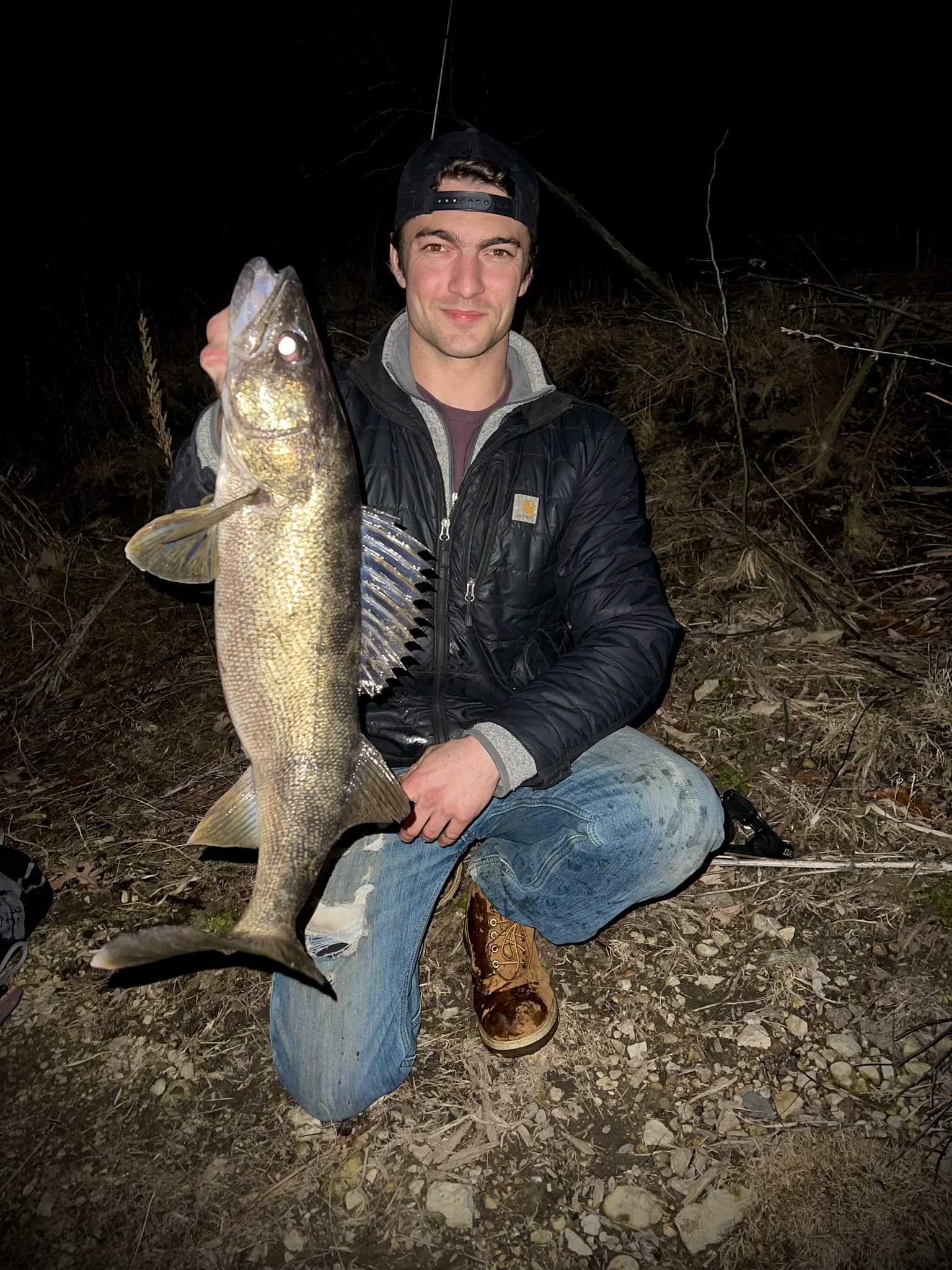
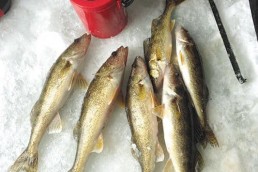
Whether you fish from a boat or from shore, you should be fishing on a river right now. The best action you’re going to find is going to be closer to the dam where walleyes, sauger and white bass move up to spawn and find an easy meal. It’s not too early; fish are up there right now and will continue to be within a mile or so of the dam for the next month at least.
When I’m walleye fishing, I always like to have as many baits in the water as is legally allowable; that way, figuring it out comes quicker. The first time I fished an MWC walleye tournament in Spring Valley, Ill., I was amazed at all the different techniques employed by all the boats around me. Guys were vertically jigging with heavy jigs and stinger hooks, trying to hold on to a school of sauger. Guys were slipping downstream with lighter jigs, holding vertically but moving with the current. Guys were pulling upstream with bottom bouncers and floating jigs. While all these techniques varied, the one thing they had in common was that everyone was using minnows.
That same tournament is happening this month. The number of techniques employed has grown even more; trolling crankbaits, handlining, jigging heavy spoons and blade baits, plus jigging and pitching plastic worms and swimbaits. In case you don’t know it by now, walleye sand sauger can be caught by a variety of lures and live bait!
So, whether you are fishing a small river or a larger one like the Mississippi, Wisconsin, St. Croix or Rainy, you need to key in on the hot technique by trying a variety of different baits. A good jigging spoon like a Wolf’s Tackle One Eyed Shiner can be fished fast, as can a B-Fish-N B3 Blade Bait. These lures seem to get fish to aggressively strike even when they just nibble on minnows.
More popular options include a variety of jig and plastic combos. AuthentX Ringworms, Pulse-Rs and Moxis offer a variety of distinct size, color and action combinations that work well. I like using a version of a Dubuque rig (a double-jig rig) with two of the same weight B-Fish-N H20 jigs on two-foot leads to a three-way swivel, rigged with 2.45-inch Pulse-Rs for eating-size walleyes, sauger and white bass. This has really produced for me over the years, as has running a heavier jig on bottom with a 4-inch Moxi and a lighter jig rigged with a Ringworm—a definite trophy producer.
Whether you pull out your boat or fish from shore, it’s not too early to fish your local river or make a trek to a primo, early-season hotspot. But do not put that ice fishing gear away, as some of the hottest ice fishing action of the year is also happening right now!
Did you enjoy this post?
You can be among the first to get the latest info on where to go, what to use and how to use it!