
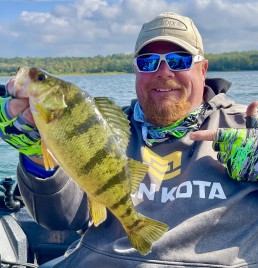
Ice-Out Jumbo Perch
When ice leaves the lakes in northern Minnesota, it’s a sad time for hardcore ice anglers. Other anglers celebrate and get the boats ready for open water fishing. Ice fishing is my favorite by a small margin, but I also appreciate the sights and sounds of fishing from a boat, such as waves and water splashing; and the wingbeats of trumpeter swans slapping the water, and their bugle calls back and forth across the lake.
As the ice goes out, jumbo, perch from the basin leave deep water and move to the shallows to spawn. They search for weeds where they can lay their eggs. This migration creates some of the largest perch schools of the year. Big females attach their tube-like skeins of eggs to standing weeds or weed stubble. Males linger in the area for days, with timing influenced by calm weather and warming temperatures. This can happen even with ice still on the lake.
On large bodies of water with multiple bays and weed beds, conditions can vary widely. One area may be on fire with warmer water temperatures, while another bay with deeper water may take longer. This staggered warming gives anglers additional chances if they miss the early runs.
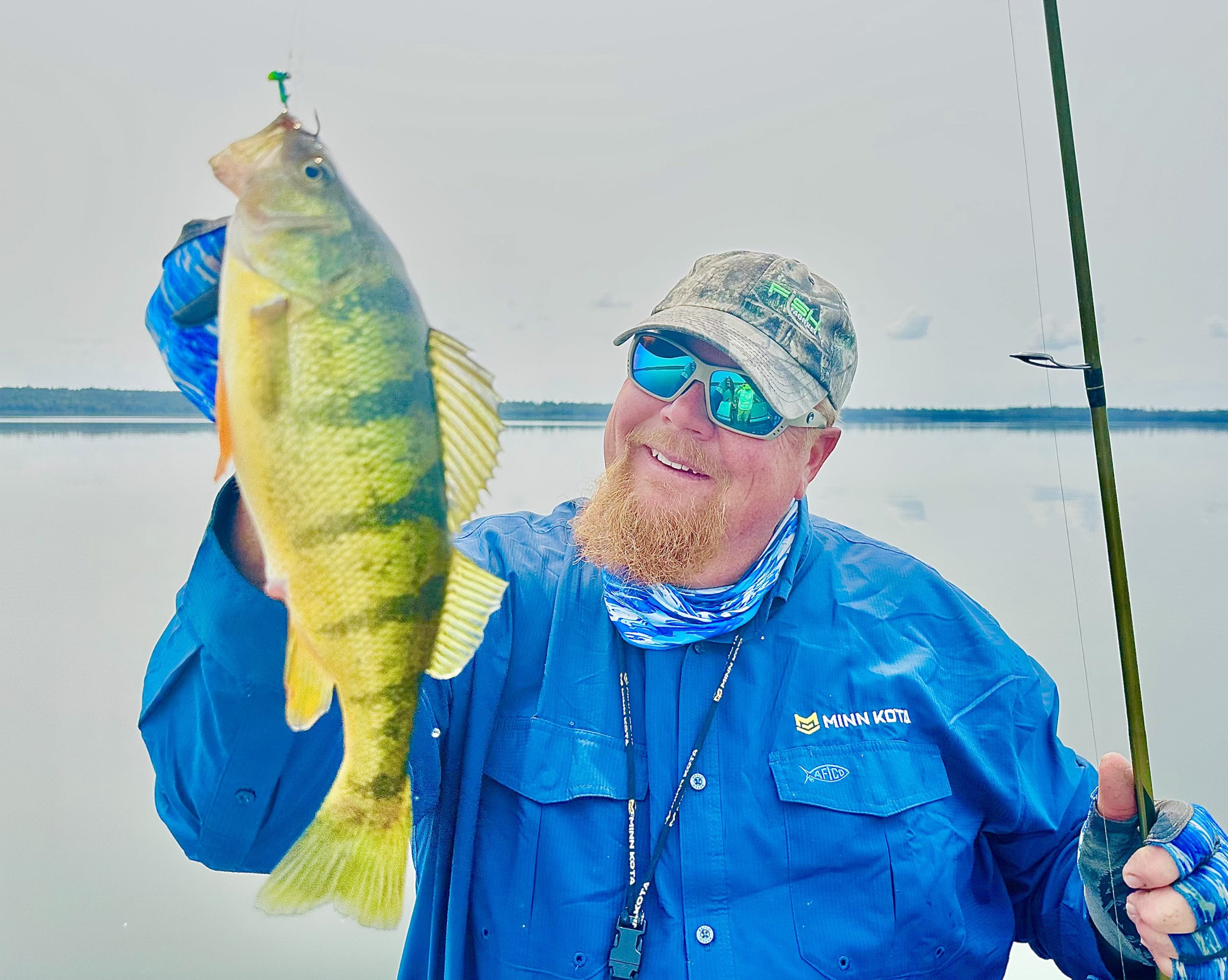
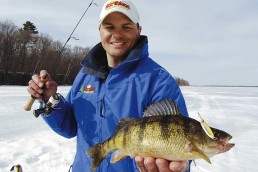
When they spawn, big females drop back into deeper water—20 to 30 feet—and become very difficult to coax into feeding. The males are typically the fish harvested, as they remain in the weeds and provide great fish-fry opportunities. The females are for “grip-and-grin” jumbo perch photos, then gently released without dropping or tossing them, which could damage the eggs if not carefully handled. Female perch do not have much meat in the belly area, as it is distended with a sack of eggs, while males have better back and belly fillets for harvest.
Clear, dark lakes
In early spring, before wind stirs the lake, water can be incredibly clear—like an aquarium. You can see lake structures that are barren, almost like a desert, broken up by small oases of weed patches. You can watch fish swim and dart around the weed stalks.
You can be among the first to get the latest info on where to go, what to use and how to use it!
Before heading out, I use my One-Boat Network to mark potential weed zones, then transfer those marked spots to my Humminbird Xplore. Even small ripples can make fish hard to see, so I rely heavily on Humminbird Side Imaging to find perch holding around weed stalks, lined up like a school of striped fighter jets. I can run all my Humminbird screens all day using a single Amped Outdoors 12-volt, 160-amp-hour lithium battery.
MEGA LIVE 2 on a Fish Armor Pro Pole shows perch swimming in real time. In clear water, fish are easily spooked, so avoid running directly over a school. Fish from a distance of 30 feet or more. In dark-stained water, you can fish closer or even under the boat. However, lack of precipitation has left many lakes 2 to 3 feet below normal, making even stained lakes clearer than usual. Weed beds may be large and widespread due to clear ice and lack of snow. In years with deeper snow, many of those weeds do not survive.
One-two-three punch
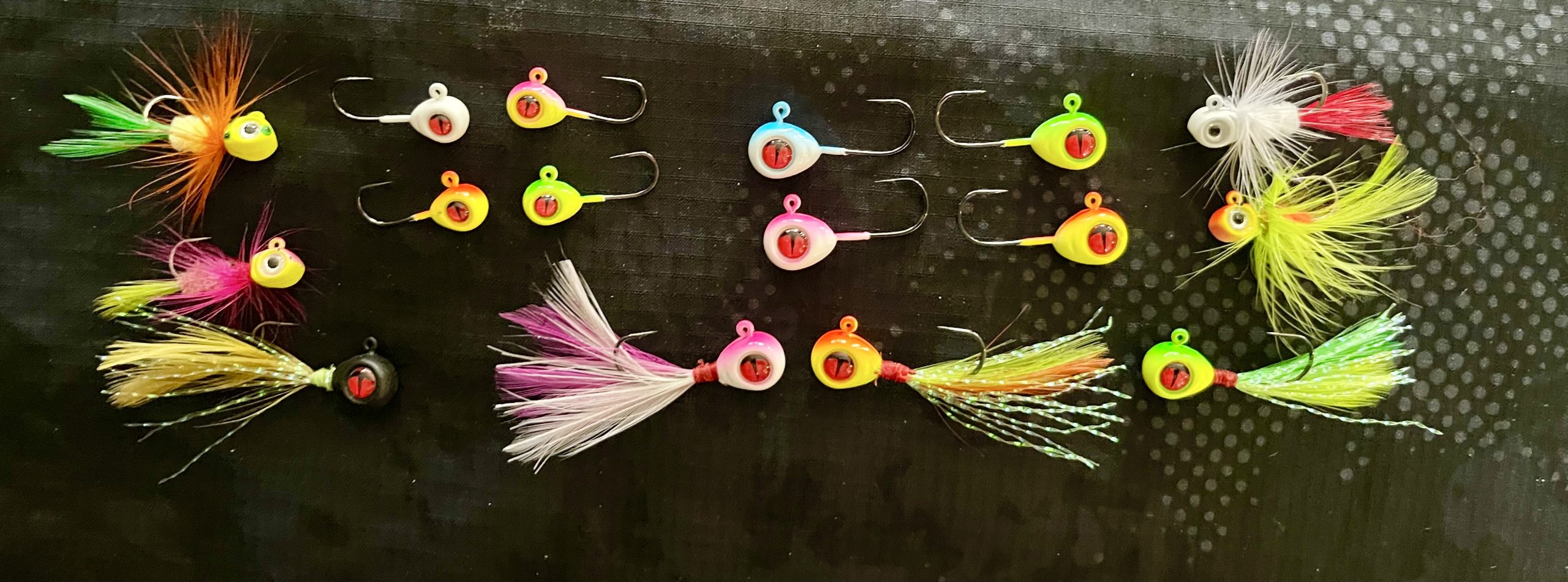
While the water temperature is still cooler, smaller ice fishing baits work better, especially on stable barometer days. I always carry a Northland Crappie King Fly jig tipped with a small minnow, waxworm, or a chunk of red worm.
My setup includes three rods:
- The first is a St. Croix 7-foot Panfish Elite paired with a SEVIIN 750 GS reel and a small slip bobber.
- The second rod is rigged without a slip bobber, with a 1/16-ounce jig for tight-lining or slow-fall pitching.
- The third rod is a drop-shot rig with a 1/8-ounce drop shot sinker set 15 inches below a Gamakatsu size 6, neon chartreuse, octopus-style hook with a 5mm glow- or red-bead tipped with a minnow, waxie or worm. The drop shot works best when the wind picks up. Bobbers move too fast and blow through the fish too quickly. Pitch a drop shot and it will anchor your bait right next to the perch.
I always use Sunline SX-1 8-pound green braid, and a 3- to 4-pound, 30-inch Sunline Sniper fluorocarbon leader. On calm days, I use 15-foot Minn Kota Talon shallow-water anchors to pin me down with maximum stealth. In windy conditions, I Spot-Lock 30 to 40 feet upwind in rough water, or downwind when winds are 10 mph or less.

Did you enjoy this post?
You can be among the first to get the latest info on where to go, what to use and how to use it!