
Go-To Lures to Crush the Smallies this Year
Seasoned anglers and newbies alike can walk into most stores and feel overwhelmed by the different styles of rods, spinning or casting, along with seemingly endless lures ranging from soft plastics to crankbaits, topwaters, etc. Additionally, when you wander down the aisles of your favorite fishing retailer, you will find countless different colors of lures. All of this can get beginning anglers overwhelmed, and veteran anglers second guessing lure choice.
Fishing does not have to be so technical. Sure, there are better colors to throw in spring, like a red or craw-colored crankbait, or switching up to a spinnerbait or chatterbait in high winds. However, certain lures can produce big smallmouths consistently, using colors that significantly catch fish day-in or day-out on lakes, rivers, and streams. To narrow this down for beginners, and to reinforce the idea for veteran anglers, I’ve narrowed down the top four baits that consistently catch smallmouths in my area.
The tube
My father used tubes on largemouths, spotted bass, and smallmouths. His buddies on the local tournament circuit in West Virginia used to crush all species using a tube. When fishing a tube, people think two things: It’s an old-school lure, and it consistently catches smallmouths. Of course, they would be right about both subjects. However, when we talk about catching smallmouths, in my area, they usually live in deep, clear lakes, rivers, streams or creeks with good visibility.
When selecting a tube jig head, you need enough weight to quickly get the bait down into the strike zone. For example, the shallower you fish, the less weight you need. On shallow streams, you do not need to go any heavier than a 1/16-ounce tube jighead. For larger, deeper lakes, I usually use a 1/8- to 3/8-ounce head to get down into the strike zone quicker.
The best lure color for a tube is usually a natural color that tends to imitate a crawfish. Color patterns that consistently produce fish include green pumpkin, pumpkinseed, or even grayish, smoke colors. When fishing a tube, you want to throw toward structure such as laydowns, rock bluffs, or deeper holes in small streams where fish congregate. To work a tube, slowly lift the bait off bottom and then let it fall, or make quick twitches with the rod tip, to garner a strike.
Hellgrammite
Most fisherman have heard the term “match the hatch.” Hellgrammites are prevalent throughout spring and into early summer. Hellgrammite-imitating soft plastics can be very effective lures at this time, and well into the fall.
There are several ways to rig a soft plastic Hellgrammite, but to make it snagproof, Texas Rig it with a small, 1/0 EWG or worm hook with a round bend. Add some type of weight to this presentation, due to the very lightweight of the lure. It is usually fished best on 8- to 10-pound fluorocarbon.
You can be among the first to get the latest info on where to go, what to use and how to use it!
Many manufacturers use elastic material to make the hellgrammite weedless so it can produce up to 20 to 30 fish without having to change the plastic; these lures can be pricey, though. Neko is arguably the most famous manufacturer of hellgrammites, but there are cheaper varieties out there, such as Bass Pro XPS hellgrammites. Colors vary widely as with most lures, but I find that natural colors such as dark brown and black usually produce the most strikes.
Stick baits (Senko, Dinger, etc.)
Stick baits are a tried-and-true method of catching all the black bass species. Stick baits are usually wacky-rigged or Texas-rigged when the bite gets tough, or if you just want to catch numbers of fish. Both wacky rig and Texas rig methods involve lifting your rod tip up slowly and letting the bait drop; you will get most strikes on the drop.
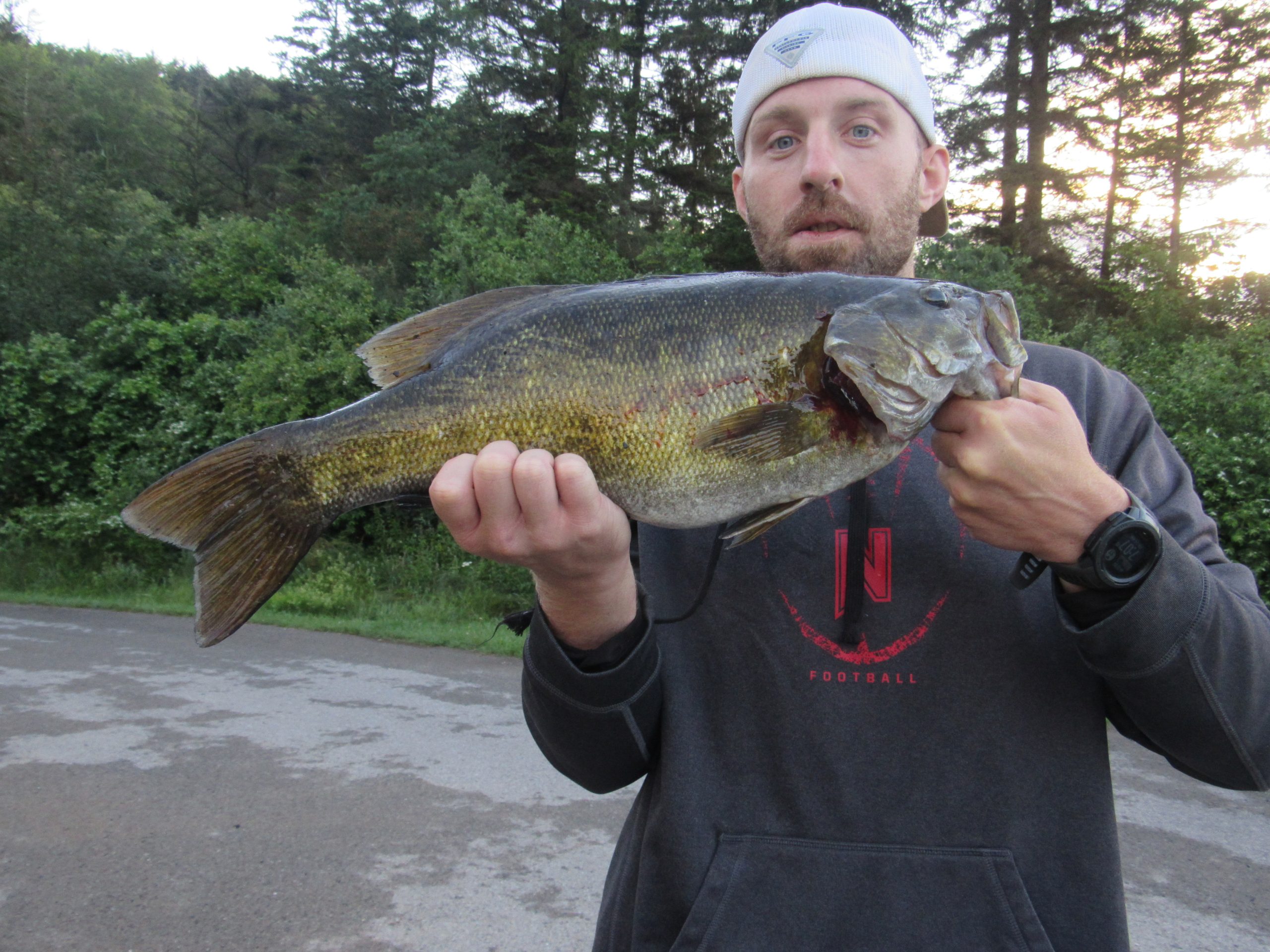
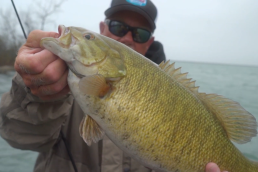
When fishing for finicky smallmouths, I usually downsize from a 5- to a 4-inch stick bait that is Texas rigged. This gives it similar presentation to a Ned rig but makes it weedless. All my trophy smallmouth has come off a Texas-rigged, 4-inch Senko, including a 5.5-pound, 22-inch smallmouth caught in July. (My brother caught a 5-pound, 10-ouncer on a hellgrammite during the same trip).
I add weight to a Texas-rigged stick bait. The amount depends on water depth. I always have a 1/16-ounce bullet weight rigged when fishing shallow water, and upgrade to 1/8-ounce when fishing water depths of 20 feet. The weedless presentation gives you confidence to really cast the bait into laydowns, rocky areas, and thick cover where fish tend to ambush their pray. I fish this on a medium-fast-action rod with 10- to 12-pound fluorocarbon or monofilament. For beginners, this would be my recommendation to start until you start refining your technique and abilities.
Spinnerbait
Spinnerbaits are tried-and-true lures that are effective for catching smallmouths. I usually pick a spinnerbait up in early spring that has double willow blades, or a willow blade paired with a Colorado blade. For murky water, it will serve you well to pick a chartreuse/white or an all-chartreuse spinnerbait. For early spring, a 3/8-ounce spinnerbait really shines when cast to laydowns, shallow cover, or retrieved just over some grass.
Spinnerbaits can work well during pre-spawn, but can remain effective throughout the year, especially on rivers where you can get more strikes on moving baits. When the water is clear, I will go to 1/2-ounce double willow blade in white paired with a white swimbait trailer. Many companies make fantastic spinnerbaits, but I usually have War Eagle and Booyah spinnerbaits in my arsenal. Spinnerbait selection can be overwhelming, given all the colors and trailers. Sticking to colors that resemble a baitfish, with either a white or shad color paddle tail swimbait, is a good place to start.
When throwing a spinnerbait, pick up your casting gear. My go-to setup is a medium heavy baitcaster spooled with 12- to 15-pound monofilament. Spinnerbaits can be go-to lures year-round, especially in rivers or when fishing shallow on windy days around structure on lakes. The key to spinnerbait fishing is to not over complicate it, and to know the right times and conditions to throw it.
Did you enjoy this post?
You can be among the first to get the latest info on where to go, what to use and how to use it!
