
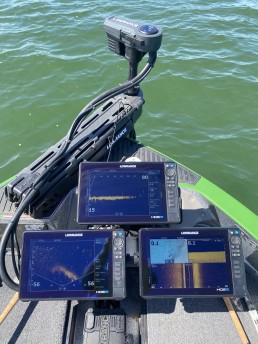
Forward-Facing Sonar: Balancing Innovation and Tradition on Midwest Waters
Forward-facing sonar is changing the way that anglers approach fish across Minnesota and the greater Midwest, sparking conversations about fairness, tradition, and the future of the sport. As technology accelerates, the challenge becomes finding balance, preserving the heritage that shaped us while adapting to tools that are reshaping the water beneath our boats.
Forward-facing fair chase
As a lifelong Minnesota angler, I’ve watched technology reshape the way we fish, just as surely as it has transformed everyday life. And the conversations I hear on Minnesota lakes are the same ones happening across the Midwest from Wisconsin and Michigan to the Dakotas, Iowa, Illinois, and beyond.
Forward-facing sonar (FFS) is the latest tool to stir debate, and it has exposed a clear, generational divide in how anglers approach electronics. Many older fishermen I meet on the ice or at the access tend to approach FFS cautiously, leaning on the traditional skills they’ve trusted for decades. Younger anglers, meanwhile, adopt new tech quickly, seeing FFS as a natural extension of the digital tools they use every day.
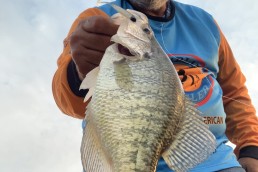
For them, real-time imaging accelerates learning, improves efficiency, and offers a clearer look at how walleyes, crappies, and bass behave beneath the surface. And there’s no denying the rush of watching a fish react to your bait in real time; once you’ve seen it, it’s hard to forget.
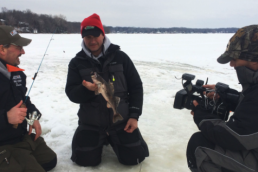
The divide becomes even more noticeable in winter, where FFS offers a level of precision in locating suspended fish, especially crappies, that simply didn’t exist a decade ago. Whether you’re on Mille Lacs, Lake of the Woods, Devils Lake, or any of the region’s big reservoirs, the impact is the same.
But the debate over FFS isn’t just about age or comfort with technology. It’s also about how the tool is used. Two distinct styles have emerged, each carrying its own ethical weight.
Reading structure
Structure-focused use—scanning weed edges, breaklines, or trolling routes—mirrors traditional fishing. It relies on habitat and fish behavior rather than chasing individual marks, keeping angler thinking in terms of ecosystems instead of targets.
Many see this as closer to “fair chase” because you’re still fishing areas, not specific fish. It’s the same mindset that anglers have used for generations across the Midwest’s diverse waters.
Hunting singles
Fish-targeting use, by contrast, involves chasing individual marks in real time. It dramatically increases efficiency and allows anglers to pursue fish that would otherwise go untouched—especially suspended or pressured fish.
On big, heavily pressured lakes—whether that’s Mille Lacs, Leech, Green Bay, Lake Winnebago, or Oahe—this style can feel almost like sight-fishing beneath the surface. Critics argue that this crosses an ethical line by removing much of the uncertainty that defines sport fishing.
Ethics on the water
The real ethical question isn’t about the tool; it’s about impact. Ethics in fishing hinge on how we treat the resource:
• Are we harvesting responsibly?
• Are we respecting limits and the fishery?
You can be among the first to get the latest info on where to go, what to use and how to use it!
• Are we avoiding unnecessary stress on fish?
• Are we practicing selective harvest on the water?
• Are we using technology in a way that aligns with our values?
An angler using FFS to chase individual fish, but practicing selective harvest and careful handling, may be acting more ethically than someone trolling structure but keeping everything they catch. Neither method is inherently more ethical; the difference comes from the angler’s intentions, restraint, and respect for the resource.
And with FFS units costing as much as a used boat motor, the technology gap itself shapes who participates, and how they fish—a reality felt across the entire Midwest.
Tournament tech
Tournament use of FFS has created one of the sharpest divides in the entire debate. Forward-facing sonar is reshaping competitive fishing across the Midwest, with events on lakes and rivers increasingly rewarding anglers who can afford and master the technology.
Many worry that this creates a widening gap between well-equipped competitors and those relying more on traditional skills. The pressure to keep up with advancing electronics has become part of the competitive landscape.
Beyond the tech gap
A deeper concern emerging in tournament circles centers on how FFS influences angler behavior on the water. High-stakes competition can push anglers to fish harder, longer, and more aggressively, raising questions about responsible harvest, fish handling, and overall pressure on the resource.
In response, some organizers are rethinking how events are structured, improving release practices, clarifying rules around technology use, and encouraging selective harvest in events where fish are kept. Many tournaments are also exploring reduced practice days to limit cumulative pressure on fish that are already heavily targeted by forward-facing sonar.
These adjustments reflect a growing effort to balance competitive opportunity with long-term stewardship of the resource.
Finding common ground
By understanding how each generation views and uses technology, and by recognizing the ethical nuances between different styles of FFS use, we can find common ground. Minnesota’s fishing traditions have always evolved, and the same is true across the Midwest. With thoughtful conversation, they can remain strong, ethical, and enjoyable for everyone.
As the conversation continues and the technology evolves, one truth remains clear:
In the end, the future of Midwest fishing won’t be decided by the tools we use, but rather by the values we bring to the water.

Did you enjoy this post?
You can be among the first to get the latest info on where to go, what to use and how to use it!
