
Heddon Tadpolly Spook
Heddon Tadpolly Spook
Heddon’s 1952 catalog introduced a new, 3-inch-long diving lure which was to remain in production for over 40 years. In fact, this was well beyond the time when Heddon itself would be a stand-alone company in Dowagiac, Mich, and become part of the EBSCO/PRADCO group in Fort Smith, Ark. in 1984.
The lure would become one of the greatest fishing lures of all time and is still in demand from fishermen and collectors today.
The Tadpolly Spook
The inspiration for the Tadpolly Spook was developed from the original Heddon wooden Tadpolly series #5000 and #6000 lures which were produced from the 1920s until the early 1940s. However, this new lure was made from Heddon’s “spook” plastic, so named because of its almost ethereal transparency. This material was used for several different Heddon plastic lures, such as River Runts and the Vamp, and all had “spook” added to their model’s name to differentiate from the wooden-bodied models.
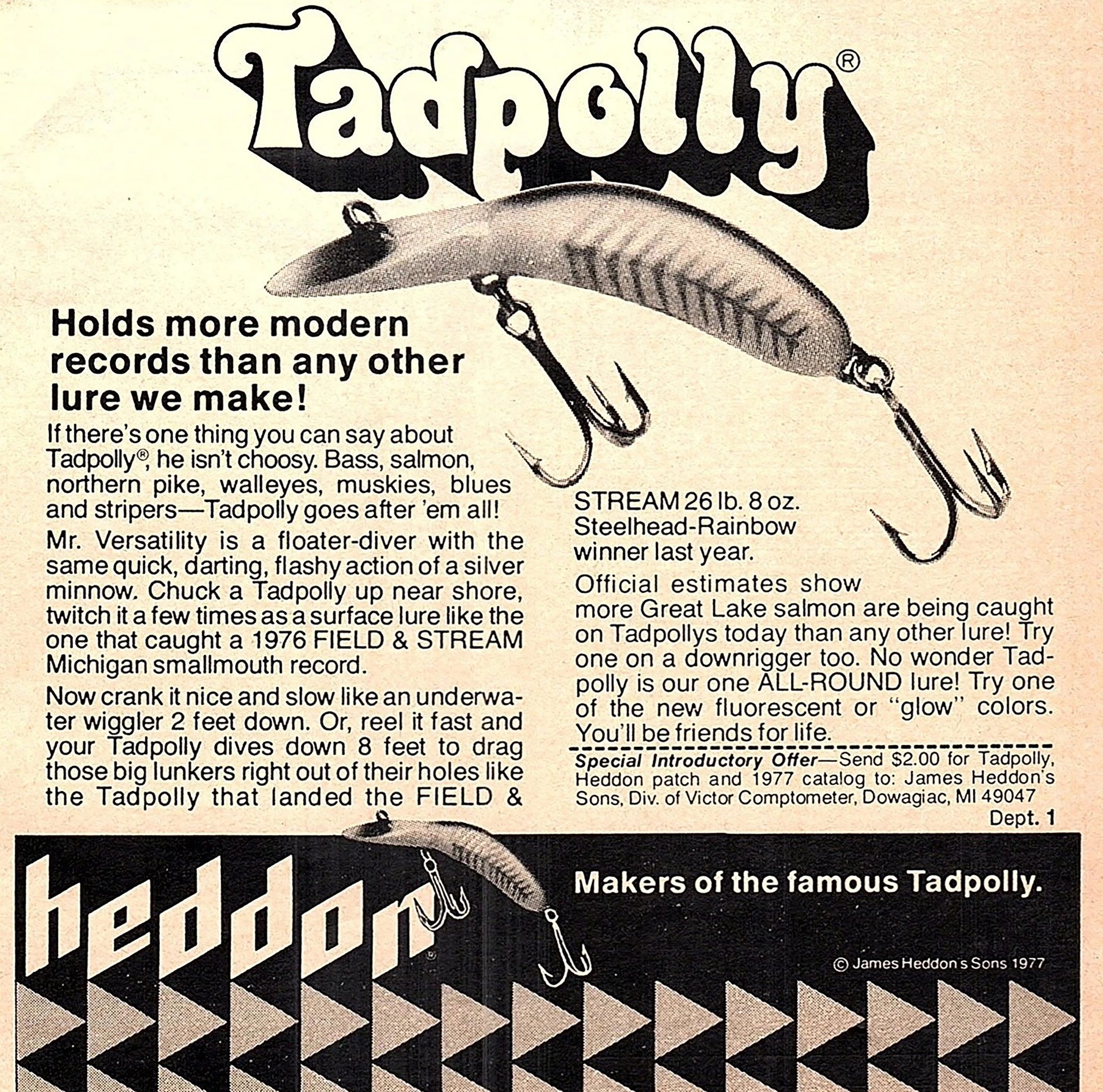
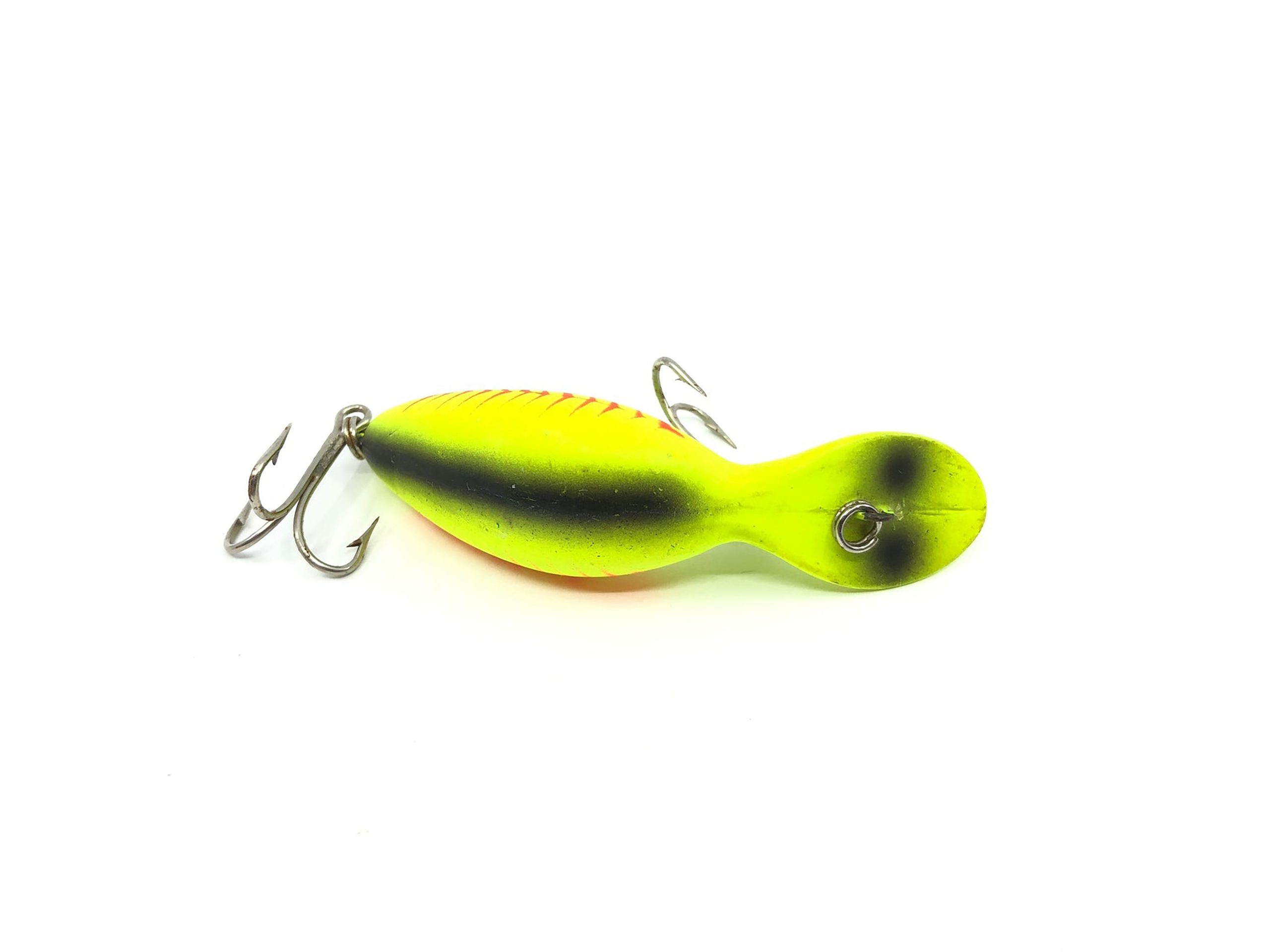
The new Tadpolly Spook (#9000) was a revolutionary, new shape that needed no metal diving lip or blade to impart action to it. The line tie was located on the angled oval face or bill, which provided the surface area for the water to act against it on retrieve, causing the lure to dive. With the smooth, almost sensuous shape of the body behind a slim neck, the lure had a fast, vibrating, rolling, lateral action which progressively increased with faster line recovery. This new lure was 3 inches long with two treble hooks attached with surface hardware. It was marketed for all gamefish and was a hit almost immediately.
In 1960, the cataloged size of the Tadpolly Spook changed from the original 3 inches to 2 7/8 inches. This “new,” slightly different-shaped Tadpolly Spook had a head or bill which was shorter by 3/16 inch and narrower by 1/8 inch. This model is commonly referred to as the Narrow Face Tadpolly by collectors. Surface hardware was still used for the forward hook, but the rear or tail hook was attached using a screw eye with a metal surface cup or bell on the screw thread. Commonly known as Surface Cup Hardware, exactly why we see this change is open to debate, because the body molding still had the indents to take the rear Surface Hardware fitting, but without the forward screw hole being drilled.
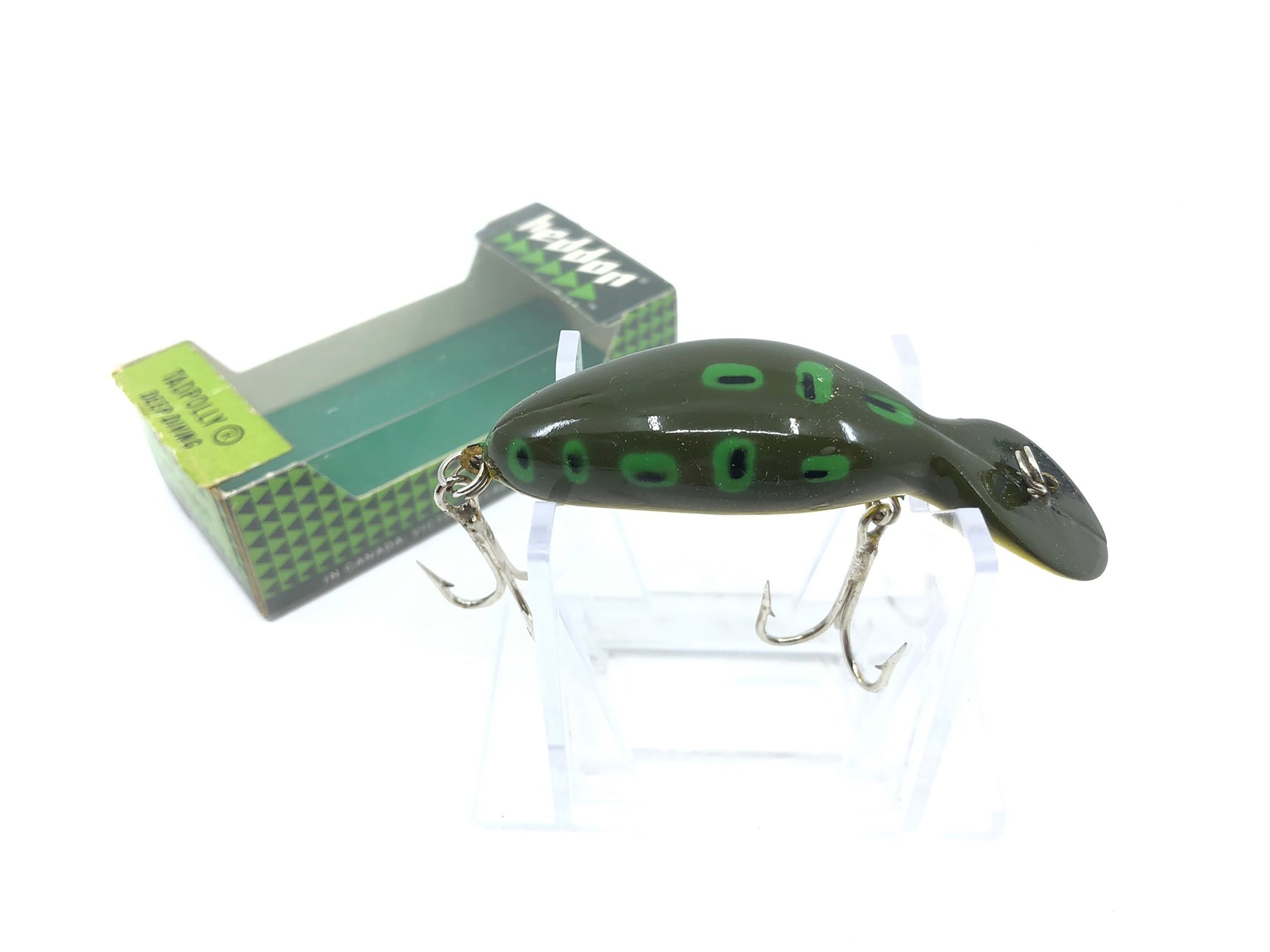
 By 1962, Heddon had reverted to the earlier shape Tadpolly Spook, possibly because the Narrow Face model was not as popular with anglers for some reason.
In 1968, the Tadpolly Spook disappeared from Heddon’s annual catalog but reappeared in the 1969 edition. This coincided with a change in ownership of the company. When the reissue occurred, the Tadpolly had undergone another minor design alteration. The body now used a different mold which was cruder in shape, with harder edges—particularly on the shoulders—and a noticeable neck seam.
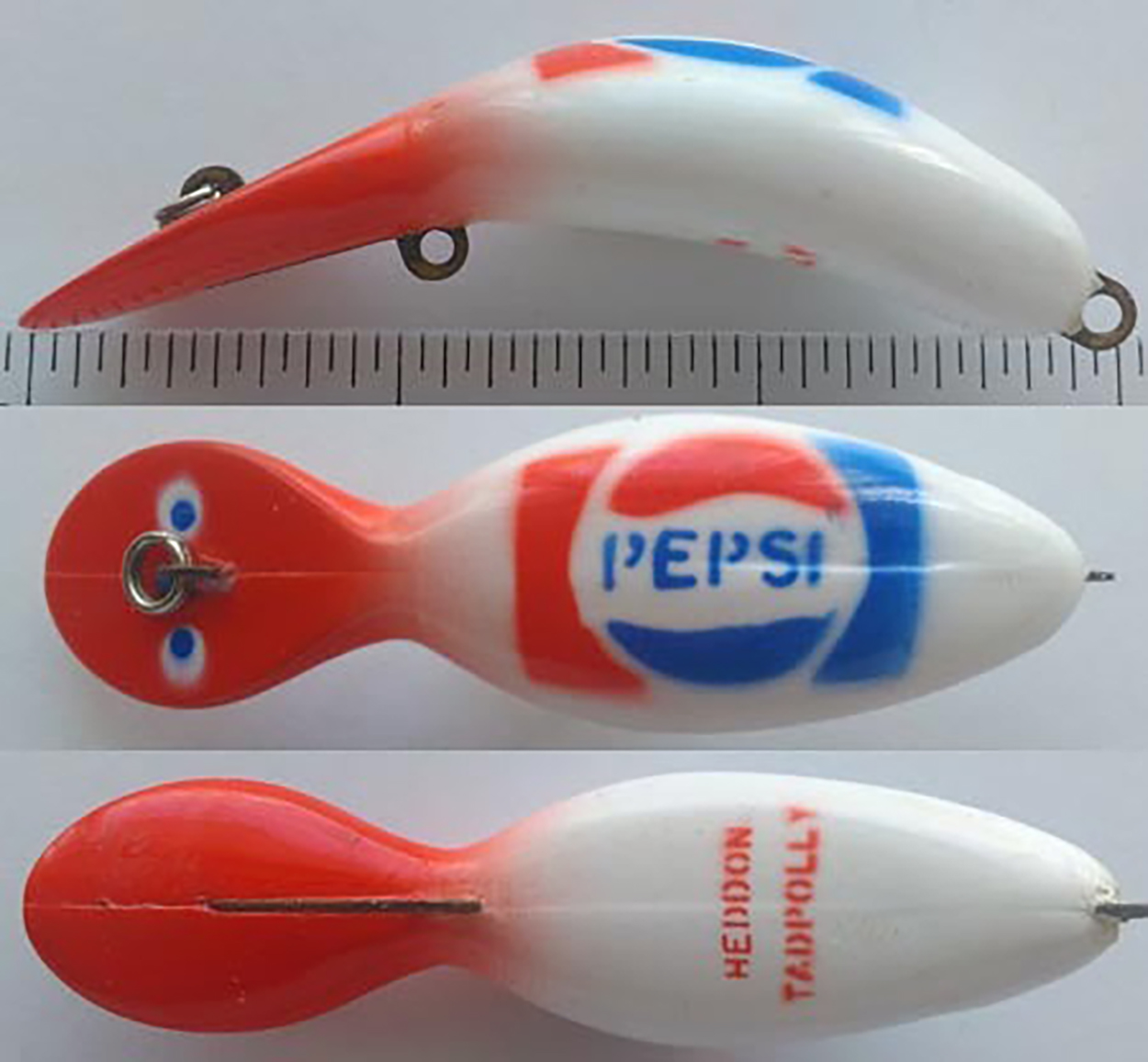
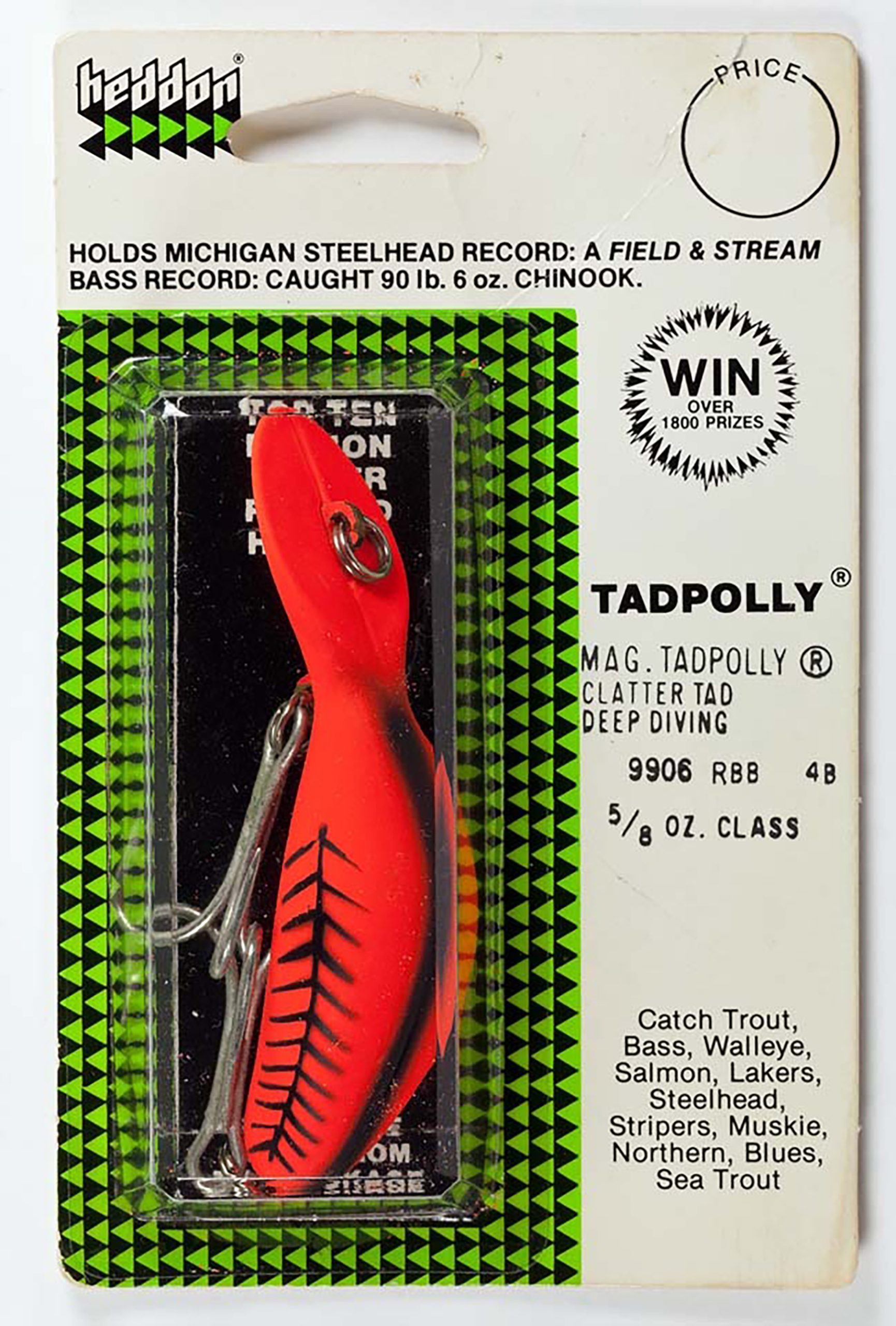
Another change, perhaps to reduce production costs, was the change from surface hardware to eye screws for both hooks. Around this transitional time, we began to see the loss of the word “spook” on both packaging and belly stencils. Some lures were made using the clear spook plastic in the newest molds, and these kept the name spook, while others were made using a new, nontransparent plastic in the same molds, and the lure just became the Tadpolly. To confuse the matter more, there is a crossover where a clear Spook plastic lure may only have Heddon Tadpolly stencilled on it. This third generation of Tadpollys was not available in many colors, which seemed to be common on most of Heddon’s lures during this time.
By 1972, a smoother-body mold was back in use, the standard size Tadpolly was now rated as 1/2-ounce class, and all sizes of Tadpolly, along with several other Heddon models, had adopted the brass plate hook hangers that would stay until the end of production. It is believed in some quarters that this change was engineered to pacify anglers who were complaining of losing hard-fighting fish when the screw eye carrying the hook was pulled out of the body of the lure. We don’t know for sure if this is true, but considering the Tadpolly’s popularity with salmon anglers, it seems quite possible.
You can be among the first to get the latest info on where to go, what to use and how to use it!
Due to the massive success of the Tadpolly Spook, Heddon added many variations to the line over the years. I won’t cover them in detail here, but they include the Tiny Tadpolly, CatterTad, Jointed Tadpolly, Wobble Tadpolly, Mini Tadpolly, Wee Tad, and Magnum Tadpolly.
The Tadpolly was produced annually and featured in the Heddon catalog through 1993. It then reappeared in 2002 and lasted through 2005.
Colors and packaging
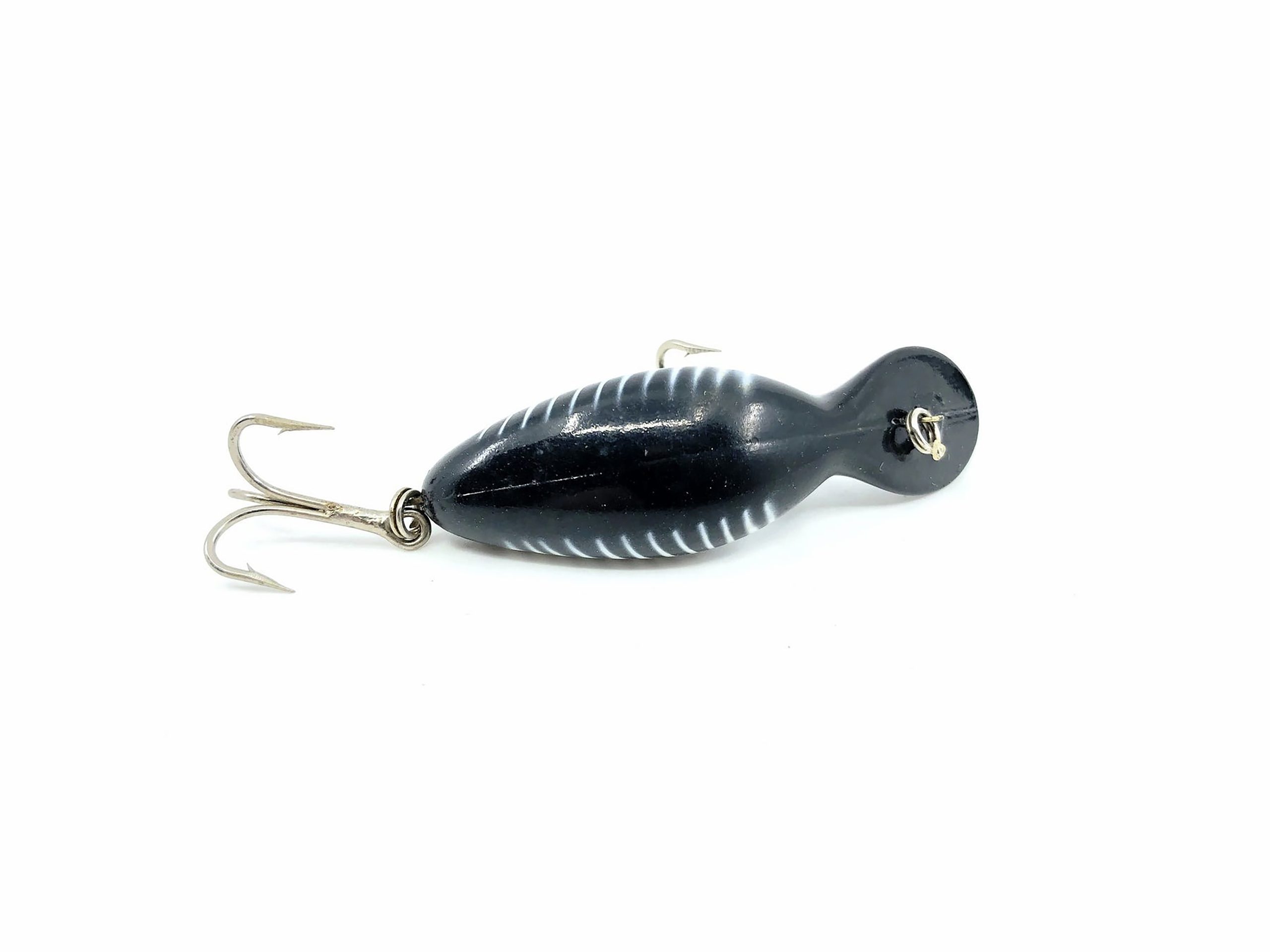
The 1952 Heddon catalog introduced the Tadpolly Spook in 12 different colors: Black and White Shore Minnow (XBW), Bullfrog (BF), Golden Shiner (PG), Light Green Scale (LD), Yellow Perch Scale (L), White, Red Head (RH), Red Head Flitter (RHF), Silver Body, Red and Black spots (SRB), Silver Shore Minnow (XRS), Spotted Orange (SO), Yellow Body Red Head (YRH), and Yellow Shore Minnow (XRY). All of these had gold-painted eyes with black pupils and red tips on the underside of the bill, except for the Black and White Shore Minnow, which did not have the red tip.
The 1960 Heddon catalog listed only 6 available colors: Perch (L), Spotted Orange (SO), White, Red Head (RH), Black (B), Coach Dog (CD) and Yellow Coach Dog (YCD).
In 1962, we see the introduction of several new colors with gold eyes and cream eyes, both with black pupils. Newer colors are Black (B), Red Coachdog (RCD), Silver Scale, a different variation of Spotted Orange (SO), White Coachdog (WCD), and Yellow Coachdog (YCD), which, along with some of the originals, gives us a total of at least 13 options plus the eye variants. On the White and Yellow Coachdog finishes, the cream eye versions have a black blush around the eyes; and on both the Red and White Coachdog finishes, along with what I call the Silver Scale, the belly is painted in a pearlescent finish.
In the early 1970s, Heddon started producing Tadpollys with a chrome or nickel plate type finish. This brought forth a range of lures with colored paint accents or details overlaid on the bright metallic finish. The years of 1977 and 1978, when Heddon had found a way to color the lures without paint, saw the number of color options flourish. In fact, there are so many variations after this point in time that I won’t list them all here. In addition to the standard catalog colors, there are a lot of special or non-catalog colors out there.
As a collector of these lures, I keep a running database on our website, and we are over 220 colors and adding new ones all the time.
Tadpolly Spooks were originally supplied in Heddon two-piece cardboard banner boxes. Eventually, they were changed to plastic-top cardboard boxes, and then a variety of cards.
Collectors value
A Heddon Tadpolly Spook in excellent condition without the box would be worth anywhere from $15 to $30 depending on the color and hardware. With the matching box in excellent condition, the price would jump up to anywhere from $25 to $50. Special colors can be worth quite a bit more. Worn and fishable Tadpollys can be bought for less than $15 and are excellent for fishing. They are some of my best lures to fish every year in a variety of colors.



Did you enjoy this post?
You can be among the first to get the latest info on where to go, what to use and how to use it!
