
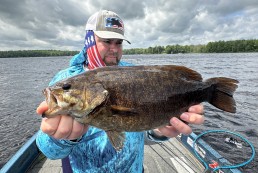
Fishing After a Front Passes
Part 1 of this feature appeared in the March 2026 issue of MidWest Outdoors and focused on pre-frontal fishing strategies. Part 2 appears here and concentrates on adjustments in fishing strategy after a cold front has passed.
Post-frontal strategies
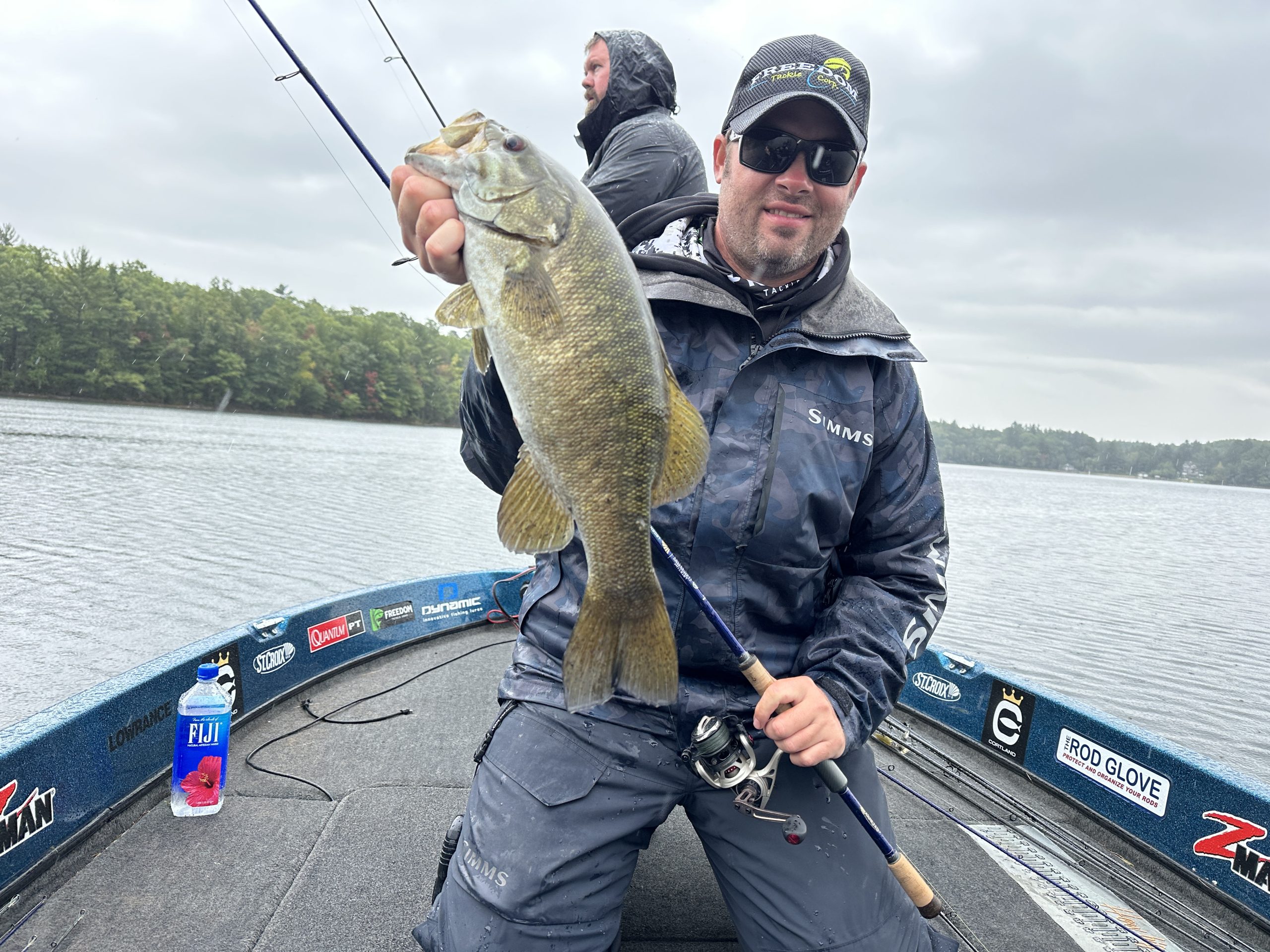
After a cold front passes through, and for a few days after, conditions often remain poor for up to a few days; the duration can vary. The high pressure that follows behind cold fronts contributes to lethargic fish that won’t move as far, or anywhere up in the water column toward near the surface. The impact from cold fronts is most drastic and negative to smallmouth bass. This pressure change affects smallmouth swim bladders the most and keeps them pinned down towards the bottom where they will be reluctant to chase moving baits.
Anywhere I fish, I expect bass to move off the areas where they were prior, reposition, and hold tighter to the habitat or structure they are using.
If smallmouths were caught from a specific area or piece of structure prior to the front, the expectation now is they didn’t retreat too far away. They’ve sought out protection from nearby cover, or sanctuary on deep structure, waiting for the front to pass through.
Weed fisheries are easiest to target, as smallmouths seek refuge along the edges of and atop coontail beds. Probing through the edges with jig worms and Ned rigs such as Z-Man TRD’s on 1/8-ounce heads reliably produces. They descend slowly downward, offering smallmouths extra time to decide whether to pursue them or not.
Additionally, power anglers fishing weed smallmouths have options as well. My boat commonly enjoys ripping 4-inch Z-Man Diezel MinnowZ paddletails rigged on 1/4-ounce Finesse EyeZ heads, Chatterbait WillowVibes with Scented PaddlerZ, lipless crankbaits, and perch pattern swim jigs through weed pockets, openings, and edges. Each lure type triggers reaction strikes, and commonly produces a wild ruckus of other species that can include muskies, big walleyes, pike, and largemouths that are also buried in the same weed cover for protection.
Out deeper, targeting cribs and deep rock piles and boulders is strongly recommended. Finesse and drop-shot anglers excel in these locations. Drop-shot rigs with finesse worms are deadly. Many guide trips have been saved by customers subtly wiggling their worms alongside and through the structures. Preferred finesse worms are Kalin’s Weenie Worms, Zoom Finesse Worms, and Luck E Strike Finesse worms.
Following cold fronts, I live and die by a custom-poured, 4-inch solid black stick worm rigged on a weedless Ned head, fished as a bottom rig. Heavier 5/32-ounce sizes are used to maintain bottom contact. It is almost snag-proof. Deadstick, but keep pressure on the line to avoid deeply hooking fish. The creation of this homemade rig in 2018 (named the AR Rig) has produced several 4- and 5-pound-caliber smallmouths.
Catching bottom-huggers requires patience, persistence, and some wizardry with your rod and line to detect light strikes. Bites will not come easily and are rarely detected without some magic touch. Nearly all bites will come deadsticking, when the bait is motionless. Among our trusted methods are drop-shot rigs, heavy Ned rigs, finesse football jigs, and tubes with 1/4-ounce jig inserts and an exposed hook. Maintaining bottom contact is of utmost importance. Otherwise, you’ll fail to catch these least-active smallmouths. You will become a frustrated angler pursuing these fish. Don’t quit on them prematurely!
For largemouths, a cold front always makes things tougher. Instead of covering water and fishing quickly, slow down, be more persistent, and slow your retrieves. Identify the most obvious high-percentage locations on your lakes, which on mine tend to be offshore weed humps, weed bars, secondary points, coontail beds, and wood. Don’t neglect nearshore habitats, either. Many Northwoods lakes feature bog edges, flooded brush, laydowns, docks, and emergent plants.
Focus only on your area and concentrate on delivering your very best presentations into the short (reduced) strike zones. If largemouths are there, you can get them to bite. It will require repetitive casts and multiple attempts with several baits into those areas to coax them.
You can be among the first to get the latest info on where to go, what to use and how to use it!
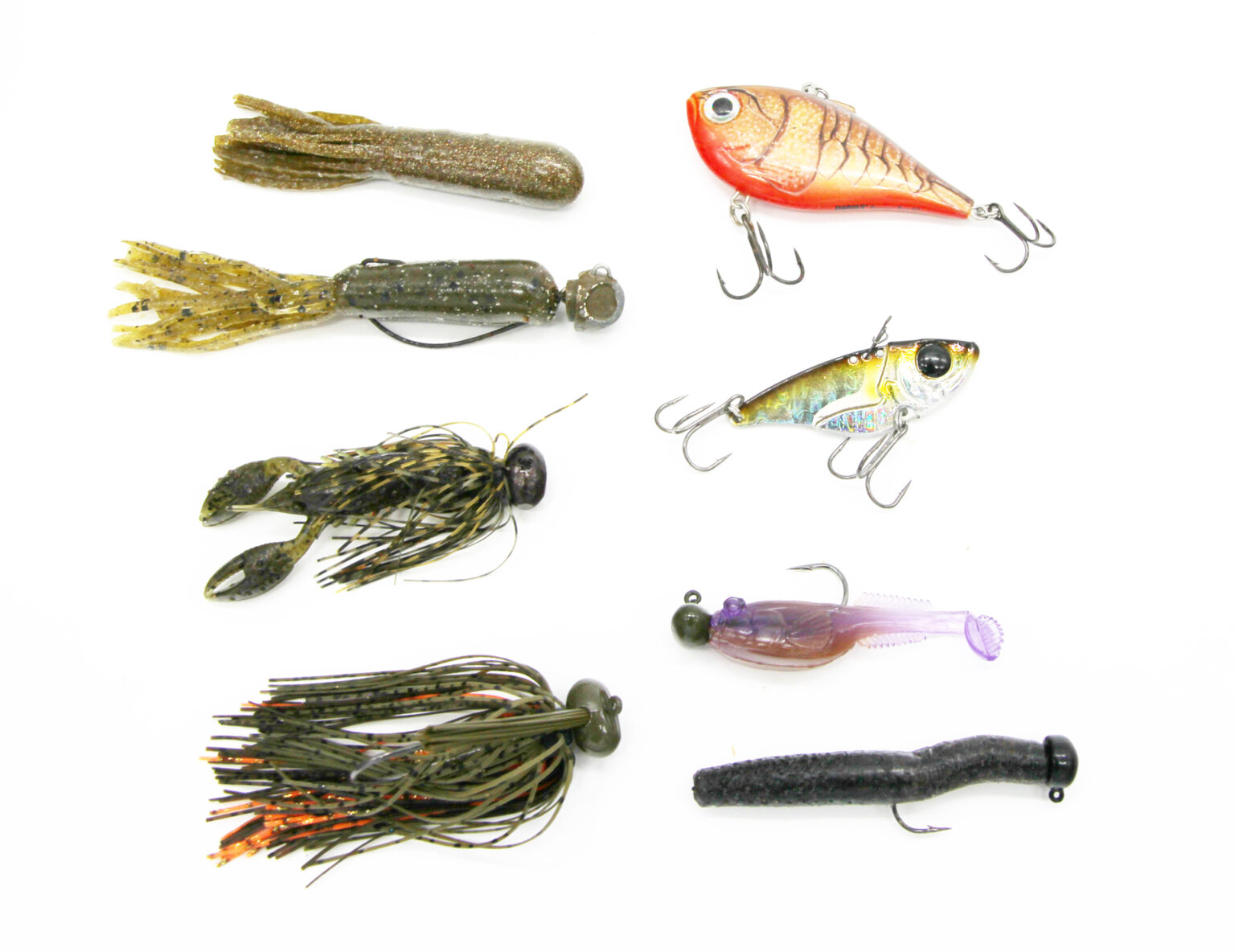
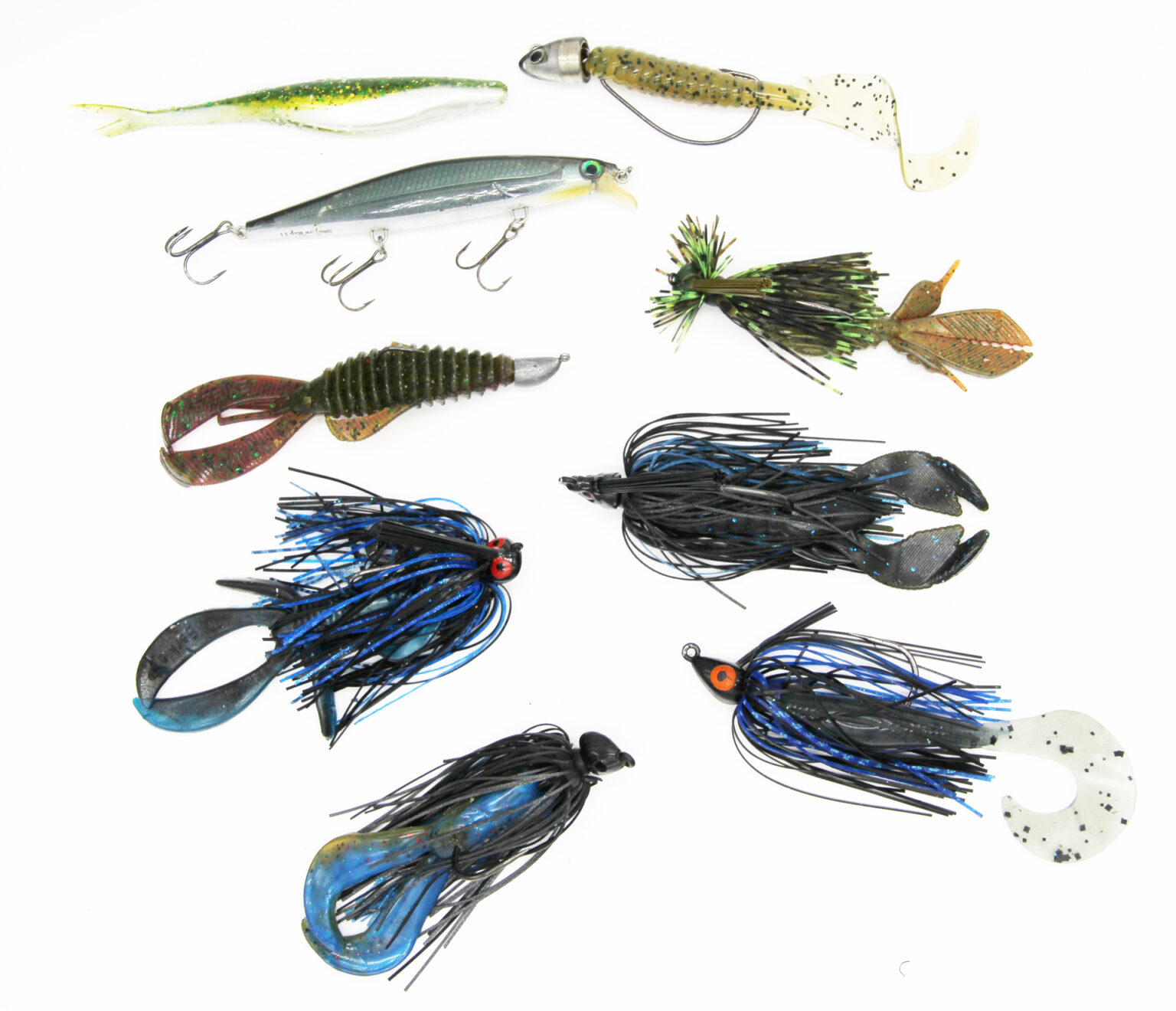
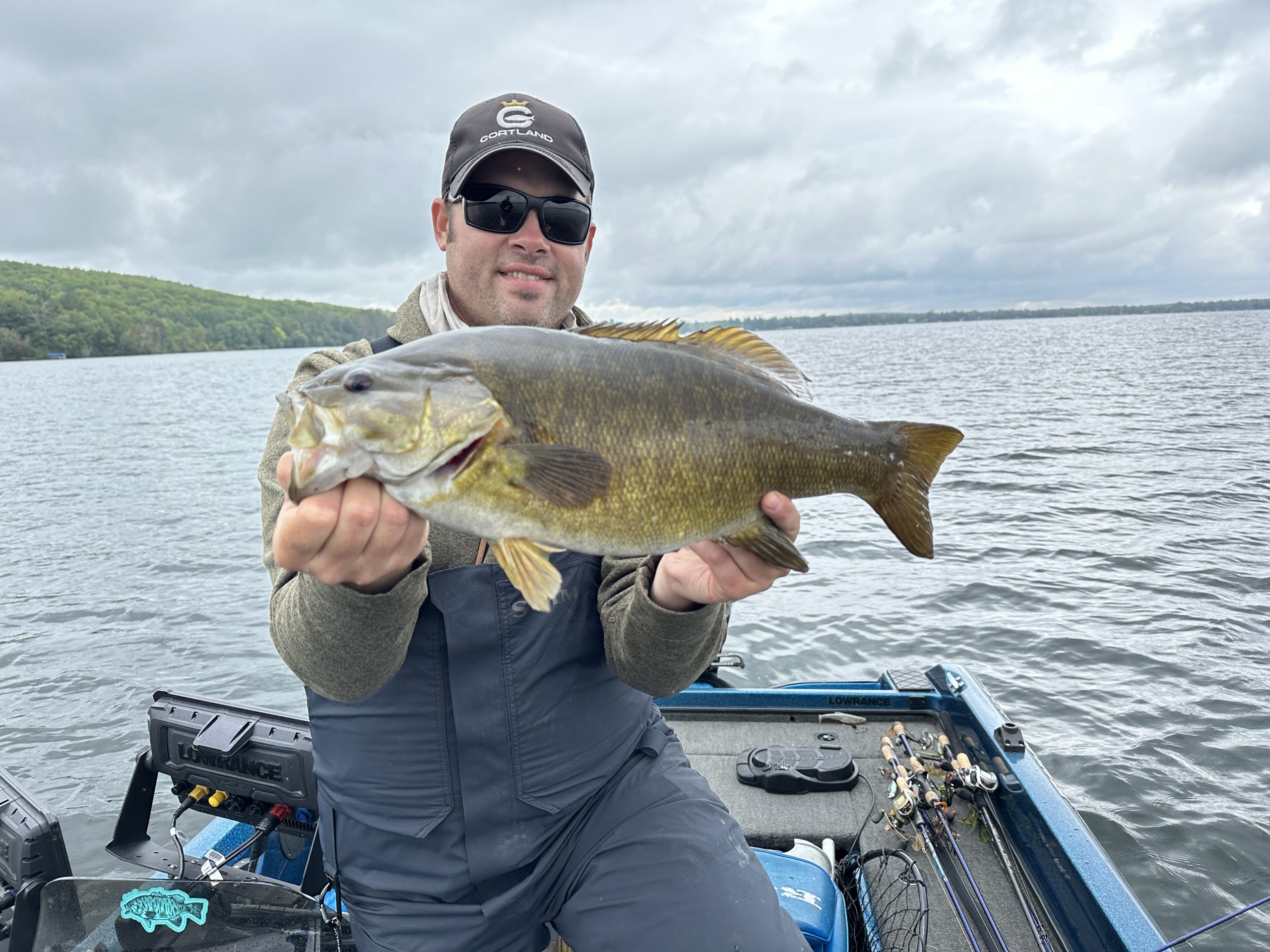
With a few exceptions, post-frontal lure adjustment should be smaller and slower, and more compact.
Rather than throw a 1/2-ounce swim jig with 5-inch trailer, I instead choose a 1/4-ounce version of the same jig and 3-inch version of the trailer. Rather than working it with a heavier casting setup, I might fling it out there with MHF spinning gear instead. The same concept also applies with casting and flipping jigs. And instead of using full-bodied trailers, I consider chunks and downsized creatures such as Missile Baits’ Baby D-Bombs, and Paca Craw Chunks and Paca Craw Jr’s infused with BaitFuel.
In general, smaller lure profiles are easiest for largemouths to catch up to. Four-inch stickbaits, shakey worms, and tubes worked on spinning gear are favored if a more finesse approach is needed.
Downsizing is a popular way of getting more bites in post-cold front conditions. You tend to increase the number of bites you get, but only if you are putting the bait within the fish’s strike zone. Downsizing like this is not a guarantee to bites, however.
With any lure choice, slowing the presentation increases your odds since it gives sluggish largemouths a greater bite opportunity. From creeping a casting jig to slow-rolling a Chatterbait Elite EVO just fast enough to keep the blade vibrating, baits should be easy for largemouths to catch up to under bluebird skies.
Alternatively, don’t ever omit reaction strikes. Deep-diving crankbaits that can rip through the weed tops and grind bottom take both largemouths and smallmouths equally well. In fact, a recent smallmouth trip on a dark-water lake produced a handful of high-quality, 18- to 20-inch fish for my customer whose subtle reaction strikes were triggered by the lip of a Rapala DT-8 grinding into rock piles. His crankbaiting outfished every downsized and bottom bait we attempted that day.
Additionally, if you need to extract big largemouths from weed lines and upset them with additional reaction baits, look no further than rip baits such as a loud, lipless crankbait, a Chatterbait Elite EVO or Jackhammer, or upsizing to a Z-Man Big Blade Chatterbait. The two most important rods in my boat for the deployment of these “piss ’em off!” strategies are my St. Croix Mojo Bass Glass (MGC72MHM) and St. Croix Legend Tournament Rip-N-Chatter (LBTC72HM).
Coping with cold fronts
A cold front’s passage puts every angler to the test. Every fishing decision you make from lake choice and location to lure selection will be based on the cold front and how it has affected the fishery.
Undoubtedly, fishing slowly and methodically with patience, persistence, repetitiveness, and penetration into where bass dwell is a winning strategy. As bass react slower and are more reluctant to feed, smart anglers recognize the conditions and adjust their strategy and presentation accordingly. Going beyond strategy, identifying the best fisheries and lake types that can fish favorably to these adverse conditions, as I have shared, is also another winning formula.
And it wouldn’t hurt to lower your expectations, either!
Complain all you want about cold fronts, but bass are always going to remain catchable.
Did you enjoy this post?
You can be among the first to get the latest info on where to go, what to use and how to use it!