
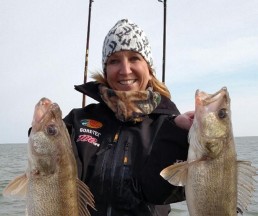
Fewer Numbers of Trophy Walleyes Present, but Millions Coming Soon
On November 30, when the two 2025 walleye derbies ended on Lake Erie—the Fall Brawl and Walleye Slam—the lightest fish in contest history topped the leader boards, without any breaking the 12-pound mark.
Winners over the years have ranged from a 12.30-pound, 31.35-inch specimen caught off Huron by Ed Hatten, Jr. last year, to one weighing 14.97 pounds measuring 31.5 inches caught near Cleveland by Mathhew Branigan in 2017.
The top-placing and winning fish are often taken late in the contests, but very strong winds limited full participation as the contest was winding down this fall.
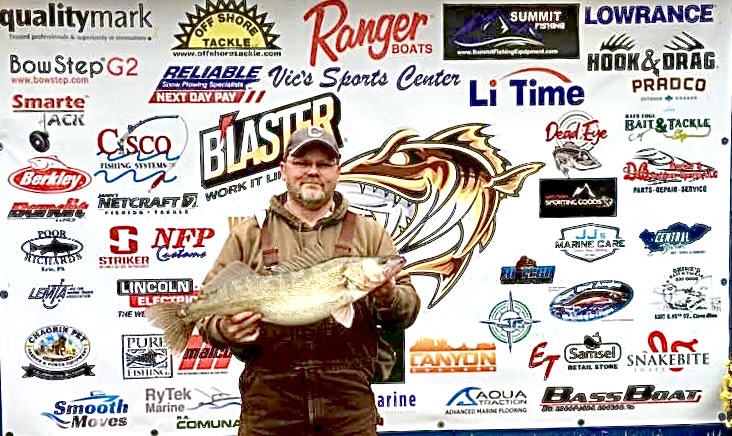
The winner of both contests, who received a fully rigged fishing boat from each, was Jay Gullet, of Williard, Ohio for his 11.59-pound (official Fall Brawl weight)/11.64-pound (official Walleye Slam weight), 29.5-inch fish caught on November 20. He, like many other anglers, signed up for both contests for this very reason.
Coming in second place in the Fall Brawl was Michael Higinbotham, who won the second, fully rigged fishing boat for landing an 11.46-pound fish that was 31.0 inches long. He did not sign up for the Walleye Slam and missed out on also collecting its second-place prize of $50,000.
Instead, Bradly Wissel, who on November 4 caught the longest fish that was entered into both contests, a 31.5-incher weighing 11.42 pounds, earned him the $50,000 second place award and the third-place cash prize of $55,000 in the Fall Brawl.
Another 31.5-inch walleye was caught by Joe Mazur on November 7, but it only weighed 10.38 pounds
The current age structure of Lake Erie’s walleyes is loaded with younger fish now that the monster hatch of 2003 that provided several successive years of teenaged fish has finally aged out of the system.
Lake Erie walleyes reach 15 to 19 inches by their second year but it takes at least 9 years to reach the 30-inch mark, according to Ohio Division of Wildlife inner ear bone (otolith) growth ring observations. Growth to 32 inches long was seen in fish aged from 13 to 15 with one fish determined to be 24 years old.
Following 2003, walleye spawning was much less successful, producing several poor year classes from 2004 through 2014.
Whenever recruitment levels are low, the odds of consistently finding teenaged fish that have grown to over 30 inches become less likely.
2015 was the first above-average hatch since 2003, which has led to a bump in fish that are now reaching trophy size at 11 years of age.
Then, a streak of above-average hatches occurred in 8 of the last 11 years, including good ones in 2020 and 2022 and exceptional hatches in 2018, 2019, 2021, and 2023.
At the October Ohio Wildlife Council meeting, Lake Erie fisheries biologists announced a preliminary observation of Ohio’s 2025 walleye trawl numbers as “Exceptional.”
On December 15, the combined Ohio/Ontario 2025 Western Basin walleye and yellow perch hatch results were released. It cited Western Basin findings of 128 walleyes per hectare (hectare = approx. 2.5 acres), well above the average of 57/hectare, ranking it the sixth largest walleye hatch of the past 38 years.
You can be among the first to get the latest info on where to go, what to use and how to use it!
The reasons to fully explain what causes poor to excellent hatches are not known with certainty, but several theories have been offered by Ohio’s fisheries biologists.
One of the theories to explain the recent high numbers of good years is that high water levels made the depths of more of the Western Basin limestone reefs ideal for deposition, incubation, survival, and hatching.
Although a fraction of Lake Erie’s walleyes migrate into tributary streams to spawn, an estimated 90 percent of spawning takes place on the extensive reef complex near Camp Perry and the Davis-Besse Nuclear Power Station.
In addition to walleyes spawning on the rocky substrate, many deposit their eggs on dredge spoil humps just outside the shipping channel and on sandbar spits in both Maumee and Sandusky Bays.
On the negative side, recent milder winters that limit the number of days for the eggs to fully mature in the female walleyes before they are deposited are known to impact their size and health.
The occurrence of strong storms while the eggs are incubating can also be blamed for losses of fertilized eggs from currents when scoured off the reefs, or smothered with silt which can lead to suffocation or disease.
However, the most accepted explanation for years when there is a catastrophic failure in recruitment of fry to young-of-the-year fingerlings is from poor timing of plankton blooms.
Quagga mussels are increasingly being recognized as the cause of reduced algal densities and subsequent declines in zooplankton availability that affects the aquatic food chain, and has been cited for the lower numbers of prey availability for whitefish and other sport fish species.
Yellow perch in the Central Basin of Lake Erie are another presumed victim of this effect caused by the invasive species.
Even though the Western Basin continues to be overfertilized from agricultural nutrient inputs, they do not reach further east in high enough concentrations to trigger enough algal productivity to offset consumption by mussels.
Catch rates every year since 2017 rival or even top those from the famous 1980s and are being called “the good old days of walleye fishing” by Ohio’s fisheries managers.
Knowledgeable anglers should be drooling over the prospects that are on their way in the coming decade as steady growth combined with high numbers will provide both good numbers and size.
This should now begin occurring as the 2015 year-class is 11 years old and the hatches from 2018 on start piling up, thanks to Ohio’s conservative management that leads to harvest levels that ensures great catch rates despite occasional poor hatches.
Meanwhile, selective anglers can expect to be able to keep year-round, 6-fish limits of 22- to 27-inch walleyes that test the capacity of their coolers.
I love the thick “backstraps” that these jumbo walleyes provide when cut into walleye “nuggets,” and the silver-dollar-size cheeks are a big bonus when fish chowder is on the menu.
Be sure to plan annual trips to west, central or eastern Lake Erie, the Walleye Capital of the World, depending on which month is chosen, but heed the marine forecasts.
This big body of water can often get angry enough during any time of the year to keep even the most skilled skippers on shore, or wishing they had waited for winds to subside.

Did you enjoy this post?
You can be among the first to get the latest info on where to go, what to use and how to use it!