
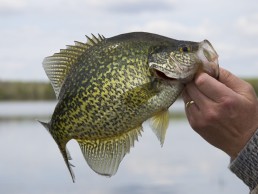
How to Catch Early-Spring Crappies on Percy Priest Lake
Early-spring crappie fishing on Percy Priest is one of the most reliable, and totally misunderstood, fisheries in Middle Tennessee. Every year in early February, anglers rush to the banks to catch their limit—and unfortunately leave empty-handed, because they are a few weeks early. Pre-spawn crappies follow a predictable temperature-driven, water temperature—not air temperature—pattern. If you understand where they stage, and what triggers the move to the banks, you’ll know how to catch them.
Staging
Early spring on Percy Priest typically means late February through March, depending on weather. Water temperatures usually range from the mid 40s to low 50s, and crappies are in transition mode. They are leaving their deep, winter basins but are not yet committed to shallow spawning cover. This means that the fish will move into the creek arms, but stay in 9 to 12 feet of water, more or less adjacent to the creek channel. All crappies do not move at the same time; they move in stages. When seeking out staging areas, you don’t need a boat, but it’s darn sure helpful—especially with a depth finder and mapping.
During this period, fish stage in areas where they have fast access to deeper water while being close to nearby cover. They also seek out water that’s slightly warmer than the main lake. Fish are feeding and waiting on a stable warming trend before they move into the shallow haunts of the spawn.
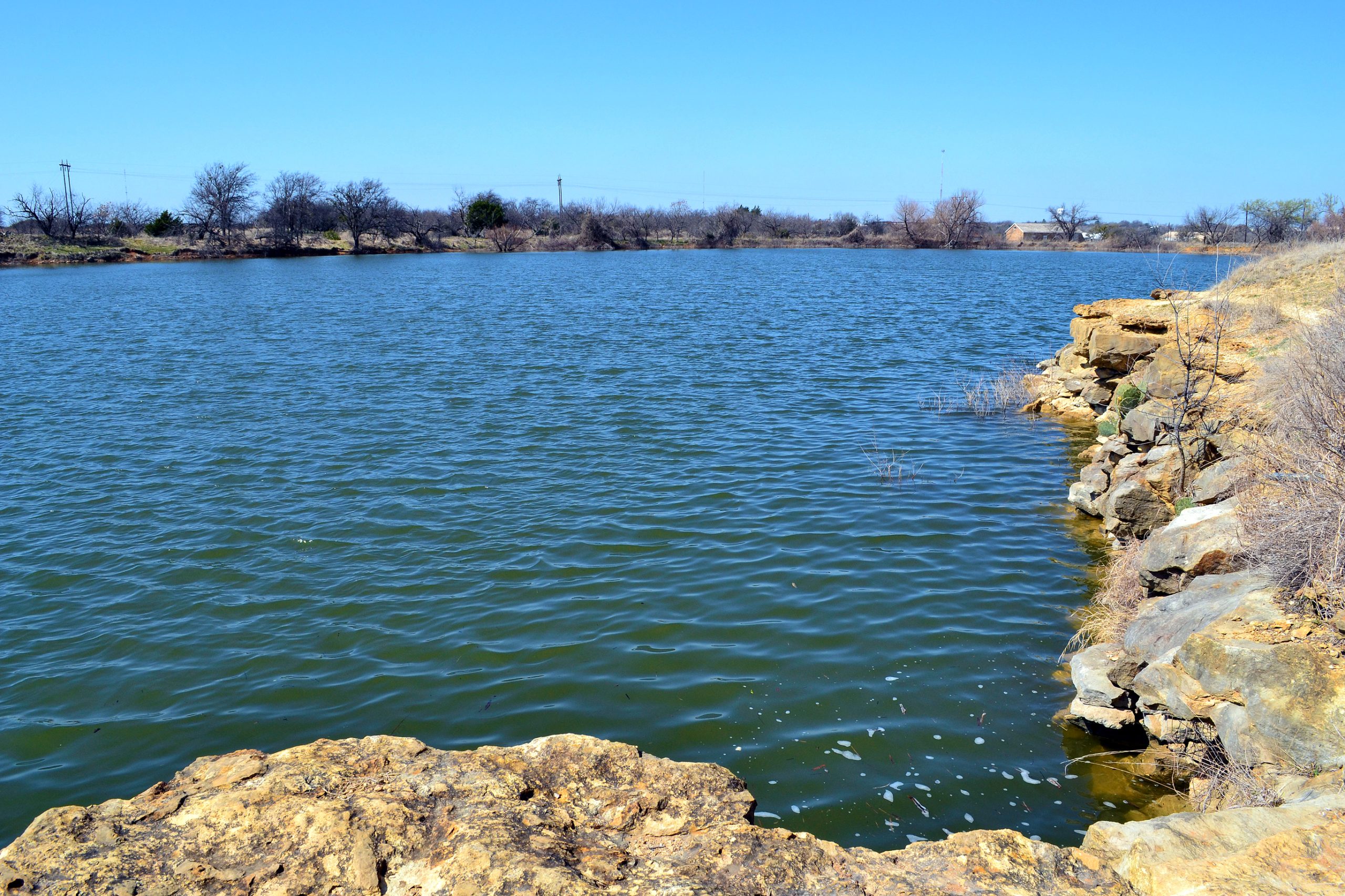
When starting to look for fish, focus on creek arms versus the main lake. Stewart’s, Hurricane, and Mill creeks are my favorite pre-spawn areas. Crappies push into these areas because they warm faster and tend to hold abundant baitfish. It’s best to ignore the very back and very front of the creek at this point in the year. Instead, look for secondary points in mid-stream.
Look for creek channel bends that are adjacent to a flat, and points that have brush close to deeper water. All these areas act as staging zones. Crappies may move in and out of these zones as unstable spring temperatures rise and fall. Today, they may be on a brush pile in 10 feet of water; then, a cold front may push them into 15 to 20 feet, or vice versa. Pay as much attention to the weather as the water to be successful with staging crappies.
Percy Priest is full of manmade structure—some placed by the TWRA and other placed by anglers. In early spring, crappies tend to suspend above the structures. Look for structure on south-facing and wind-protected banks.
Fishing methods
Early spring may bring the fish closer to shore, but they are still cold and have a tendency to be a bit lethargic. The key is using slow, if not still, presentations. Bites will be much subtler than during the actual spawn.
Trolling is a deadly technique at this time of year, if you can keep your boat around .7 to .9 mph. Slow-trolling jigs over suspended fish will almost always get you bit. Percy Priest also has big hybrid striped bass that will also hammer a jig at this time of year. A 5-pound hybrid bass in a crappie trolling setup is like a circus and rodeo at the same time.
You can be among the first to get the latest info on where to go, what to use and how to use it!
Jig colors vary this time of year; however, Charlie Brewer’s Slider seems to be a great soft plastic for trolling. We tend to fish 1/32- and 1/16-ounce jig heads in early spring. The more common 1/8-ounce heads just run too deep when slow trolling.
When setting up a trolling rig, we use three rods on each side of the boat. Over time, we learned that placing a 12-foot, 8-foot, and a 6-foot rod on each side of the boat are the best options to cover water adequately. Given that all rods are ultra-light action, a good-quality, 4- to 6-pound monofilament line excels.
Vertical jig presentations are also productive. Just keep the jig slightly above the structure. Less movement is best. Suspending the jig under a slip bobber, like minnow fishing, seems to be the better choice for pre-spawn fish. Bear in mind that depth control is paramount as fish feed “up” much more often than down. When using this method, we like an 8-foot, ultra-light rod. Since vertical fishing keeps you, and the boat, near the fish, I tend to use a fluorocarbon line in the 4-pound-test range.
Timing matters
Chasing-early spring crappies is as much about when you fish as where. There’s no need to be on the water at daybreak, unless you’re trying to get a parking spot at the ramp before all the adult-onset anglers arrive. Let the sunshine on the water and rocks warm things for a few hours. I seldom arrive before 10 am on a nice day. Any earlier is a waste of time. The sun warms the water and that makes the baitfish active, which will bring the crappies. On cold mornings, patience becomes your best friend as it takes longer for the fish to start feeding. The old saying is that, “There is never a bad day to go fishing.” However, fishing after 2 to 3 days of stable, and warmer, weather will be much more productive. It’s best to avoid hard cold fronts in early spring. These push the crappies back into their deep-water haunts and makes them much tougher to locate and catch.
Boat control
Boat control is critical in early spring, even more so than bait or color selection. Being able to hold just off cover, and the ability to move less than 1 mph, are key in the search for a livewell of crappies.
Early-spring crappie fishing on Percy Priest Lake is about anticipation, not reaction. The fish are there, moving predictably and feeding selectively. If you focus on creek arms, target staging areas with nearby depth, slow your presentation, and fish during warming periods, you can have some of the most consistent crappie action of the year. Often, you won’t even have to fish in a crowd at this time of year.
Percy Priest rewards anglers who fish deliberately. When winter is still hanging on and spring is just beginning to whisper, the crappies are already waiting, stacked on brush, watching for an easy meal, and ready for those who know where to look.

Did you enjoy this post?
You can be among the first to get the latest info on where to go, what to use and how to use it!
