
Does Color Really Matter?
With every passing season, new rods, reels, electronics, and accessories hit the market. A quick visit to local fishing shops—large or small—can prove to be an overwhelming process for even the most experienced anglers. With so many options to choose from, how do you decide?
When it comes to tackle selection, the process can be even more onerous. The choices are essentially endless—not to mention, new options hit the market every year. Every angler has their favorite bait—you know, the one that’s always tied on; the one that gives them the most confidence. For some anglers, that confidence lies in the bait’s profile, and for others, it’s related to the action. Color combination also gets a lot of emphasis from some anglers, while other fishermen are less concerned.
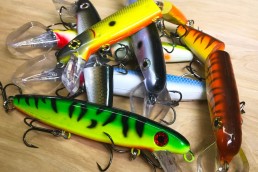
Despite what certain anglers might think, color does matter—at least a little. Not in the sense that fish won’t eat something, or will eat something simply because of its color, but more in terms of how effectively the lure can be noticed in specific circumstances. Factors like water clarity, weather conditions, and time of day all impact how effective a certain color may be. Options like glow, UV, realistic, or bright and gaudy excel in some scenarios and are less effective in others. Here are some rules of thumb to help you choose the right bait for the right situation.
Natural options
For as long as anglers have been fishing, they’ve been creating lures that closely resemble the actual things that fish are feeding on. There’s no better example of this than fly fishermen. As an angling group, they spend the most time emulating the food that fish are eating.
Ice fishermen aren’t all that different. Over the last decade or so, a variety of manufacturers have designed lures to imitate invertebrates, insects, and minnows that fish species target during the winter months. Such lures are often developed to mimic the size, shape, and color of said food sources.
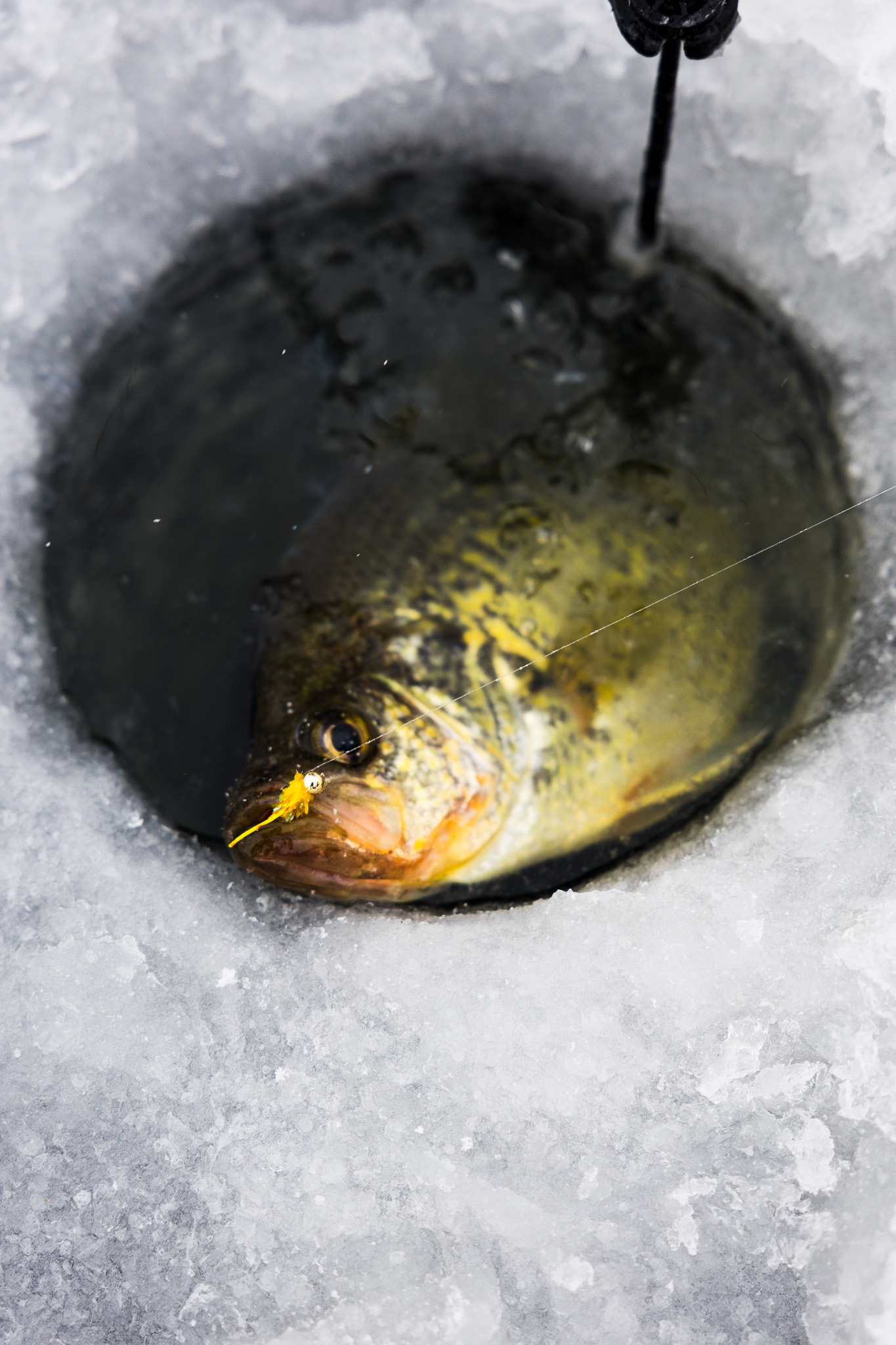
Realistic-patterned lures are excellent choices for a number of situations, which is the main reason you hear the term “match the hatch” so frequently in fishing conversations. That being said, they often perform best in situations where fish can see what they’re feeding on. For example, in clear-water environments or daytime angling. Many fish species feed based on sight, so giving them something that replicates their natural food source is a smart decision.
Non-natural options
While many non-natural colors share some similarity to natural prey (i.e. orange, chartreuse, etc.), a number of unconventional color patterns really don’t look like anything. Take Wonderbread, for example. It’s a staple in the ice tackle industry, but it certainly doesn’t emulate anything natural. These bright, gaudy, and rather unconventional combinations may look rather ridiculous at times, but they can certainly catch their fair share of fish.
You can be among the first to get the latest info on where to go, what to use and how to use it!
These choices are often touted for their ability to catch more fishermen than fish. There’s a little bit of truth to that, but in all fairness, these options have situations in which they excel.
Non-natural options can perform well in similar instances to realistic lures; however, their abilities stand out in stained or murky water scenarios really shine. Bright, unique colors add attraction and can aid in calling fish in from a distance.
Glow options
Glow-based lures have long been staples for anglers across the Ice Belt. Like the name suggests, these lures have the capability of glowing. A simple charge from a light source like a flashlight, or actual glow charger, allows them to glow for a set period of time. Depending on the lure, finish and light intensity, these lures can glow from anywhere from a few minutes to 30 minutes or more.
Technically speaking, glow lures fall into the category of non-natural lures. However, some key differences place them in a category of their own. While they often come in the same overall color schemes as other non-realistic lures, their ability to glow makes them better choices for specific situations.
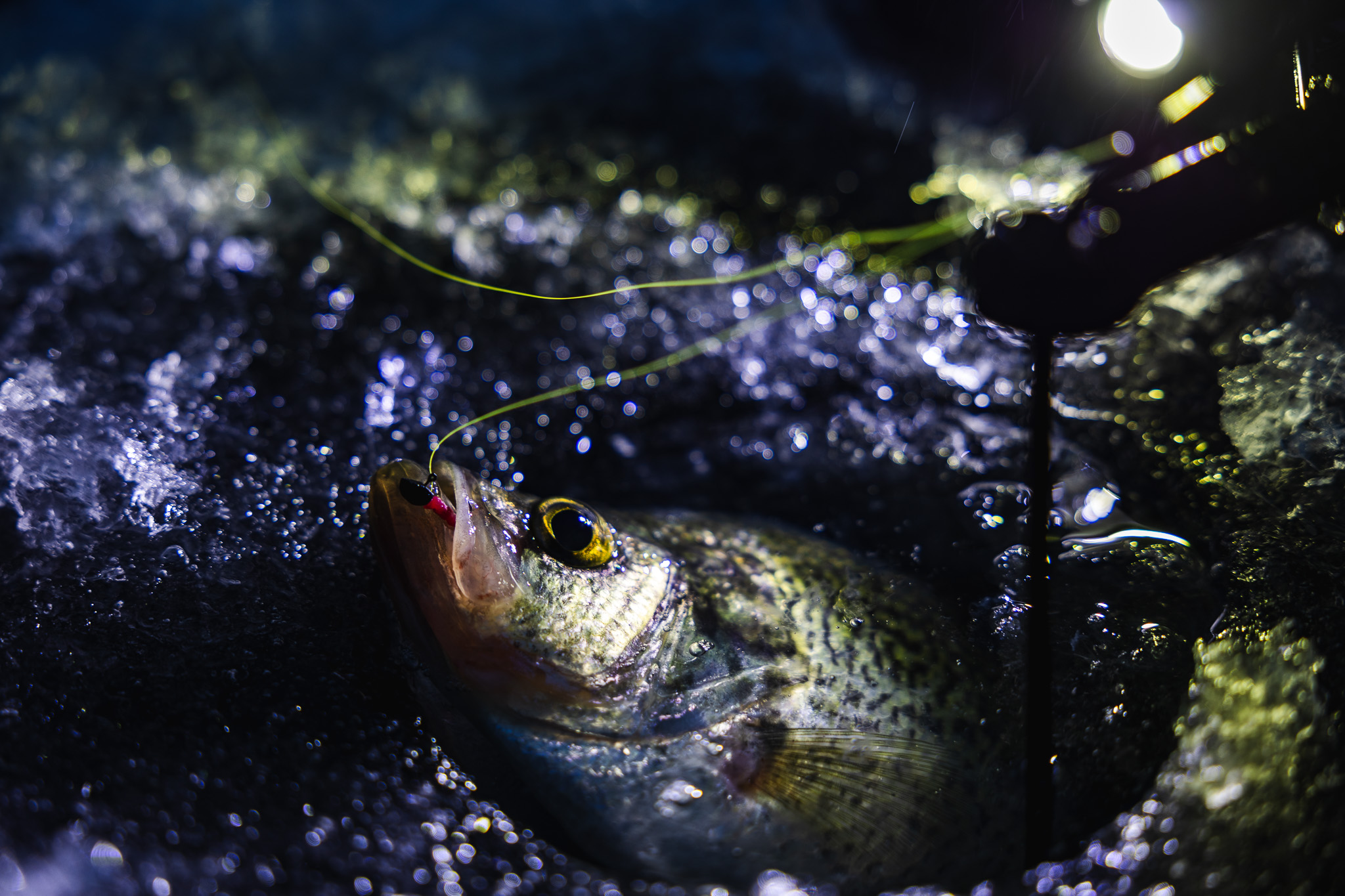
Lowlight conditions like dusk, dawn, and throughout the night, are where glow options truly shine. When there’s little to no light below the surface, glow-based lures contrast well against a dark backdrop—making it easy for aquatic predators to find.
UV options
UV-based lure options are a newer addition to the ice fishing market. While they’re often confused with glow lures, as the two terms are used interchangeably, they function in different ways. As mentioned above, glow lures require an external light source in order to emit light, whereas UV-based options actually reflect ultraviolet light—the key word being ultraviolet.
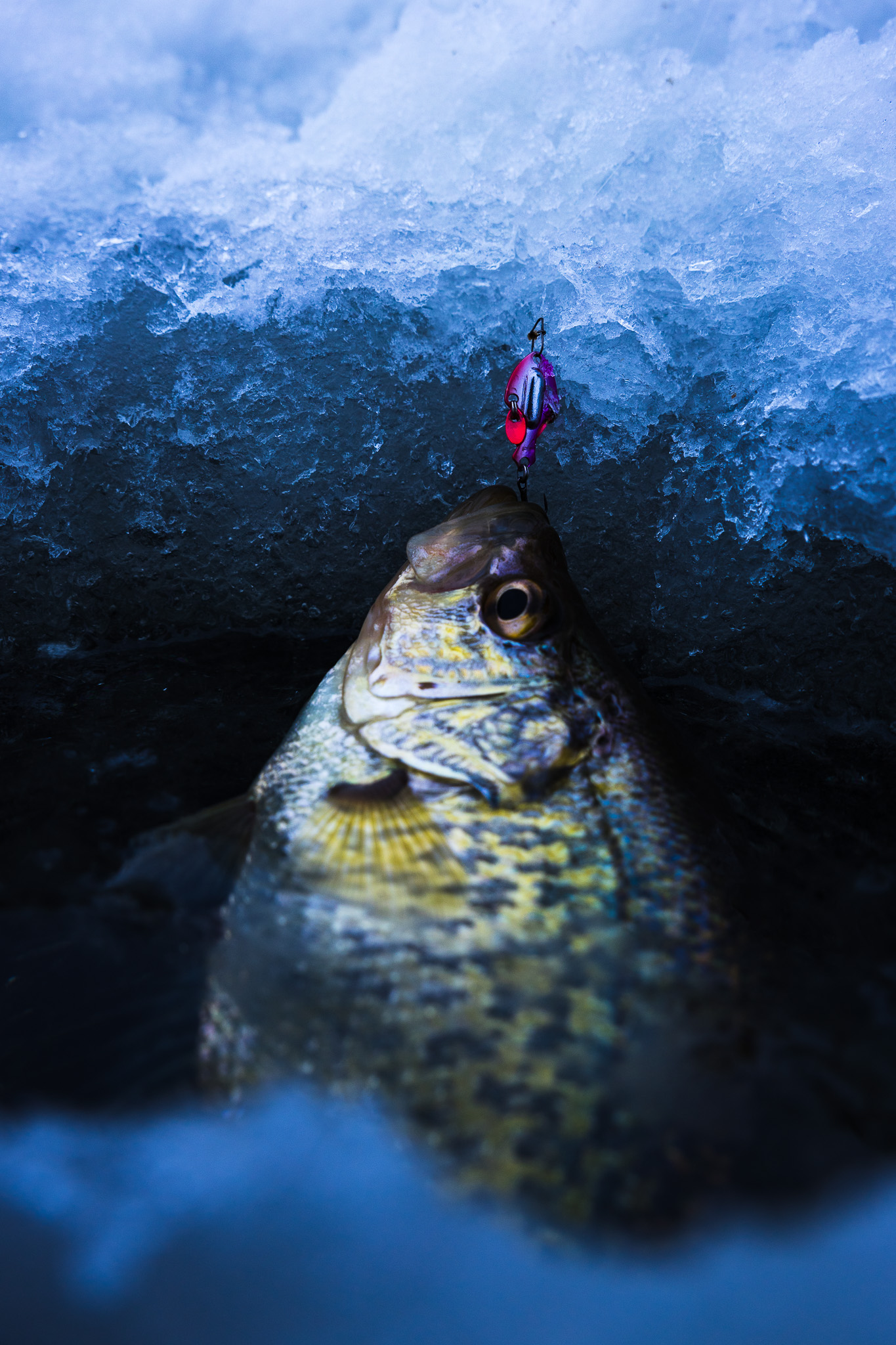
Similar to glow lures, most UV options share a similar color palette to those in the non-natural category. The differences lie in the science behind the overall finish on the lure. With the ability to reflect light, UV coatings can help lures stand out, especially in specific circumstances. Such options are hardly beneficial in situations involving adequate light (i.e, high sun) but can be a difference maker when light is less available. Take cloudy days and other lowlight conditions, for example.
A piece of advice: Rely on the correct lighting source. A number of manufacturers have developed UV flashlights and chargers which can enhance the capabilities of such lures.
Whether you believe it or not, lure color matters—at least to an extent. While a particular color likely won’t lead to magical results, certain conditions and circumstances call for specific color schemes. Understanding which scenarios call for which options, coupled with some level of confidence, can lead to more promising results on the ice.
Did you enjoy this post?
You can be among the first to get the latest info on where to go, what to use and how to use it!
