
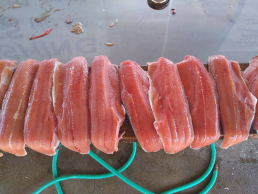
Coho Salmon in Lake Michigan
I’m old enough to remember 1966 when coho salmon were first stocked in Lake Michigan. The reason for stocking the Pacific strain salmon: massive alewife die-offs of the 1960s. I remember going down the beach at Grant Park and seeing the beach literally paved with hundreds of thousands of dead fish. They were washed up 20 to 30 yards from the water’s edge, and the smell of the rotting fish would gag you.
Alewives, also known as “river herring,” were an invasive ocean species that, along with sea lamprey eels, sounded the death knell for the native lake trout population. In response to the public outcry and high cost of cleanup, both the Wisconsin and Michigan DNR began stocking coho (aka silver) salmon. A few years later, larger Chinook (or king salmon) were added.
Coho salmon (Oncorhynchus kisutch) and the larger Chinook salmon (Oncorhynchus tschawytscha) are voracious feeders. To go from a newly-hatched fry to a mature fish weighing 12 pounds in only three years, they have to be! Radio-tracked salmon have been observed chasing schools of forage and feeding for up to 18 hours straight.
In April, the spring run-off begins warming the water as coho salmon move inshore to feed on alewives, smelt and other forage. Baitfish like smelt spawn in 44-degree water, and salmon move in for the feast. This is why shore fishing is outstanding at this time, as the water temperatures are perfect, and the fish are in close! Salmon also use breakwalls as a barrier to push baitfish up against.
The time-tested tactic of “casting one and soaking one” usually pays off. Cast a spoon or crankbait while soaking a minnow, alewife or chunk of smelt off the bottom. Cast classic spoons like Little Cleos, K.O. wobblers, or Krockodiles in blue/silver, green/silver, gold, copper or orange. I caught my first-ever cohos casting a gold Dardevle spoon off a pier.
You can be among the first to get the latest info on where to go, what to use and how to use it!
This time of year, your regular bass or walleye rod with 8- or 10-pound-test line will work just fine. Your live bait rig can be rigged on a bobber set about halfway down, or rigged with a float to stay just off the bottom. I use a modified Wolf River rig to float a minnow or dead alewife off the bottom with a small piece of Styrofoam on the hook. If rainbow or brown trout are around, you can also use a nightcrawler or a big gob of red worms.
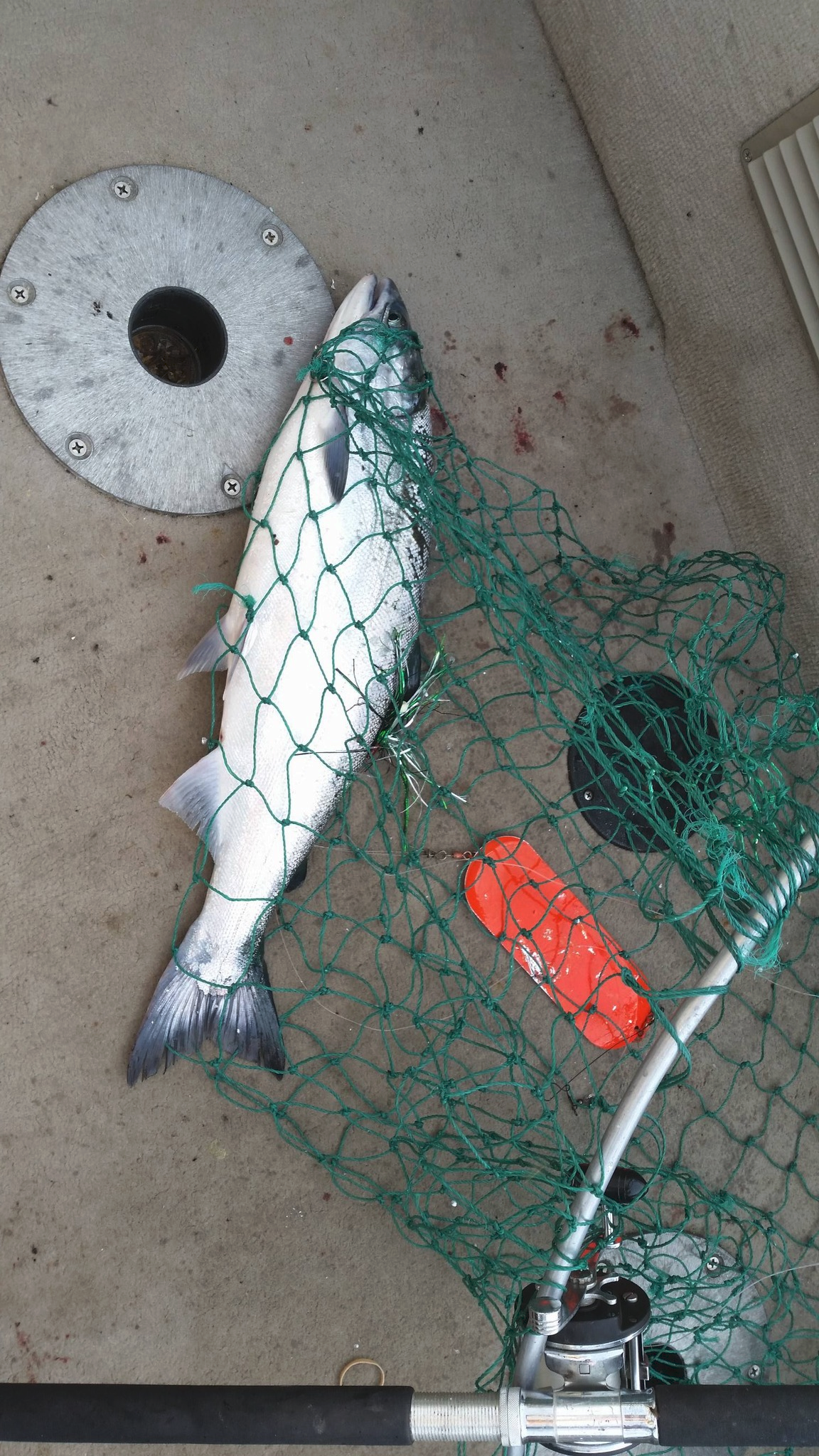
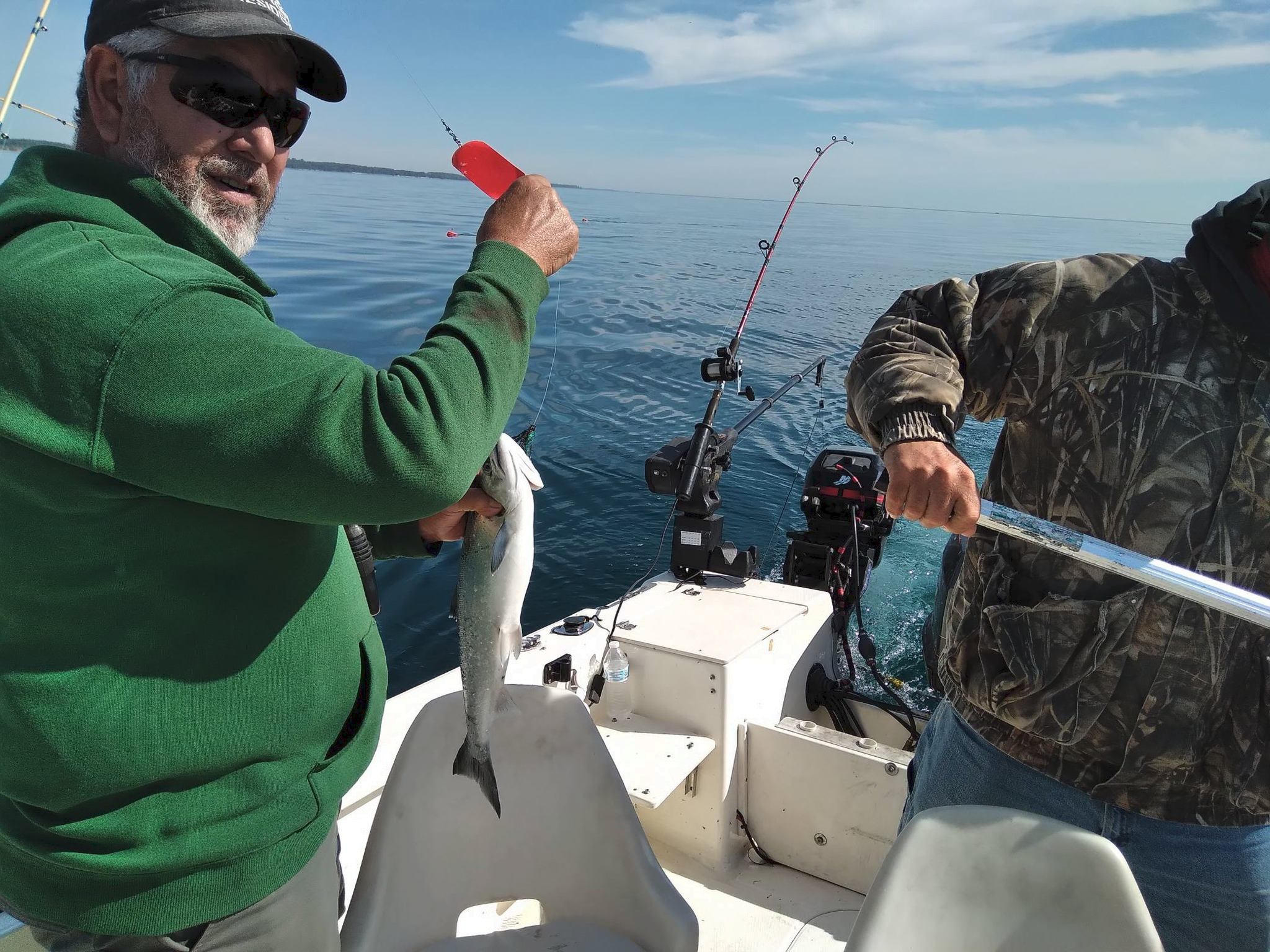
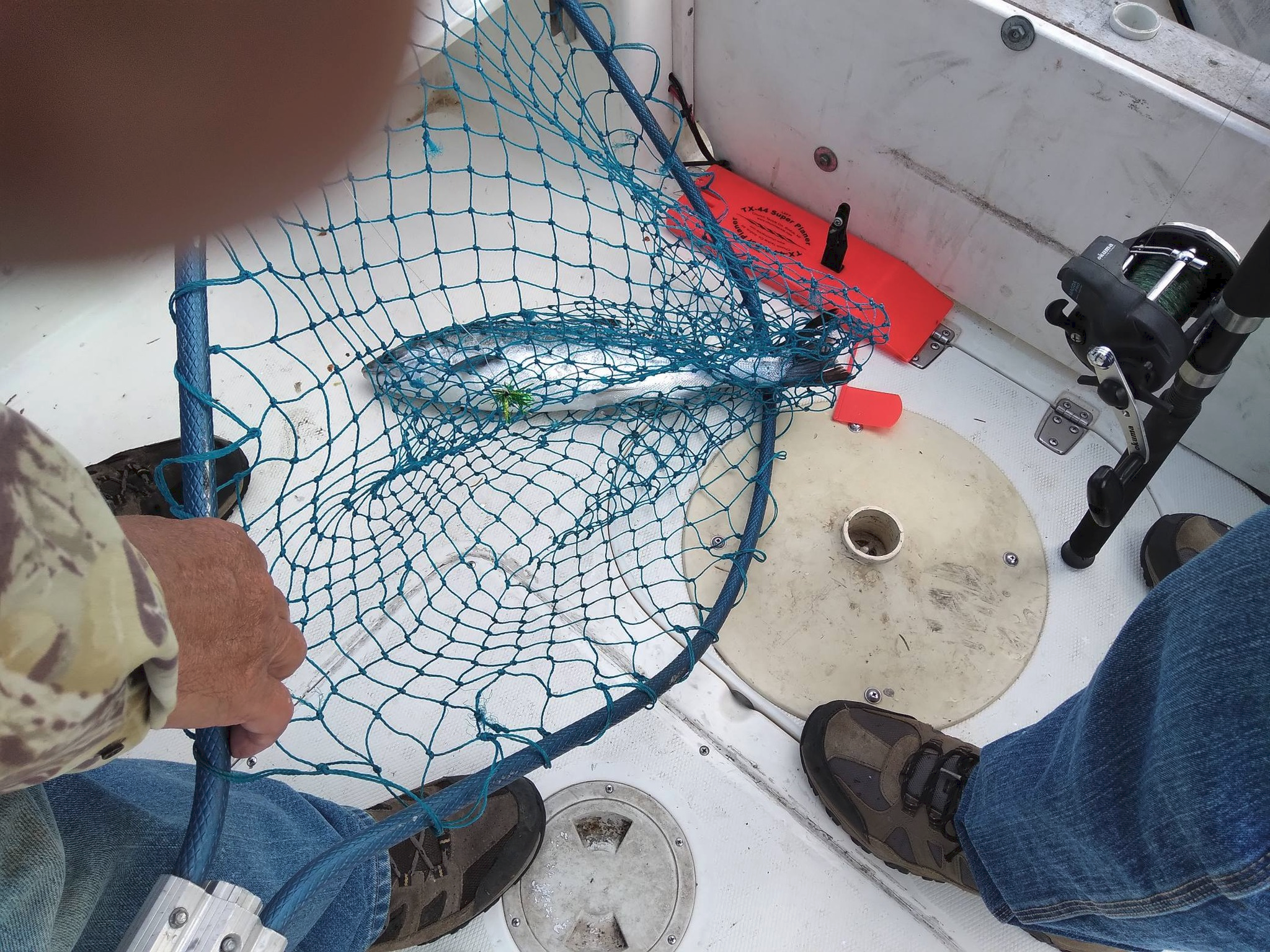
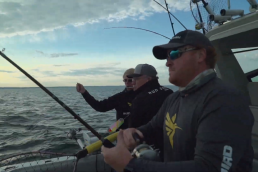
May through June are sometimes called the “amateur hour” of Lake Michigan fishing. You can launch your bass boat or duck boat and troll up a limit of coho salmon. Cold water near shore and large numbers of fish often make for quick limits. Most of these coho will be 2 to 4 pounds but are some of the best eating fish you will catch all year. Trolled spoons, stick baits, crankbaits, etc. all work, but the all-time favorite killer bait remains the orange flasher-and-fly combination. The color and size of the fly attached to the orange dodger may vary.
Early on, Peanut-type flies (basically a treble hook covered in tinsel) works well. Try various colors of fly to see what color the fish seen to favor. As the size of the salmon increases, we often increase the size of the fly. Fish will be close to the surface, so use planer boards to get your baits out away from the boat. Long flat lines with lead weights, or leadcore line set way back behind the boat, will produce trout as well as salmon.
The end of June and beginning of July has the larger cousin of the coho—Chinook—showing up. Cohos will still be around and will still make up most of the catch. The water has warmed, and anglers will have to venture out further from shore to find cool water and fish. Most fish will be caught 35 to 75 feet down. Look for the cooler bands of 50-degree water and suspended clouds of baitfish. Spoons in various colors, stick baits, and larger dodger/fly combinations all catch fish. Running planer boards still pays off; you just may need to run the lines off them deeper. Use leadcore line, in-line lead or snap weights to adjust depth.
August and September will have some nice mature coho showing up, often pushing the 10-pound-plus mark. Troll spoons and downsized versions of J-plugs, and large silver flashers with blue/green, blue/silver or green/silver full-size flies. Mature coho seem to hit the same baits their larger cousins favor, but will often be found out in deeper, cooler water than returning Chinooks. The flesh of these larger fish is still very palatable and makes some outstanding smoked fish.
October and November have mature spawning cohos entering the Lake Michigan tributaries. I’ve seen fresh coho entering a nearby creek in mid-November. If you fly fish, this is prime time to hook into a coho in its red and green spawning colors. I used to do well with a 9-foot, 8-weight fly rod using egg imitators and minnow-imitating streamers in red or purple.
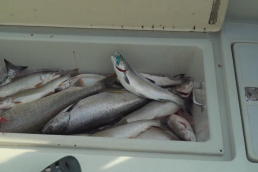
Coho will never make the long, drag screaming runs of hooked kings, but they more than make up for it in fine eating quality. Grilled, baked, broiled or smoked, they make outstanding table fare. They are a non-native species that solved an invasive species problem.
Did you enjoy this post?
You can be among the first to get the latest info on where to go, what to use and how to use it!