
Catching Cold-Water Crappies Without Live Bait
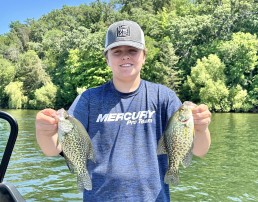
“There’s one!” called my son from the back of the boat. “Nice one?” I asked. “Not bad,” he replied as he hoisted aboard a 9-inch crappie. “I hit Spot-Lock. we’ll see if there are more here,” I told him. After about five minutes without another bite, I unlocked the MinnKota Ulterra Quest and we started slowly moving again.
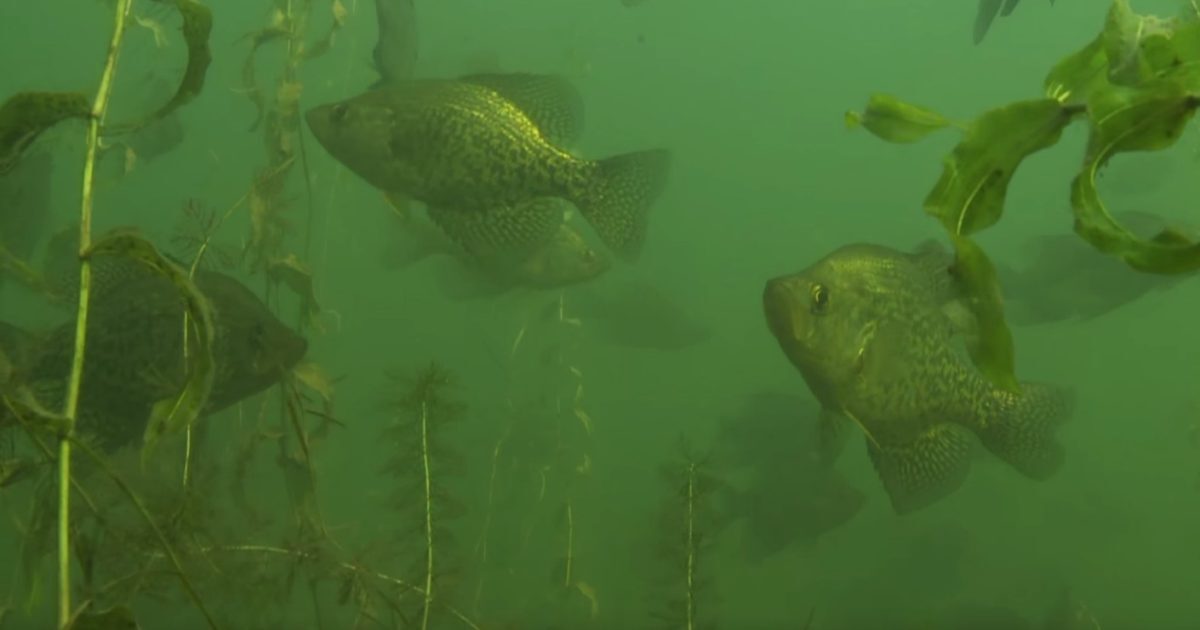
It was late April in central Minnesota, and we were fishing a large lake, looking for cold-water crappies moving into the shallows to feed. We were in a large, shallow, weedy bay, adjacent to a good drop-off to a deep wintering hole. Once the water warms into the upper 40s, crappies move to these shallow areas with warmer water and weeds, wood, or brush that minnows use as cover as they move to the warmer shallows.
We were slowly moving around, looking for cover areas that held crappies. Front -acing sonar or side-finding sonar can be helpful for this. But if fish are hiding tight in cover, you may only locate the heaviest cover spots, but still have to fish them to see if fish are present. Other times, fish may be more actively cruising around and will show up on sonar. Then the trick is getting fish that are often negative and neutral in cold water to bite.
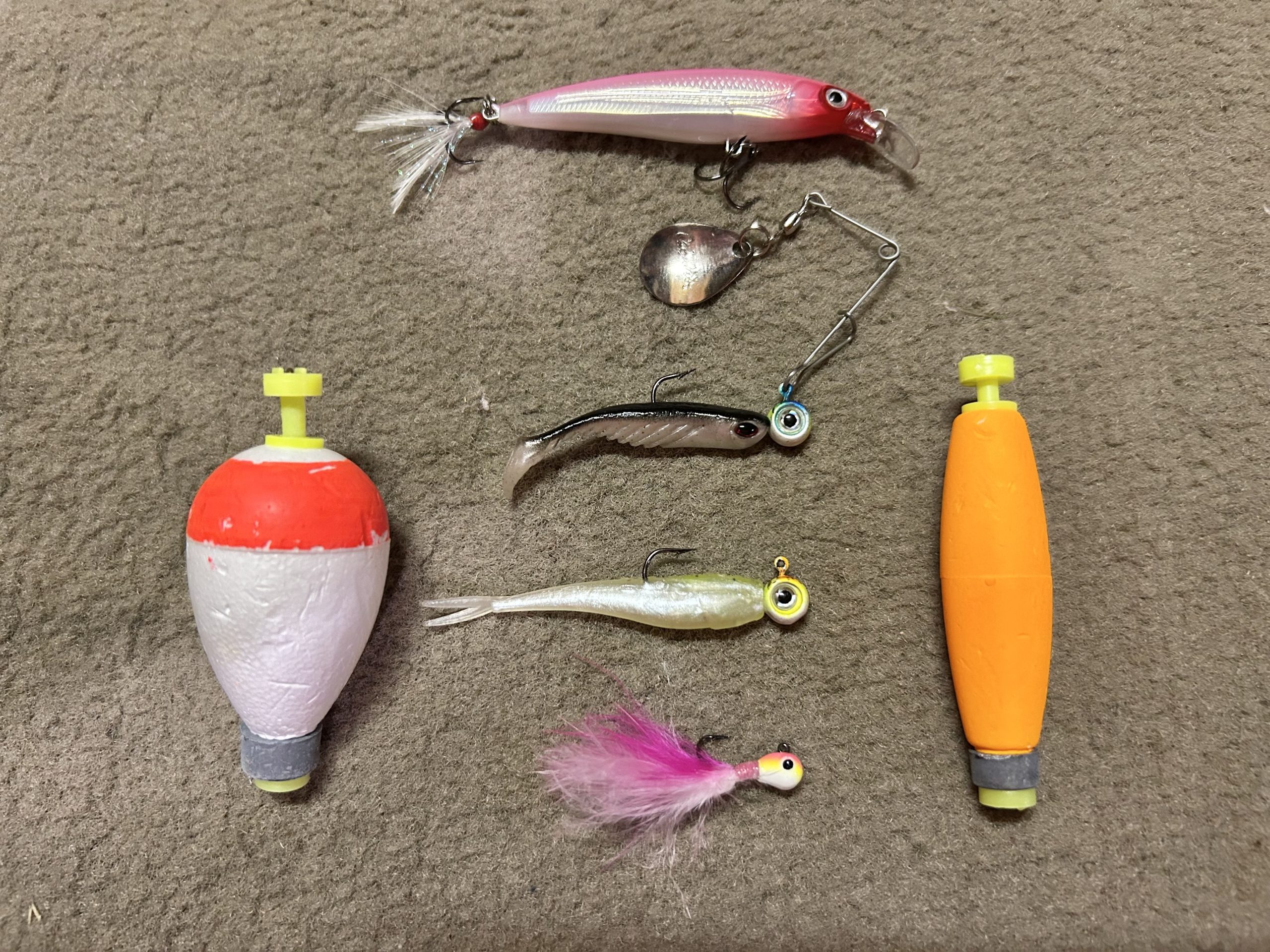
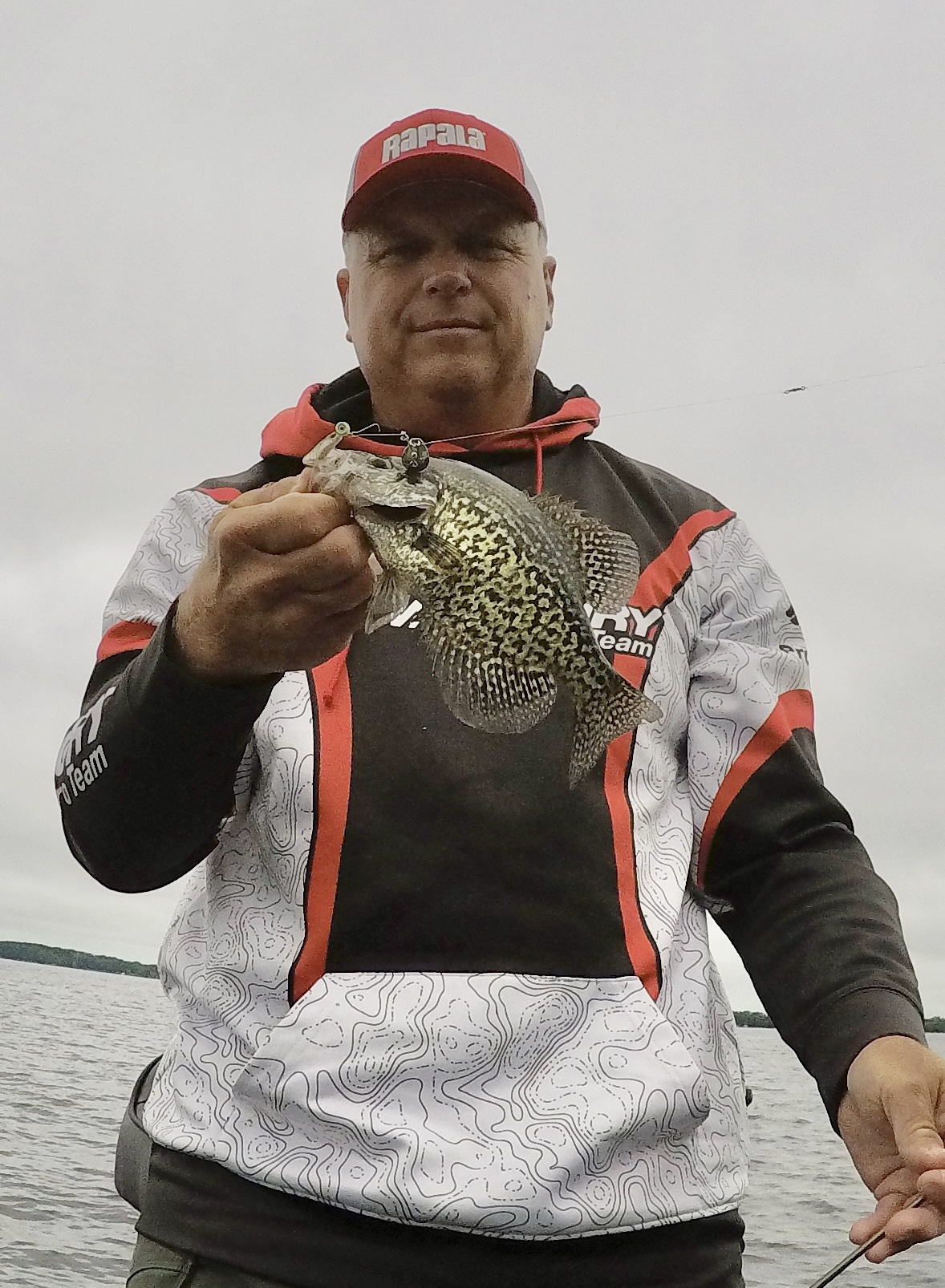
My son was pitching a small, 2-inch Rapala X-Rap jerkbait, slowly retrieving it with long pauses around areas of thicker weeds in this particular bay. I was tossing a 1/16-ounce VMC Mooneye Jig tipped with a 2-inch Berkley Powerbait Ripple Shad, suspended under a float. “Bobber down,” I told my son as I set on a crappie. “Ten-incher,” I said as I swung it aboard. “I got one, too,” he replied. We were on them.
In the upper Midwest, ice fishing is extremely popular. Winter is the favorite time of year for many anglers. But for many of us, as the days start getting longer and the ice starts to thin, the longing for being in a boat starts to weigh on us. Crappies provide the first opportunity to scratch that itch, usually sometime in April, although an early or late spring can move that up to March or back to May.
Crappies start moving from deep basin areas where they spent much of the winter into shallow bays with some type of cover. The water in these shallow bays warms first, and along with the cover of wood or weeds, attracts minnows. Crappies move into these areas to feed. A misconception is that the crappies are moving into the shallows at this time to spawn. That comes later; right now, they are moving shallow to feed and get ready for the spawn.
There are a variety of places to look for early spring crappies; it all depends on what your lake has to offer. Shallow, weedy bays are good places to start. Bays on the north side of a lake receive more sunlight and tend to warm quicker; but bays that open up from the south side of a lake get more of the prevalent northwest winds at this time blowing in to them. Wind and wave action stir up the water and help it warm quicker almost as much as sunlight exposure. So, you never know for sure where fish are present until you fish for them.
Current areas are also good places to look, especially if there is warmer water coming in to a lake from a stream, pond, or wetland. Some type of cover in the form of weeds or wood nearby makes these places even better. A large, shallow, weedy flat along the north shore of a large lake can be a good spot to look as well. All of these areas will be better if they have relatively close access to a deep, wintering area for crappies.
Also keep weather in mind. Spring in the upper Midwest can be a roller coaster of weather conditions. A harsh cold front can move crappies out of these shallow areas, causing them to suspend over the adjacent deeper water, making them difficult to catch. Warm, sunny days often provide the best fishing, with afternoon—the warmest time of the day—being the best time of the day to fish.
You can be among the first to get the latest info on where to go, what to use and how to use it!
I like to use artificial baits to search these areas for springtime crappies. Live bait can be too delicate for repeated casting, and dipping your hand into a minnow bucket on a cool, April day can be uncomfortable. I like to use small jerkbaits as search baits at this time of year.
You can fish them at almost any speed, with short or long pauses, to match what the crappies are willing to hit. A long pause, with the neutrally buoyant bait just hovering in front of their faces, is tough for crappies to resist. My hands-down favorite jerkbait for early spring crappies is the Rapala X-Rap in the 2-inch size. Silver (shad or minnow) and pink/white are my favorite colors. I fish these baits on a 6’ 6”, ultralight spinning rod and reel combo with a fast action. I use St. Croix rods with Pflueger reels spooled with 4-pound test Berkley Fireline.
Another good search bait for cold water crappies is a 1/16-ounce jig tipped with a 2-inch Berkley Powerbait Minnow or Ripple Shad with a small jig spinner attached. I use a 7-foot, moderate action, ultralight spinning combo to slow-roll this bait over and along cover to locate fish. If crappies aren’t aggressive enough to hit these search baits, they often at least show themselves, visually or on sonar, so you know they are there and require a more subtle approach. If crappies are grabbing these baits, then we hit the Spot-Lock feature to anchor and keep using these baits to catch fish.
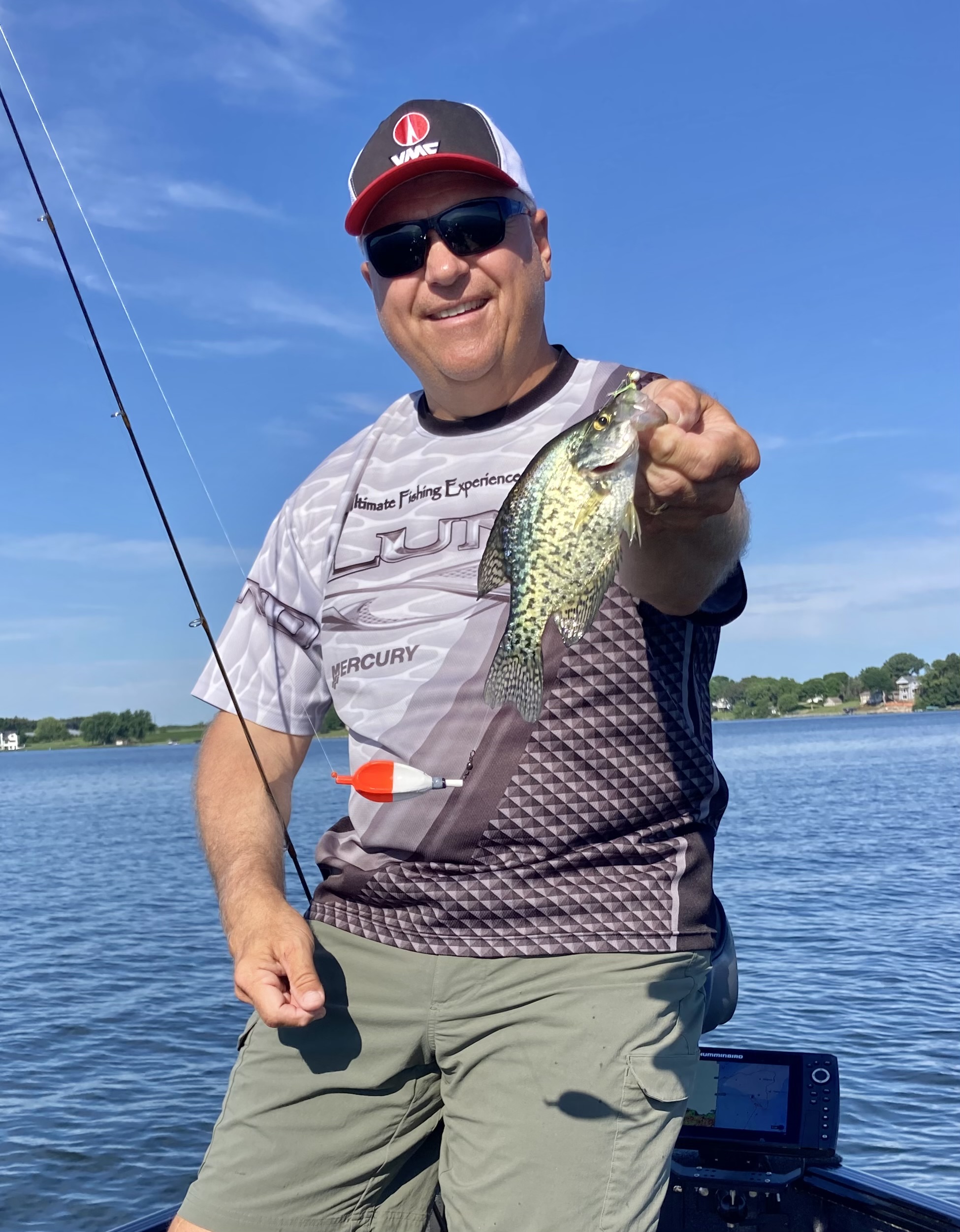
If crappies are showing themselves on the search baits, but not hitting them or short biting, it is time to go with the long-standing panfish technique of a bait under a float. I like to use a fixed float if the fish are less than 6 feet deep. This allows me to move the bait to trigger strikes or relocate around the cover, without the line sliding through a slip-float and the bait lifting up too high above the fish. Set the float to suspend your bait slightly above where you are seeing the crappies.
Under the float, I use the same 1/16-ounce jig mentioned above, tipped with the same 2-inch soft plastic offerings. I also use a 1/16-ounce VMC Roach Jig, which is a tungsten jig with hair. Crappies love hair, and this jig, due to its tungsten construction, is smaller than an equivalent-weight lead jig, which helps to entice finick fish. The advantage of this rig, as I see it, over an Aberdeen hook tipped with a crappie minnow, is durability. I can make repeated casts without having to rebait.
Also, early-spring crappies can be finicky, picking at a bait and thus pulling a live minnow off the hook, or causing you to miss a hookup. Touchy crappies can pull a live minnow off the hook without you knowing it, especially if there are waves, and then you are fishing with a plain hook until you reel in to cast to a different spot. A scented soft plastic or hair jig won’t get robbed by nibbling fish, and if you set the hook and miss a fish, you can leave it there to give the original fish, or others in the area, another chance at a hookup. With live bait, when you miss a fish, you will most likely have to reel in and rebait.
If you are like me and can’t wait to get the boat back in the water as spring approaches, think water temps in the upper 40s and above, and think crappies. In shallow, minnow-rich, warming waters you will also catch sunfish, bass, and pike as bonus fish. It is a great time to get kids out to watch a bobber go down and catch fish.
A fresh meal of crappies from cold water is tough to beat, as well. Please resist the urge to “freezer fill,” and put the larger fish back. I have caught my two largest crappies—15.5 and 16.5 inches—during this time period, using these techniques. Those fish went back in the lake, as do all crappies I catch over 12 inches, and I had replica mounts made to commemorate their catches.
Did you enjoy this post?
You can be among the first to get the latest info on where to go, what to use and how to use it!