
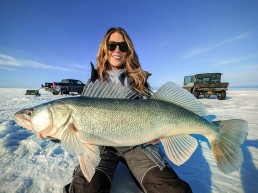
Canada’s “Sleeping Giant” Walleyes
American anglers display intriguing behavior when fishing in Canada: They tend to travel straight north from where they live, minimizing any additional east-west time and distance “wasted” reaching their destinations. Not a bad plan. But certainly not the only one.
Truth is, most of southern Canada, barring the far east and west coasts, hosts some mighty fine walleye fishing opportunities: Enough that you might consider adding a little east-west diversion when planning Canadian fishing trips in the future.
Let’s look at a little east vs. west potential, and then you make the call.
East: classic, rocky Lakes of the Canadian Shield
Eastern Canada, from about the Ontario/Manitoba border eastward, is chiefly a network of natural lakes, large and small, connected by rivers and streams that eventually flow into Hudson Bay or the Great Lakes. Rock is everywhere, from massive granite sheets to fist-sized rocks and boulders. In spring, walleyes typically move up feeder rivers to spawn on rock shoals swept by current, and later shift downstream into connected lakes.
In warmer “southern” waters near the U. S. border, walleyes often disperse to structure throughout a lake in summer, fall and winter. In colder, far-northern lakes, walleyes often cluster near river mouths/waterfalls throughout the year, because the rest of the lake is deep and cold, better suited to lake trout than walleyes. Numbers can be high in far-North lakes, but overall size is generally larger in waters farther to the south.
When fishing natural lakes for walleyes, fish shoreline points, islands and offshore humps. Cast jigs and soft plastics, or crankbaits, to windswept rocky shallows or current; vertically jig jigs and soft plastics on structure; or troll bottom bouncers and spinner harnesses dressed with live nightcrawlers or softbaits.
West: large reservoirs fed by fertile river systems
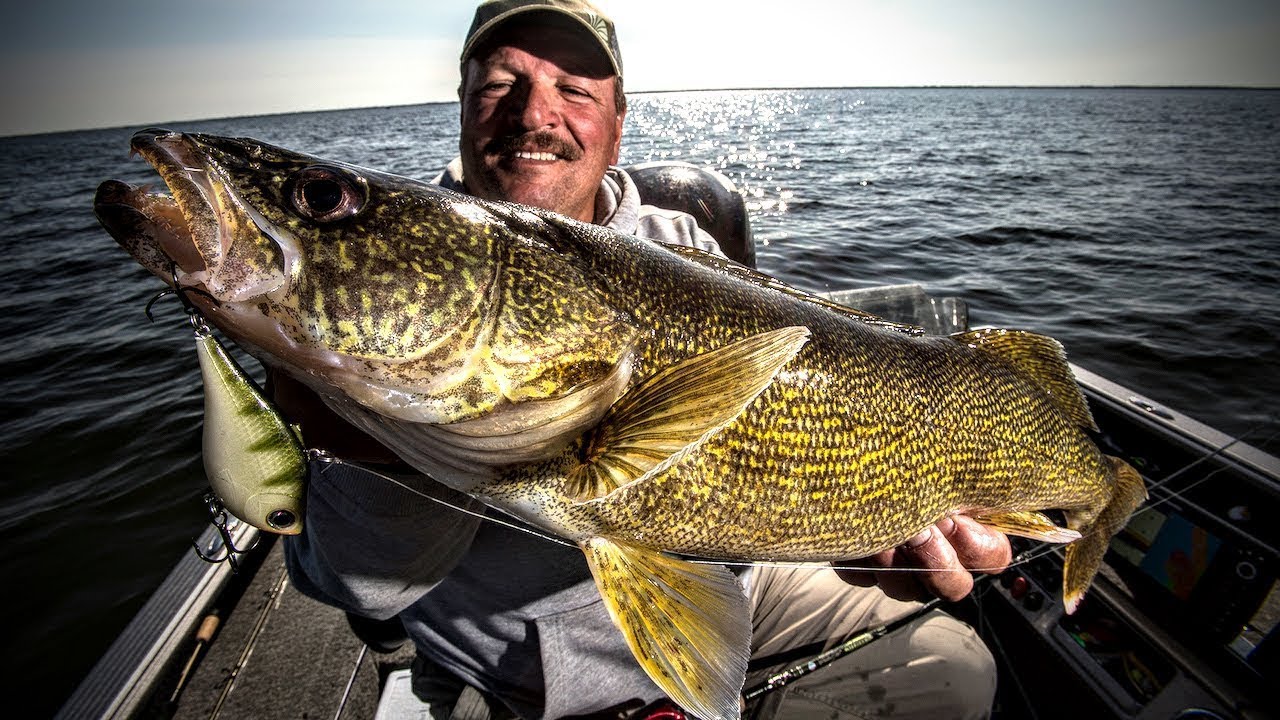
Across the prairie provinces of Alberta, Saskatchewan and western Manitoba, large reservoirs are fed by good-sized rivers, much like the Missouri River system functions in the Dakotas. Walleyes often run up major feeder rivers to spawn on rocky shoals; some may spawn along the rock riprap of dams and causeways. Fish these areas like you’d fish rocky shallows elsewhere, casting jigs or crankbaits. After spawning, fish disperse back into the main lake, often traveling long distances during the open-water season, relating to windswept shoreline points and offshore humps of modest depth.
Prairie reservoirs tend to have soft bottom and are relatively snag-free compared to the rocky Canadian Shield waters of eastern and northern Canada. Cast jigs or cranks into shallow points or humps, especially where wind-generated mudlines form. Longline troll bottom bouncers with spinner harness dressed with live ‘crawlers or softbait ‘crawler imitations. For a slower, teasing presentation, backtroll a live bait rig with a “slow death” hook dressed with a half ‘crawler.
Larger, deeper lakes and reservoirs allow a range of versatile presentations to catch walleyes: Cast jigs or crankbaits into shallows/mudlines; troll crankbaits, shallow to deep, either longlined behind the boat or using planer boards to spread lures to the sides of the boat.
You can be among the first to get the latest info on where to go, what to use and how to use it!
Trolling with leadcore line reaches deeper depths, if needed, and allows precise depth control if you need to troll crankbaits above of the tops of submerged, standing trees.
As with all waters where walleyes move deep onto classic structure, vertical jigging and livebait rigging excels. Jigging Raps/vibrating crankbaits/blade baits/jigging spoons provide additional options. But across the board, east to west and everywhere in between, jigs, cranks and bottom bouncer tactics pretty much cover your bases for walleyes in most conditions.
In general, you catch numbers of walleyes up to about 6 pounds in the far North (shorter growing season), but truly big fish are more common in the southern portions of the prairie provinces and waters of the rocky Canadian Shield.
Wall-Eyed Monsters
So, if you had to pick one body of water providing the best opportunity to catch a monster walleye—15 pounds or larger—where would it be? Let’s start with some runners-up.
The Bay of Quinte and adjacent area of Lake Ontario host some true beasts. Some say that this is the odds-on favorite to produce the next world record, which would be hard to dispute. Fish in the mid- to high teens are caught annually, particularly suspended, by trollers fishing crankbaits out in the big lake.
Currently, there is a population of very large walleyes in Lake Oahe in the Dakotas (U. S.). Fish hitting the 15- to 16-pound range have been caught in recent years, with several breaking or barely missing new state records.
Pacific Northwest walleye anglers would argue that the Columbia River running between Washington and British Columbia remains a prime candidate for producing giants, with 18 pounds the mark to beat. It’s big water with big fish for sure, but probably not for producing numbers of monsters.
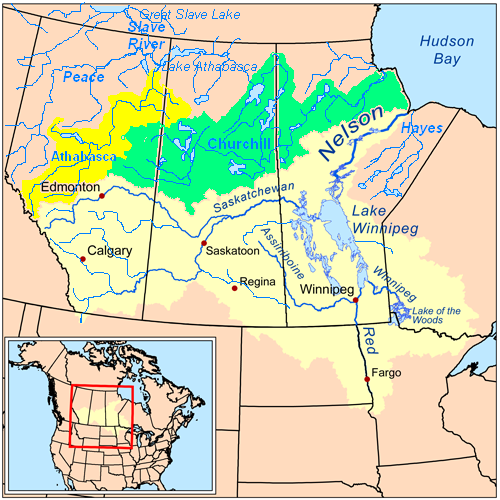
For my money… drum roll please… the Saskatchewan River system stretching from Alberta to Manitoba offers the best chance to catch a beast reaching or even topping 15 pounds. The water is ideally fertile and remains cool, but not frigid, much of the year. The result is an ideal growing climate for producing huge walleyes. Fish from this system demonstrate the genetic potential to reach outlandish proportions, evidenced by their numbers caught each year.
Trophy walleye potential kicks in around Lake Diefenbaker on the South Saskatchewan River in Saskatchewan; you could even catch a fish of this size in the river flowing through downtown Saskatoon. Things really accelerate after the North and South Saskatchewan Rivers merge, flowing into Lake Tobin—another large reservoir famed for trophy walleye gold.
Exiting Tobin, the Saskatchewan River flows east across the Manitoba border, past The Pas, into Cedar Lake. From there, it empties into vast Lake Winnipeg, which is further fed by the fertile Red and Winnipeg Rivers at its south end. Ice fishing on Lake Winnipeg annually produces too many fish exceeding 12 pounds to count, along with a remarkable number of 14- to 15-pound-class giants.
At its north end, Lake Winnipeg empties into the Nelson River system, which flows north to Hudson Bay through a network of smaller lakes, traversing a progressively colder climate with a shorter growing season for walleyes. The Nelson is no slouch for big fish, especially at its southern beginnings. But the Saskatchewan River system to the south and west remains the undisputed kingpin for walleyes in the mid-teens.
Oddly enough, even if you’ve fished for walleyes your whole life and have heard the names Tobin and Winnipeg mentioned in passing, chances are that you’ve never once heard the name Saskatchewan River amidst any of your conversations. As such, it remains the sleeping giant of the walleye world for the largest fish that swim. Tuck that little gem away in the back of your mind for further consideration in the coming seasons.

Did you enjoy this post?
You can be among the first to get the latest info on where to go, what to use and how to use it!