
Bonus Slab Crappies in Canadian Shield Lakes
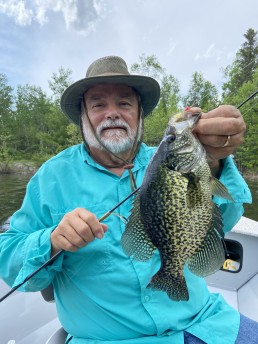
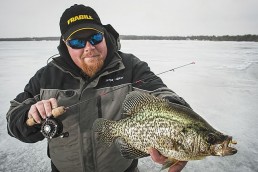
Crappies are among the most untapped species in Canadian Shield lakes lying within close proximity to the U. S. border. Big ones, too. While most anglers are busy chasing walleyes, pike, smallmouths and muskies, crappies quietly do their thing in relative obscurity.
Portions of large waters like Rainy Lake and Lake of the Woods support localized schools of slab crappies. So do many smaller waters where crappie populations are untapped. These stained-water lakes provide perfect environments to grow black crappies, but they don’t just live everywhere throughout a lake. Understanding their preferred habitat and life cycle is the key to catching them.
Crappies begin the spring season in bays, moving into reed beds in preparation for spawning. Reeds are usually abundant, so you must narrow your search to locate the right ones. Typically, the best reeds occur toward the back ends of shallow bays where the water begins to warm earlier than in deeper, outlying areas. Look for the deepest reed clumps with tangles of bent, overhead cover created by prior ice action.
Next, look into the water with polarized sunglasses for two things: 1) Thick reed cover in areas with darker bottom, as opposed to clean sand; and 2) the actual fish themselves. Males, in particular, take on a darker color near spawning time. On a calm, clear, sunny day, they stand out as dark shadows among the reeds. Softer, darker bottom provides good nesting sites as opposed to plain sand.
When you find the right combination of conditions, hover with your electric motor, anchor, or use a Minn Kota Talon or Raptor to hold the boat in place. Then lightly flip a jig and bobber combo, perhaps also tipped with a minnow, as close to the fish as possible without tangling in the reeds. Be patient. Wiggle the bait. Coax them into biting. Long spinning rods or extendable poles work great for this approach.
A classic long, thin balsa float placed about 16 to 20 inches above a 1/32-ounce jig usually does the trick. Add a small split shot in between for added casting weight. If the reeds are deeper than 3 to 4 feet, consider switching to a slip float setup. Slip floats are easier to cast without wrapping your bobber and line around reed stalks because the bobber collapses down the line to the split shot, forming a tight package, rather than a long, spindly, spider web of flailing line. Six- to 10-pound mono works great, depending on how thick the cover is.
If the reeds are sparse enough to allow casting and slowly swimming a jig without snagging, try casting a 1/16- or even 1/32-ounce jig on 6-pound braided line. A 7-foot, light-action rod allows you to cast the tiny bait far enough to reach and avoid spooking crappies in shallow cover. Perhaps add a Berkley Power Power Wiggler to the hook for added attraction.
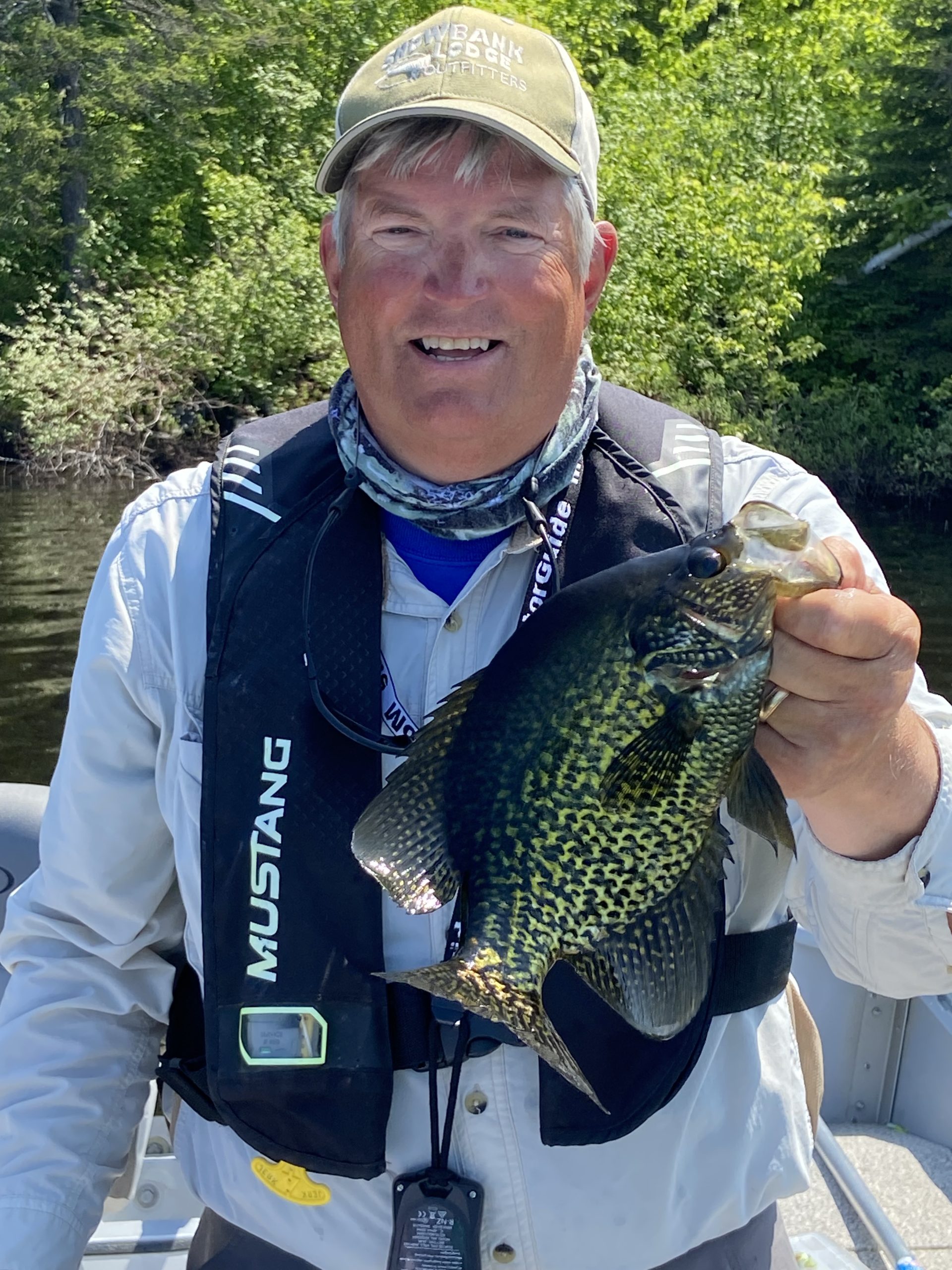
The main thing is being able to cast the lightweight offering far enough, then engage the reel, and slowly swim the jig back to the boat. Hold your rod tip up at about a 45-degree angle and lean it left or right during the retrieve to swim/steer the jig through sparse reeds, or alongside clumps. You wouldn’t think this could outproduce a jig suspended beneath a bobber, but at time, crappies respond better to this approach.
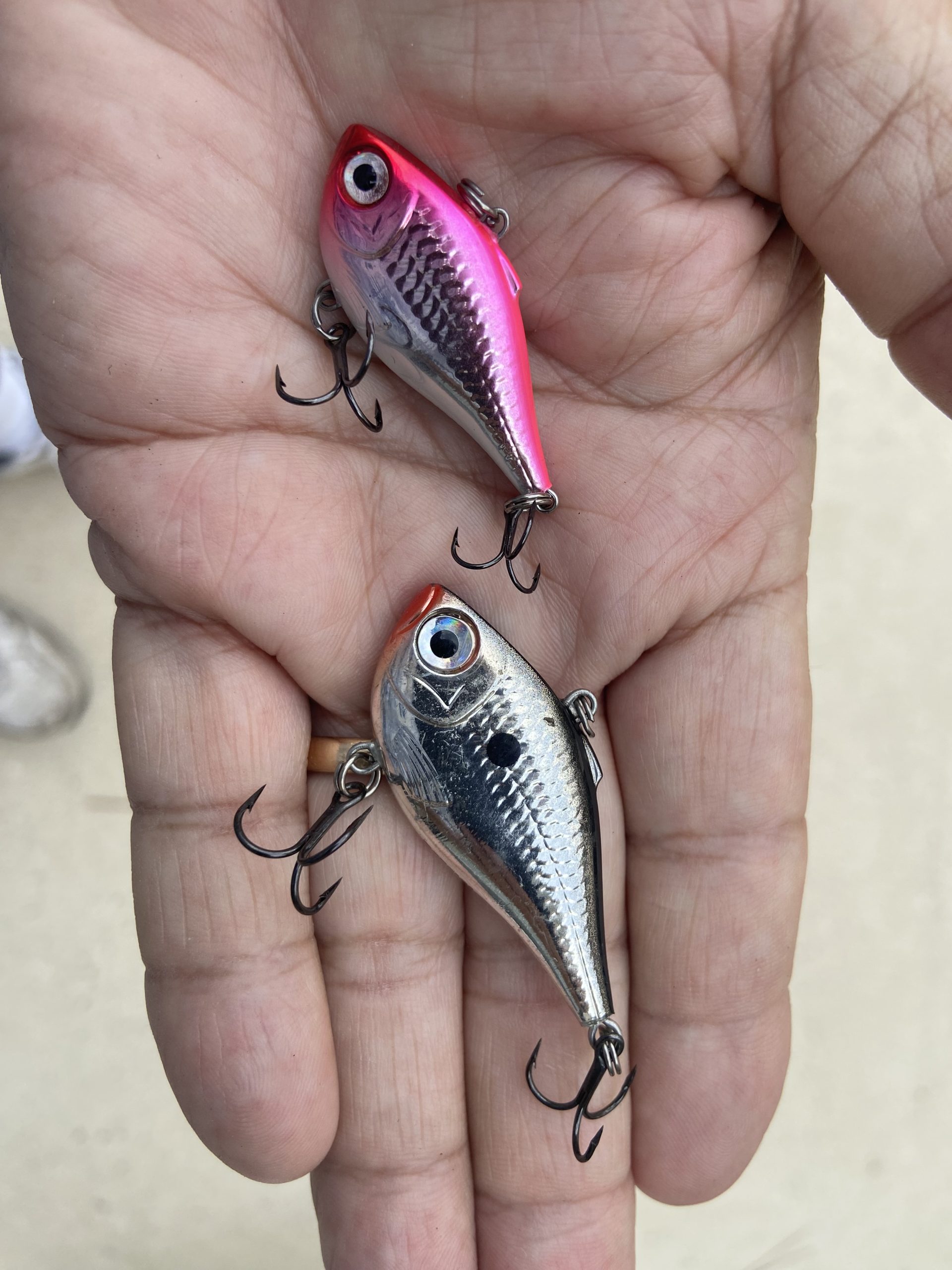
After spawning, crappies begin to dissipate back out toward the main lake, holding along the edges of deep weeds or flooded wood cover where they encounter it. You can fish the same bobber setups above the weeds or alongside flooded brush. Or try casting a small, #4 Rapala X-Rap above the weed tops and slowly retrieving it back to the boat. Tiny crankbaits work wonders on big panfish in shallow water—and for other species. Chances are, you’ll catch a mixed bag including bass, walleyes and a few pike as well.
You can be among the first to get the latest info on where to go, what to use and how to use it!
As the season progresses into early summer, expect to find schools of crappies patrolling weed edges or shoreline points out toward the mouths of coves, perhaps extending a bit out into the main lake. But generally, they don’t move too far from bays. The big, deep, open part of the main lake is more walleye/pike territory. Crappies tend to hang pretty close to the bay mouths.
At some point, loose schools of fish often drop a bit deeper and school more heavily, generally suspending somewhere around 10 to 18 feet down from the surface, over perhaps 25 to 30 feet of water. Schools are easy to spot on your electronics, appearing as large clouds of decent-sized fish around halfway down to the bottom, patrolling along the general drop-off area.
The easiest way to catch them is to hang back and cast a 1/16-ounce crappie jig out over them. Once the jig hits the water, count it down one thousand, two thousand, three thousand, etc. Most jigs of this size sink about a foot per second, so you know pretty close how deep your jig is.
On one cast, let the jig sink to a 10-count, and then slowly reel it back to the boat, holding your rod tip at a slightly upward angle. Light spinning gear of 4- to 6-pound test is ideal. On the next cast, let it sink to a 15-count, and keep experimenting until you establish the depth of the active fish. Importantly, don’t add a lot of erratic action to the jig; a simple, subtle swim works best.
Shallow humps lying fairly near bay mouths can hold crappies as well. A hump topping out at 8 to 12 feet deep is shallow enough to grown algae atop the hump, which attracts baitfish, and in turn, crappies when actively feeding. Morning and evening, cast a 1/16-ounce jig and soft plastic tail across the hump, let it sink near bottom, and swim it back.
During the day, vertically jig the same jig along the edges of the hump—particularly the shady side—paying particular attention to points, turns or wrinkles along the drop-off which may attract schools of suspended crappies patrolling the drop-off in search of minnows.
This pattern lasts all summer. After the fall turnover, the fish usually drop somewhat deeper—say, 25 to 40 feet— but seldom deeper than that. They’re also fairly tight to the bottom, rising up as much as 3 to 5 feet when active.
Again, jigs are easy to fish, but this time, use a vertical jigging approach. Lower a 1/16- to 1/8-ounce jig to the bottom, close the bail of your spinning reel, and grasp the line with your index finger. Gently raise the jig a foot or two, hold it for a few seconds above the bottom, and then repeat. If you see fish higher off the bottom on your electronics, lift the jig to or just above the level of the top of the school, and hold it there. Chances are, you’re going to get thumped! Tip your jig with a small crappie minnow for added attraction if the fish aren’t actively biting.
For a faster approach, use a small, #5 or #7 Jigging Rap, which is a heavy lure despite its small size. Add a barrel swivel into the line about 16 inches above the lure to minimize line twist. Then drop it to bottom, engage your reel, and give the rod tip a short upward sweep to snap the lure straight up off bottom. It’ll reach the top of the arc, and then plummet back to bottom. Repeat. Vertically jigging #5 Rippin’ Raps triggers similar results. Both lures are likely to produce walleyes and smallmouth bass as well.
One of those times when you go to snap, the line will be heavy. Fish on! Strikes usually occur as the lure falls back to bottom, or as fish pick it up off bottom when it’s at rest. Don’t be surprised if you catch loads of walleyes and smallmouths doing this, too! The action lasts all the way up to ice-up—and past that—although few folks seem to pursue crappies through the ice on these waters.
In early winter, look for fish to be near the mouths of bays, progressively moving father back into them as the winter draws on. By mid- to late winter, expect the fish to begin rising higher off the bottom again, suspending midway down. Deeper holes in shallow bays can collect a lot of fish right up until the time when the ice leaves the lake and crappies begin making early pre-spawn movements in search of suitable reed cover, first to feed, and then to spawn.
Did you enjoy this post?
You can be among the first to get the latest info on where to go, what to use and how to use it!