
Bluegill Fever During the Walleye Opener
The sights and sounds of fishing on open water are the perfect bookends to first ice, and spring open water is the ideal time to cure cabin fever. As winter turns to spring, anglers start thinking about chasing post-spawn walleyes. Boats come out of storage, and every detail is checked off before the first launch of the open-water season.
Your checklist might include Northland tungsten jigs, plastics, shiners and waxworms. What? Waxworms? Even with the walleye opener upon us, some anglers dream of bluegills before any other species, no matter the season.
There’s a reason for that. Bluegills may be small, but their fight is mighty! It’s a thrill to use an ultralight rod to catch this small, colorful fish that battles like big fish. When hooked, bluegills spin again and again, using their entire body to fight, making for an exciting day on the water.
Spring habitats
Bluegills favor warm water where cover and food are abundant. In spring, shallow water areas with mud bottoms warm quickly and draw bluegills in like a magnet.
Emergent weeds such as cabbage, coontail, and milfoil create edges that provide concealment from predators like bass, northern pike and walleyes. Last year’s dead, wild rice stalks are slightly woody and do not give off toxins. They create a forest of thin stems and leaves, like an abandoned hayfield, holding plenty of bite-sized insects.
Logs and beaver dams also attract bluegills. Beavers pile branches along their dams to eat the tender bark and buds, leaving behind a construction mess that’s perfect for bluegills. ‘Gills hold in the beaver’s run—the ditch that beavers dig while packing mud into the dam. These areas are best to fish when the beaver is resting or away from the dam.
The edges beneath floating bogs made up of cattails and peat moss can also hold bluegills.
Creeks, boat harbors and small bays on a chain of lakes are great spring locations. Corners that fill with summer weeds are also good starting points. Many spring bluegill spots are areas that remain protected from heavy wave action later in the season.
Not all lakes are the same. Some lack muddy areas, bays or creek mouths, but may have weed beds, shoreline depressions, or inside edges of bulrushes and king grass. On other lakes, bluegills may hold near crumbled rock shoreline points with an inside, soft-bottom edge. One constant is warm water when the rest of the lake remains cool. Water temperatures of 50 to 60 degrees F make bluegills come alive. They can still be caught in the 40s, but anglers should remain focused on areas that are warmer than the rest of the lake. During spring cold fronts or heavy winds, bluegills often drop a little deeper. I find most in 3 to 5 feet of water, though on flat, warm days, they may move into just 1 to 2 feet.
On calm days you may notice tiny dimples, like micro raindrops on the water’s surface, as midge flies emerge. This insect is an important food source for bluegills from spring through fall, with the largest groups in June. The shallows also fill with schools of minnows of all sizes. From now through spawning and bedding time, bluegills will not pass up a minnow small enough to fit in their mouths.
Tactical approach
In skinny water, I tilt my outboard motor up high enough to keep the prop from catching wild rice or floating vegetation. I cruise slowly with my Minn Kota down and Side Imaging set at 70 to 100 feet, looking for circular shadows on my Humminbird Xplore. When anchored, you will still see shallows on your scrolling screen. If bluegills are active and moving, you might also spot bass, pike, or crappies in your pursuit. MEGA Live 2 will also spot the fish between weed clumps. Before leaving home, I mark likely spots in the One-Boat Network app on my phone and Bluetooth them to my Xplore unit to save time during the search.
I power my electronics with an Amped 12-volt, 160-amp-hour battery, while my Minn Kota runs on a separate 36-volt battery. I also keep a Fish Armor Shuttle on the passenger side of the boat so guest anglers can use a Humminbird Xplore with MEGA Live 2 mounted on a Fish Armor Pro Pole.
You can be among the first to get the latest info on where to go, what to use and how to use it!
When I find fish, I use Spot-Lock. If the water is really skinny, I drop my Talon shallow-water anchors and cast from a distance. For water less than three feet deep, I prefer clip-on bobbers because they’re easy to remove if I want to fancast the area.
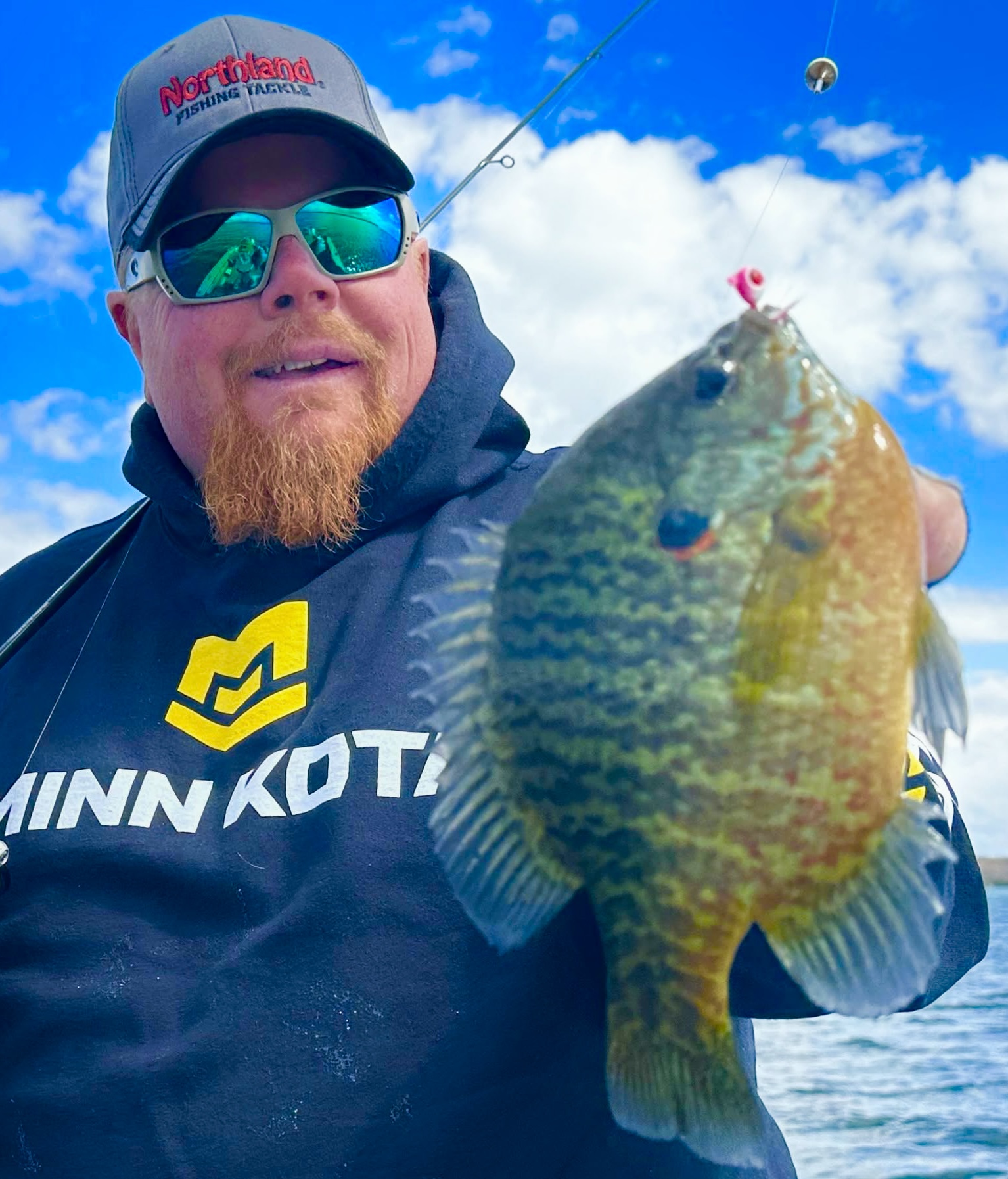
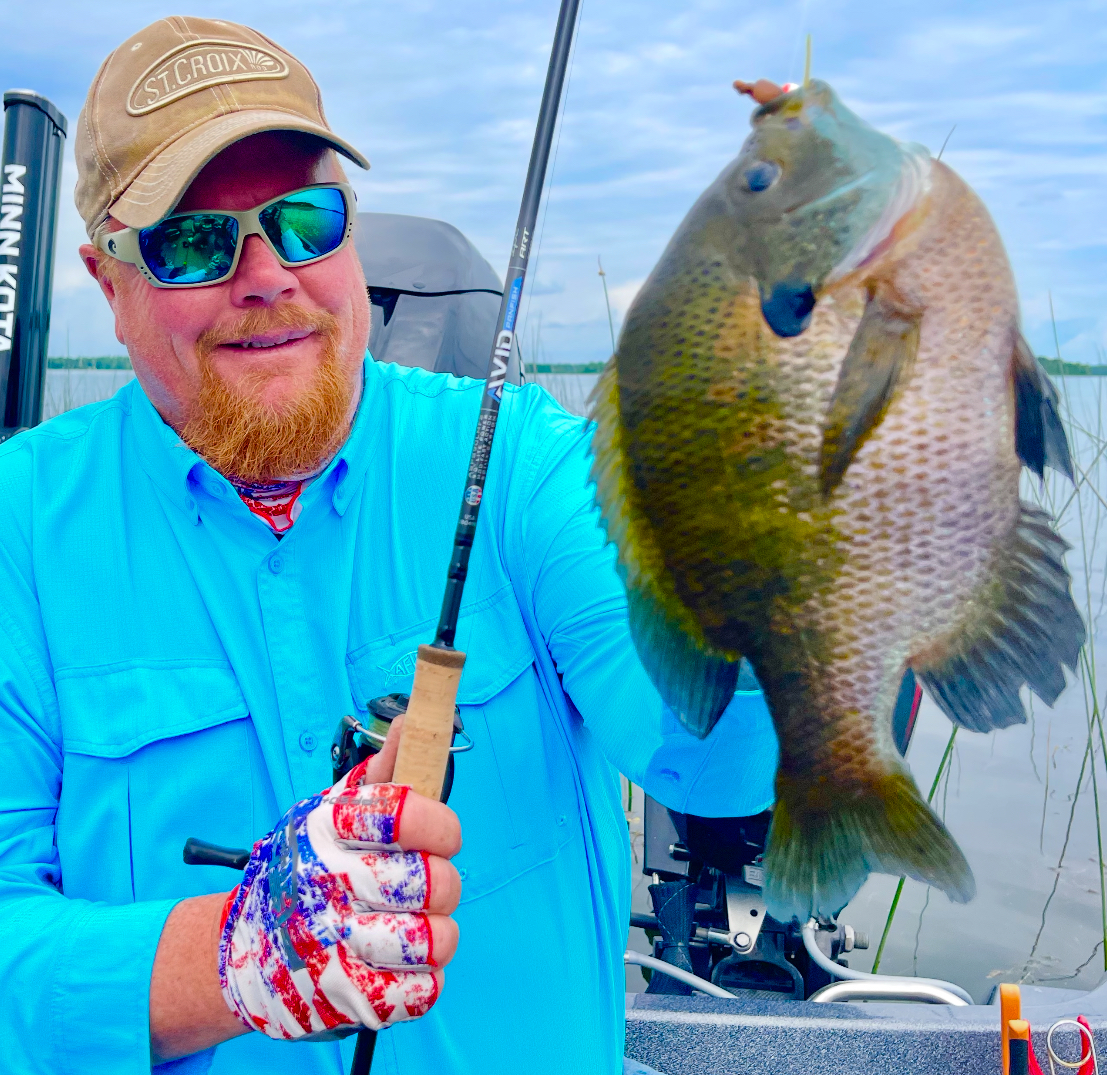
My go-to jigs are Northland Tungsten Crappie King Flies in 1/16-ounce and Fire Fly Jigs down to 1/32-ounce. If it’s windy, I’ll increase to a 1/8-ounce jig. The key is using ultra-thin, braided like Sunline SX-1 8-pound, which cuts through the wind for long casts. I tie on a segment of 3- to 4-pound Sniper fluorocarbon to avoid spooking fish in clear water.
My rod is a St. Croix Legend Elite Panfish, 6- to 7-foot length, paired with a Seviin 750 GS reel. A light rod and light line level the playing field between angler and fish. Bluegills have binocular vision and can be difficult to coax into biting. Their vision helps them survive on tiny foods such as zooplankton, bloodworms, freshwater shrimp, and a long list of aquatic insects.
When pitching a bobber, give it small micro-hops, just enough to tip the bobber sideways, and then reel in the slack. If there’s no strike, let it sit for a moment. Tip the jig with one or two waxworms or a small chunk of ‘crawler. When bluegills turn on, it’s a fantastic experience.
Bro Pro Tip: Spring weather can be unpredictable, so I always wear my AFTCO Reaper Hoodie and keep a Barricade rainsuit packed and ready in the boat. I also use Fish Monkey Stubby Guide Gloves. The PVC grip keeps a light rod secure in your hand and protects against sunfish spines.
Sunfish or bluegill?
Bluegills are impressive little fighters, and they grow big in the North Country. Don’t be surprised if you hook a plate-sized bluegill, pumpkinseed or hybrid sunfish. They’re all members of the sunfish family.
Bluegills are slightly yellow with hints of purple, and males have a red breast. Pumpkinseeds are very colorful, displaying shades of orange, green and yellow. Hybrids are slightly tiger-striped and mostly reddish in color. Pumpkinseeds and hybrids rarely exceed a pound. Bluegills can reach 1 1/2 pounds, and they may even push two pounds on rare occasions.
For harvest, it’s best to keep medium-sized fish under 9 inches. This helps maintain healthy population dynamics and allows larger bluegills to continue growing. Take a photo and release the bigger ones; a forkful of meat isn’t worth stunting the bluegill population on trophy lakes.
Incidental Catches
While chasing bluegills, expect to catch other fish such as crappies, largemouth bass, pike and walleyes. Anglers aren’t the only ones who enjoy a bluegill dinner. Bluegills are on the menu for every larger predator in the lake.
Landing these predator fish on light finesse gear is a real feat and adds excitement to your bluegill outing. Don’t forget to bring a few Fire Ball jigs and shiners so you can switch gears for some walleye fishing if you want a break from the bluegill action.


Did you enjoy this post?
You can be among the first to get the latest info on where to go, what to use and how to use it!