
A Walleye-Catching Mecca
TV producer Tim Pumper and I rolled north through Ontario last September, excitedly looking forward to a return trip to Showalter’s Fly-in Outposts. Our anticipation heightened, knowing we’d be fishing an entirely new lake that proprietor Eddie Showalter recently added to his lineup. This region of Northwest Ontario, about four hours north of the border crossing in International Falls, Minn., is loaded with awesome fisheries throughout, with walleyes and northern pike the primary target species.
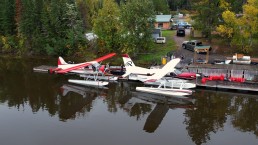
Operating out of their floatplane base located in Ear Falls, Ont., Showalter’s shuttles guests to 18 different outpost lakes located from 45 to 160 air miles from base. Over the decades, I’ve enjoyed “the outpost experience” at many of these fish-filled hotspots, lakes instantly recognizable to existing guests: Hammerhead, Pine Needle, Action, Cherrington, Carroll, and Irwin, among others.
Anglers who choose to make Canadian fishing trips part of their lifestyle know that the memories are many and they last a lifetime. Some of my fondest experiences are of bringing my sons on various Canadian trips—from drive-ins, to boat-ins, and especially the thrill of fly-in fishing trips. There’s no substitute for flying over the vast wilderness, in some areas more covered by water than land masses, to be dropped into a remote destination. Having an entire lake to fish just for yourself and your group, and the only cabin on a 10-mile-long lake, is hard to beat!
Exploring new fisheries is always fun. While paper maps marked with fishing hotspots and shallow-water hazards always always provided for outpost lakes by the outfitter, new technology adds a lot to the discovery process. My portable Humminbird unit is a must-have, loaded with a Zero Lines SD Card so I can build my own maps on the go.
The card features the outlines of all the land and water masses in North America. With the transducer properly mounted on a 14-foot or 16-foot outpost boat, I can run at full throttle and still get a strong bottom return, utilizing Humminbird’s AutoChart feature to build a full-color map on the blank SD card. In my mind, it adds a nice safety feature as well, because when boating on unfamiliar, uncharted lakes, the map appears so quickly on the screen that it helps anticipate upcoming shallow water, providing advance notice to slow to idle speed.
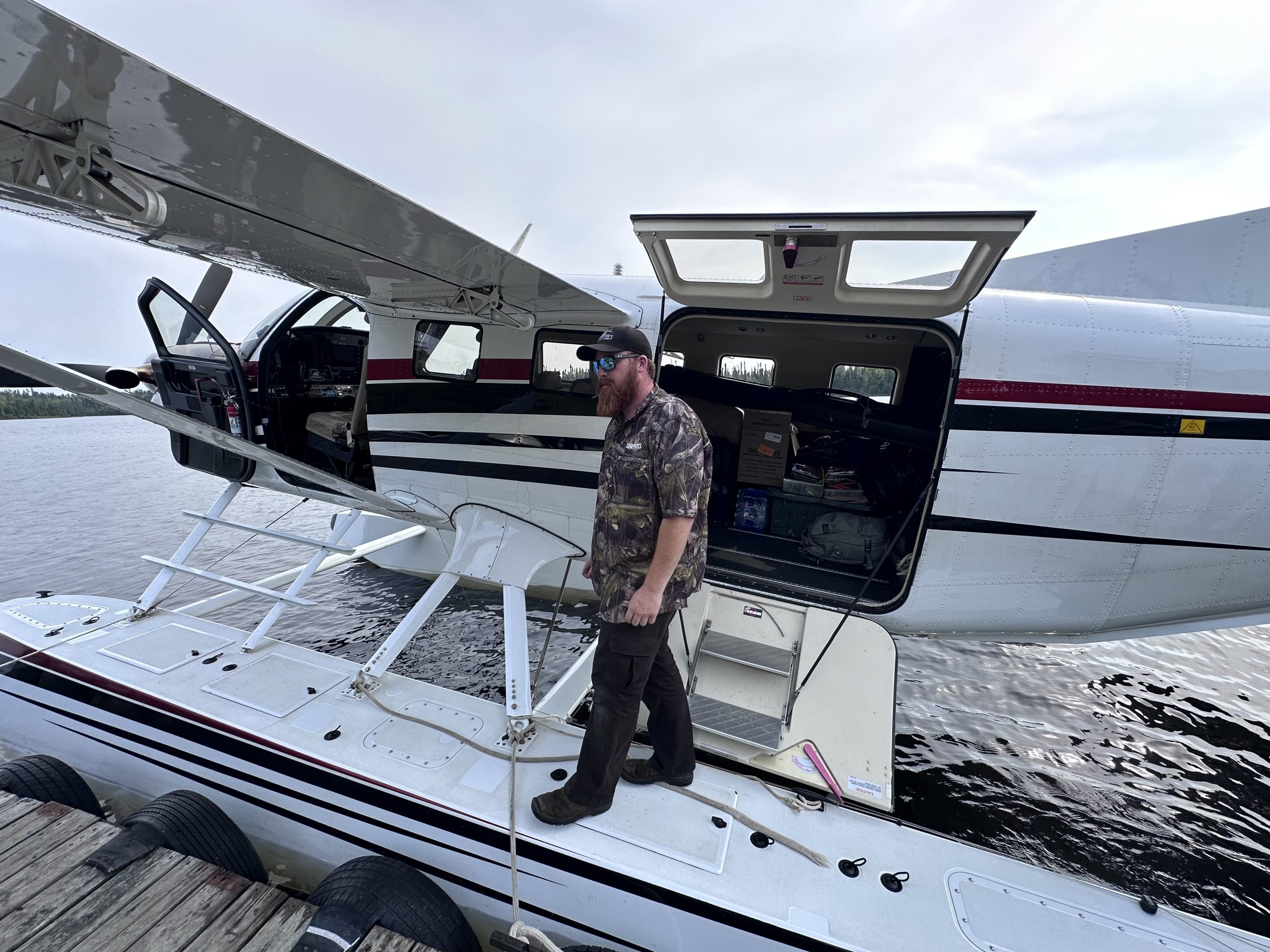
An awesome new addition to the Showalter’s floatplane fleet is a Daher/Quest Kodiak 100, a large, comfortable, modern airplane powered by a 750 hp PT6 Pratt & Whitney turbine engine. Fast and quiet, this aircraft accommodates up to eight anglers with gear, quickly delivering guests to outpost lakes at airspeeds of 160 mph. The existing Showalter’s floatplane fleet also includes a DeHavilland Beaver, twin-engine Beechcraft 18s, and a Cessna camp check plane. New in 2026, Eddie Showalter is adding a second Kodiak 100. Simply put, his guests will be transported more quickly and efficiently to and from their chosen outpost lake than ever before.
You can be among the first to get the latest info on where to go, what to use and how to use it!
Once we were dropped off at the new lake, Producer Tim organized his camera gear while I assembled some St. Croix rod and reel combos and loaded a couple of tackle trays into our boat. Time to explore a new lake! With a marked paper map in hand, AutoChart enabled on my Humminbird, and a full tank of boat gas, it was off for a day on the lake. Like most Canadian lakes, this one featured fantastic structure—rugged shorelines, long tapering underwater points, and mid-lake reefs—some shallow and some deep. I held off on fishing right away, preferring to get an understanding of average depths (and most dominant depths) throughout the lake, how steep the breaklines were, and a basic understanding about navigation in some spots. Such as, in a narrow, neck-down channel between two basins, is the water 3 feet deep or 10 feet deep? Can I run through at full throttle, or do I need to slow to idle speed? How much current is there? Are there any waterfalls or current inflow/outflow in areas where I see creeks indicated on the map?
Blessed with glorious mid-September weather—bright blue, sunny skies, light winds, and a stable forecast for the duration of our trip—I expected to find walleyes both shallow and deep. Canadian lakes in general, but especially remote outpost lakes that only experience a tiny amount of fishing pressure annually, are usually fish-filled and provide nonstop action. Tim and I scouted, bouncing from spot to spot and catching walleyes at most of our spots. Soon, a pattern emerged. Gradually-tapering points, mostly “main-lake” areas near the deeper basin areas, and depths between 17 to 25 feet were most productive locations.
Hoping for a shallow casting bite (with small swimbaits or jerkbaits/crankbaits—among my favorite ways to catch walleyes), I also checked a number of shorelines and shallow reefs. However, lacking wind, there was no incentive to pull gamefish shallow to feed, so I focused on shorelines and points featuring those 17- to 25-foot food shelves.
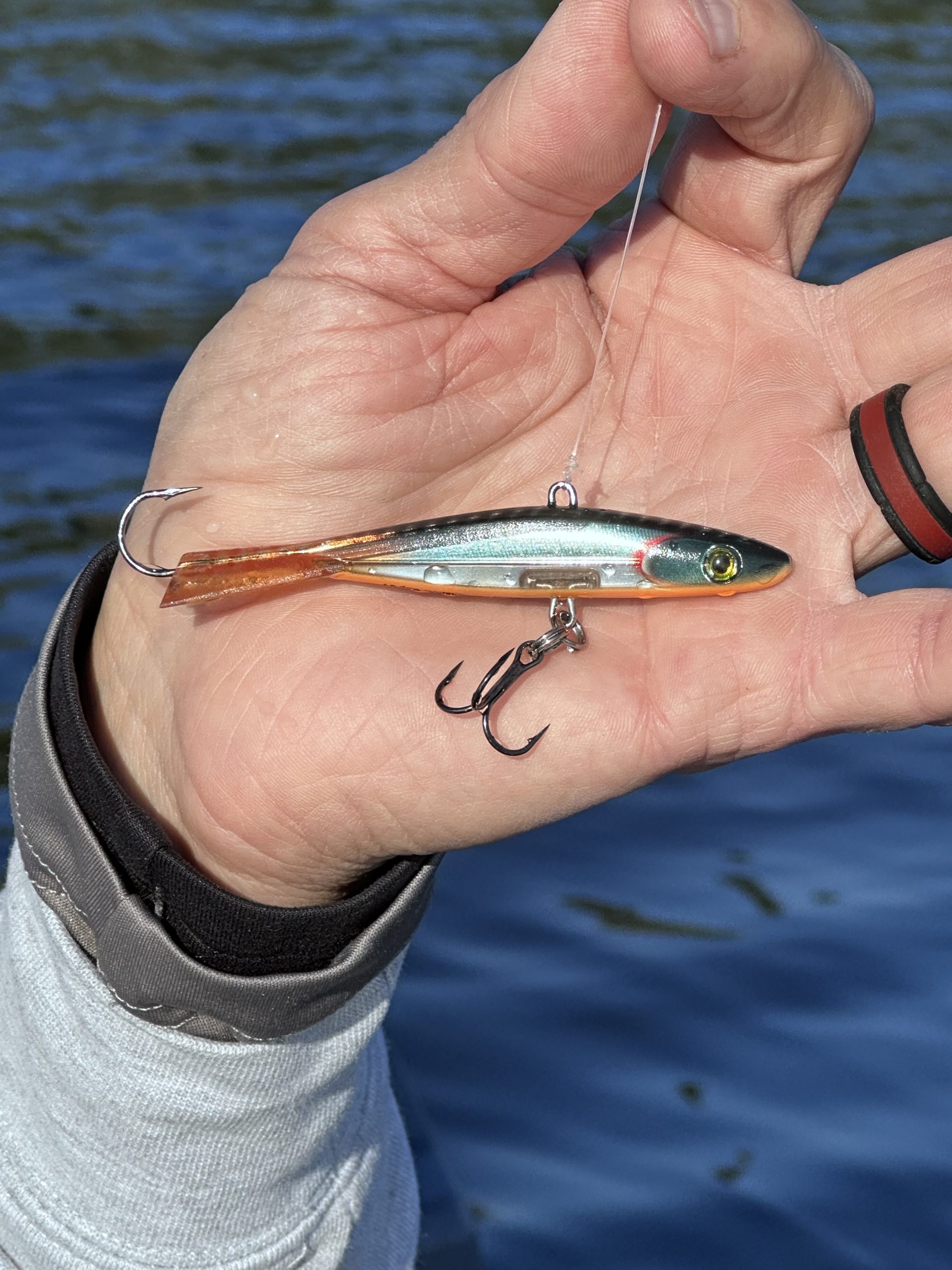
The days of me transporting and caring for live bait on extended Canadian fishing trips are pretty much over. We did pack in some containers of frozen shiners—always good to have on hand as a back-up—but it’s so easy to catch walleyes on artificials at these outpost lakes that it’s become my preferred fishing method. Jigging Rapalas—both the go-to #7 size and the #9—are a key choice. For this trip, I also brought the brand-new #11 size, and soon discovered the walleyes especially liked the green tiger UV color pattern. Jigging Shadow Raps was a nice alternative as well, offering a fatter profile and slower fall rate.
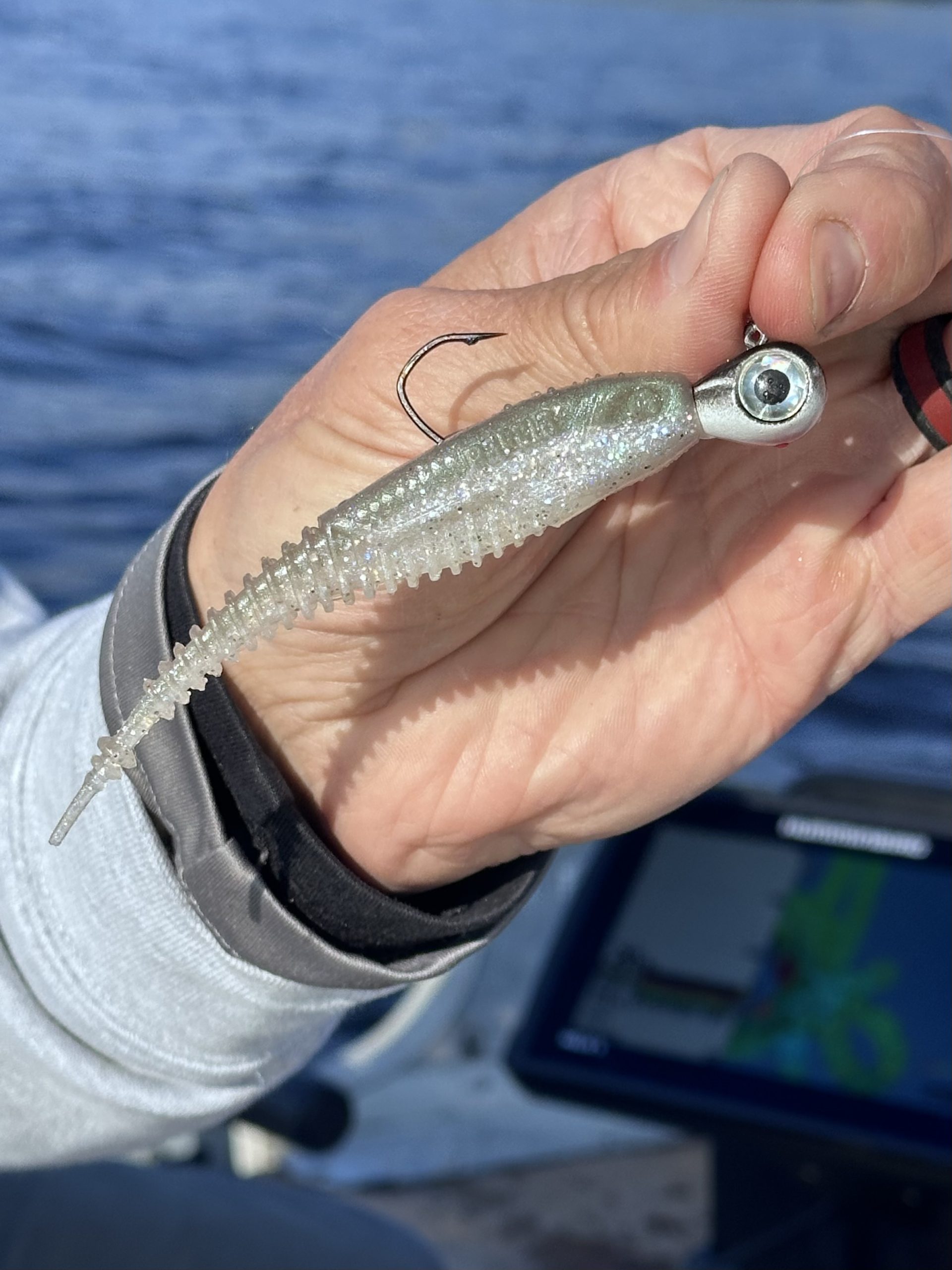
Another artificial lure for targeting deeper walleyes that produced some nice fish was a VMC Sleek Jig rigged with a Crush City Freeloader in green shad. This soft plastic is infused with salt and scent for added attraction, and the bulky profile is ideal in fall when walleyes are fattening up for winter and seeking larger baitfish.
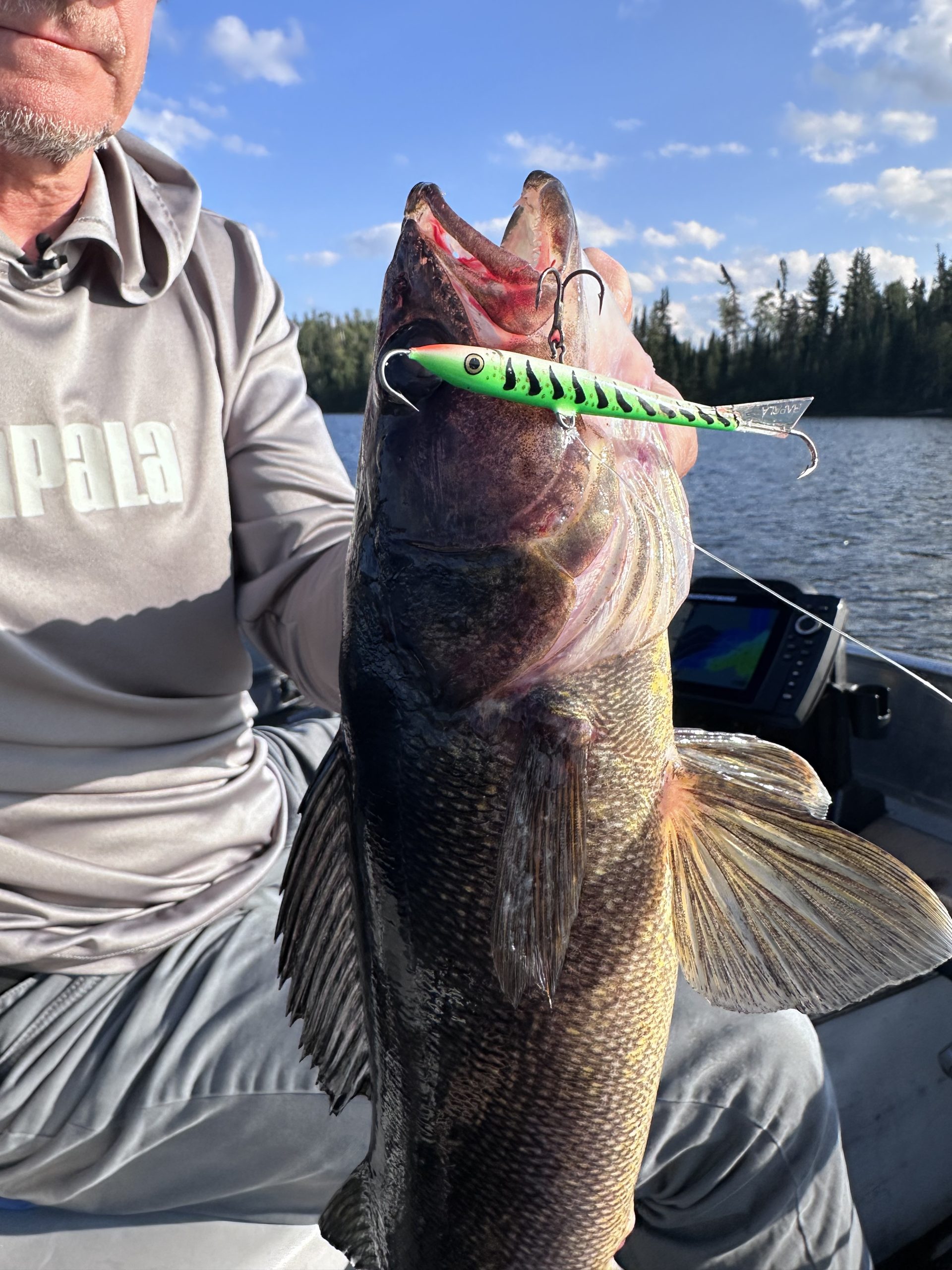
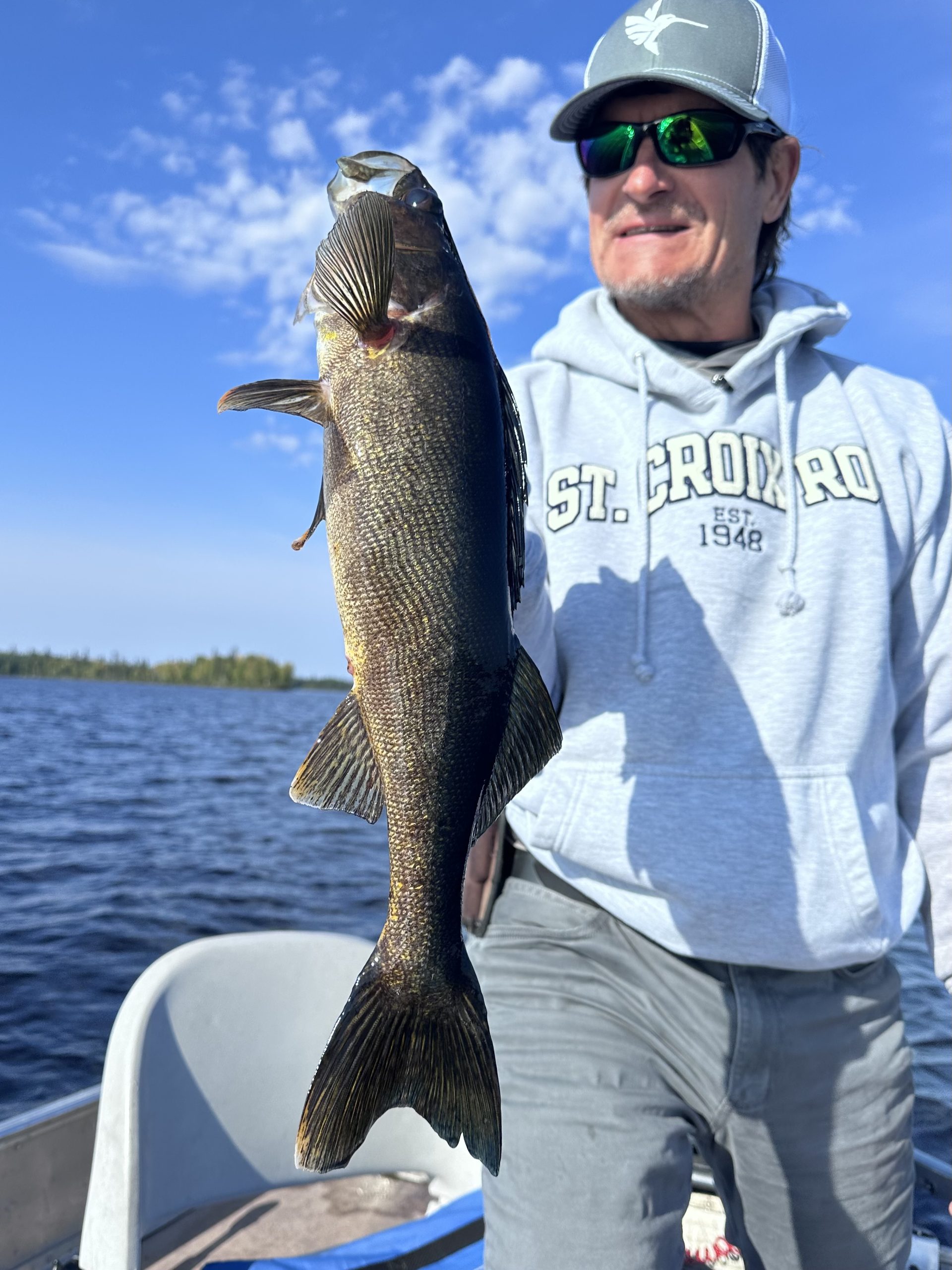
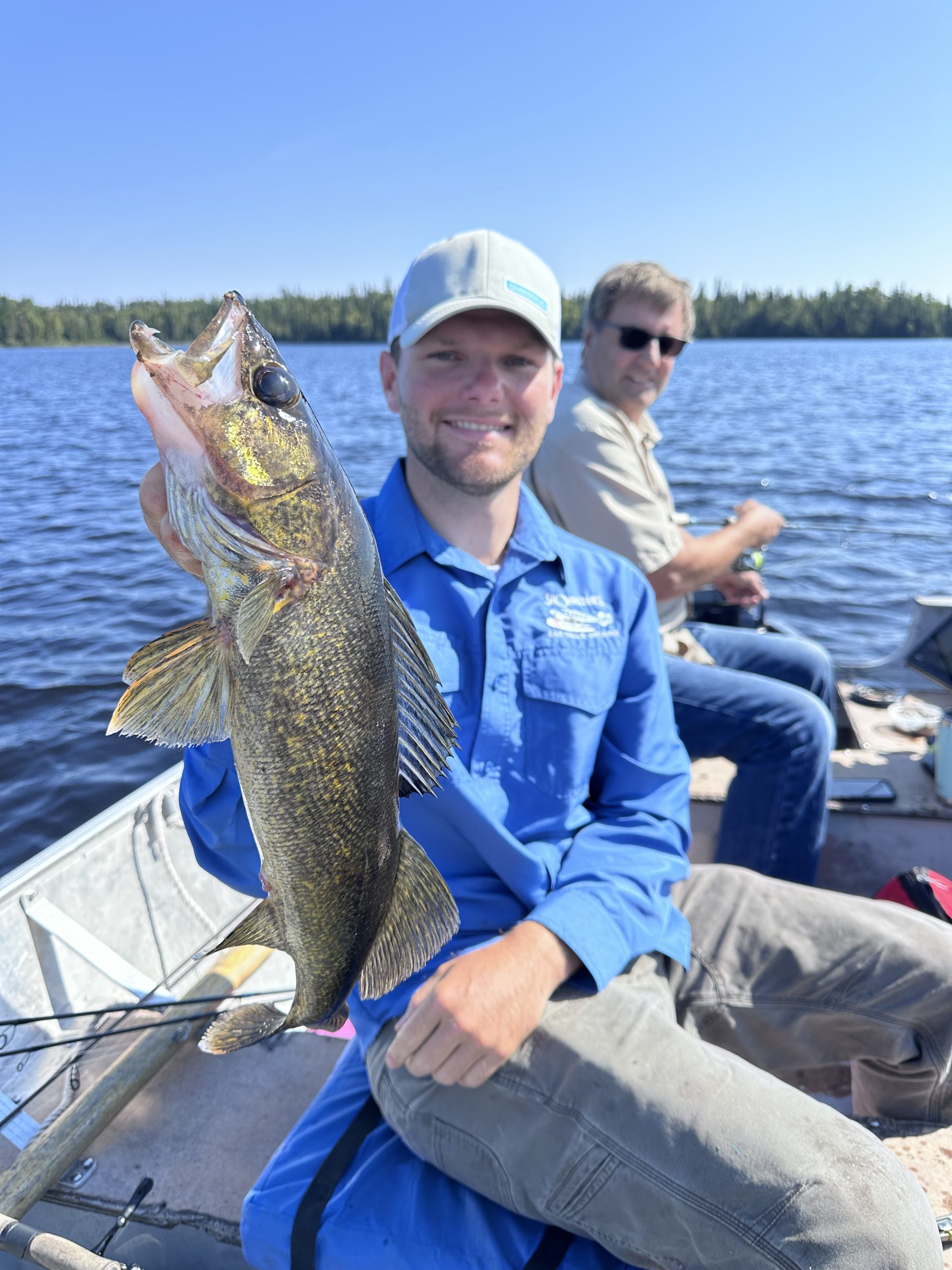
Tim and I enjoyed a nice treat during our outpost stay, when Eddie and Michael Showalter swung into camp and invited us to fish with them for a couple of hours. I’ve known Eddie for 30 years, going back to when his father Edwin ran the operation (the Showalter’s family has been in the Canadian fishing business for 68 years), and I first met stepson Michael over a decade ago. Soon, we were motoring across the lake to one of the hotspots I’d discovered earlier, and within a minute we had walleyes on the line. Watch for an upcoming MWO TV episode showcasing the many double and triple hookups we enjoyed that afternoon!
All in all, our Showalter’s Fly-in fishing adventure to a new outpost lake was as I expected—completely awesome! Have you planned your Canadian fishing trips for the coming year yet? Now’s the time!


Did you enjoy this post?
You can be among the first to get the latest info on where to go, what to use and how to use it!