
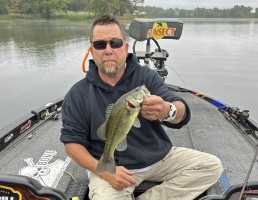
A Fishing Road Trip to Big Hill Lake in Kansas
Last year, I made a fishing road trip to southeast Kansas. Who doesn’t love fishing road trips? I have driven through Kansas multiple times over the years on my way out West, but never took the time to stop and explore this beautiful state. It is a long drive from northern Indiana, but I’m glad that I finally took the time and made the trip.
While planning the trip, I traded numerous emails with Jim Zaleski, a longtime friend and former Hoosier from Hammond. Although he grew up in Indiana, Jim moved out of state many years ago, and now Parsons, Kansas is his home. Since he has been a serious bass fisherman for decades, I knew that he would have a great handle on the bass fishing in the local waters.
I arrived in Parsons and got to bed early that night since Jim would be picking me up at the hotel before 6:00 am. The next morning, he was right on time, and I hopped in his truck for the 30-minute drive over to Bill Hill Lake. Labette County’s Big Hill Lake is a sprawling reservoir that covers more than 1,200 acres.
There is a wide variety of fish habitat in the lake, from shallow bays and weedy points to areas near the dam that are 60 feet deep. There are also spots with plenty of submerged trees and standing timber, remaining from when the lake was impounded. Largemouth bass inhabit most of these areas, and we would be targeting them. The lake also features some rocky and sandy shorelines, and the resident smallmouth bass were more likely to be found in those areas. We were hoping to catch some of them, too.
We arrived at the boat ramp in the gray morning light and quickly launched the boat. It was cloudy and there was no wind. Jim suggested that we motor over to one of his favorite areas where a point jutted out into the lake with some nice weeds growing up to the surface. Since it was early, we tied on some topwater plugs to see if we could get bass to hit on the surface.
Although the spot looked very fishy, we couldn’t get a hit. Jim removed the plug and rigged up a green, 5-inch Yamamoto Senko worm that he could fish wacky style. Before he made a cast with it, though, he decided to modify it just a bit. He dipped each end of the worm in chartreuse Dip-N-Glo dye. The bright chartreuse color made the tips of the Senko look almost fluorescent, and he explained that the action of the wacky worm would make the brighter tips of the bait look like the fanning pectoral fins of a small sunfish—one of the favorite snacks of the resident bass.
After just a couple of casts, Jim hooked a bass. It was not terribly big—maybe 12 inches or so—but it was the first fish of the day. After he released it, I decided to switch to a Senko worm, too. Jim dipped the ends of my bait in the bright dye just like before, and we both started working the deeper edge of the point as it extended out away from shore.
Near the end of the point, I felt a fish pick up my worm, and let it run with the bait for a short distance. When I set the hook, though, the fish had already dropped it. I am not nearly as experienced as Jim when it comes to fishing for bass with Senko worms, but I was learning. After working the point thoroughly with no more action, we decided to move to another spot.
You can be among the first to get the latest info on where to go, what to use and how to use it!
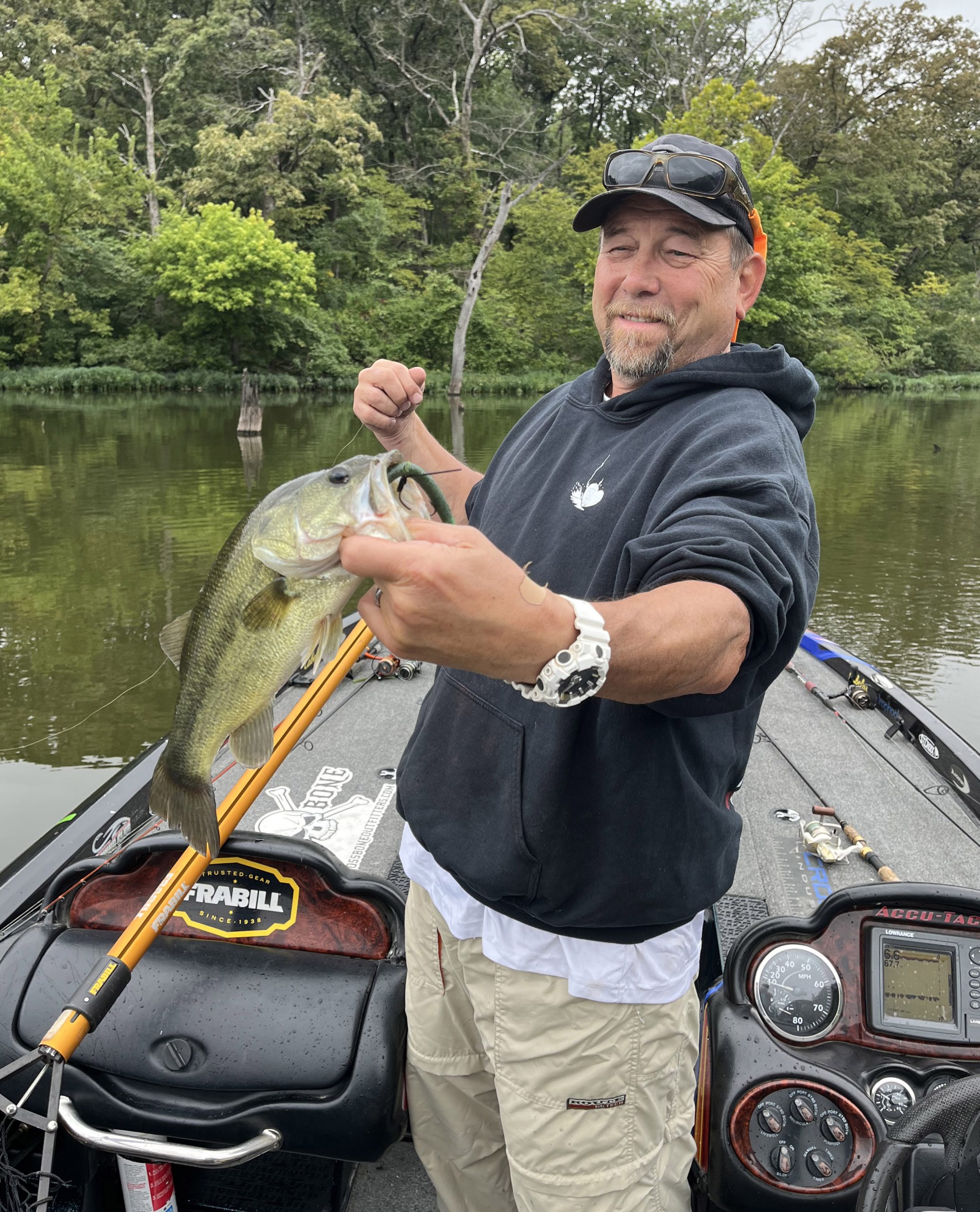
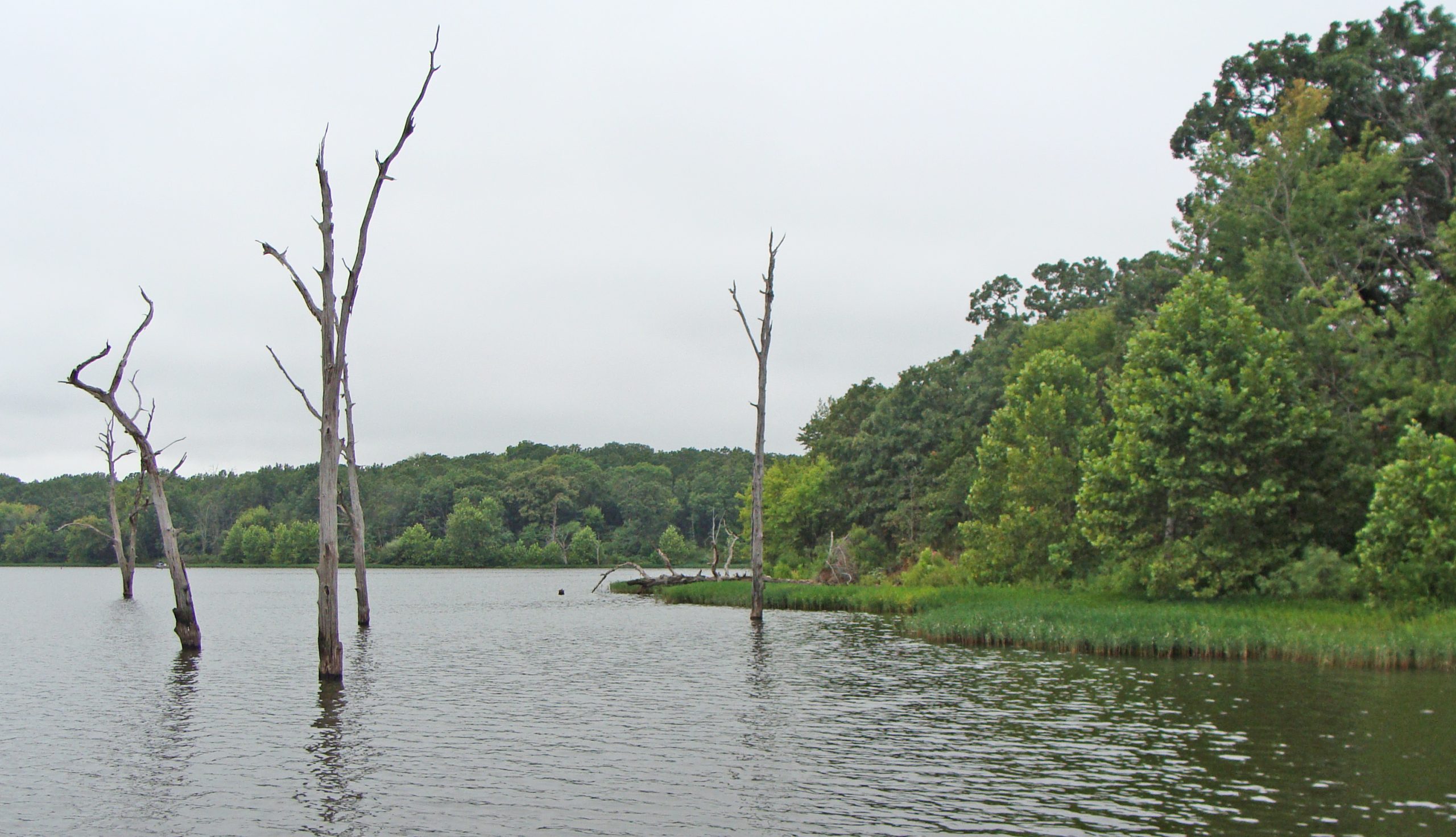
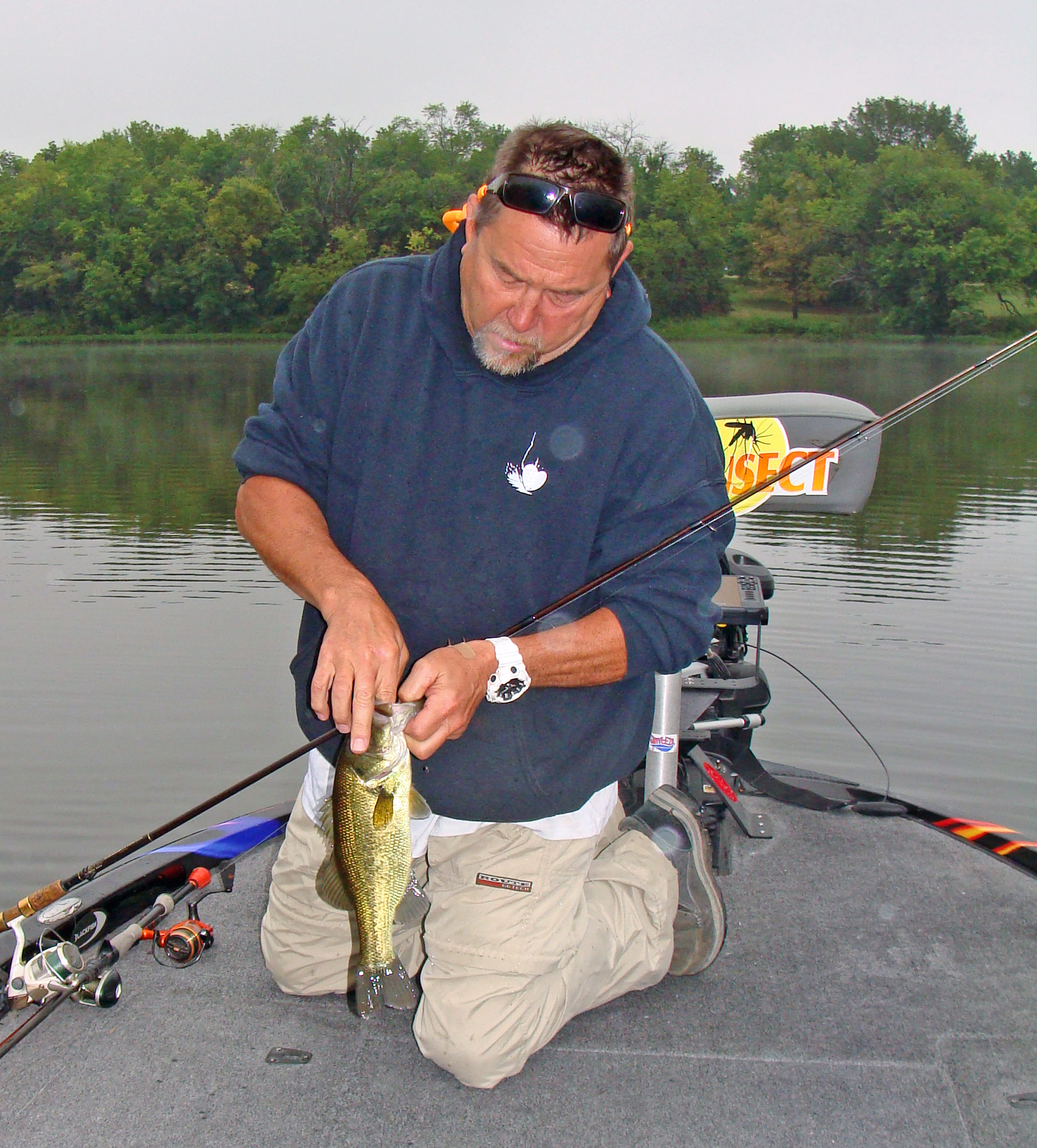
Jim motored over to one of the areas with lots of dead trees and rotting timber sticking up out of the water. Numerous stumps just below the waterline became visible as we got near them, too. The area looked very fishy to me. Jim was the first one to connect with a fish. He suddenly set the hook mid-retrieve and a chunky largemouth leaped clear of the water. After a short fight, he swung it aboard. Jim posed for a quick photo, then released it to fight again.
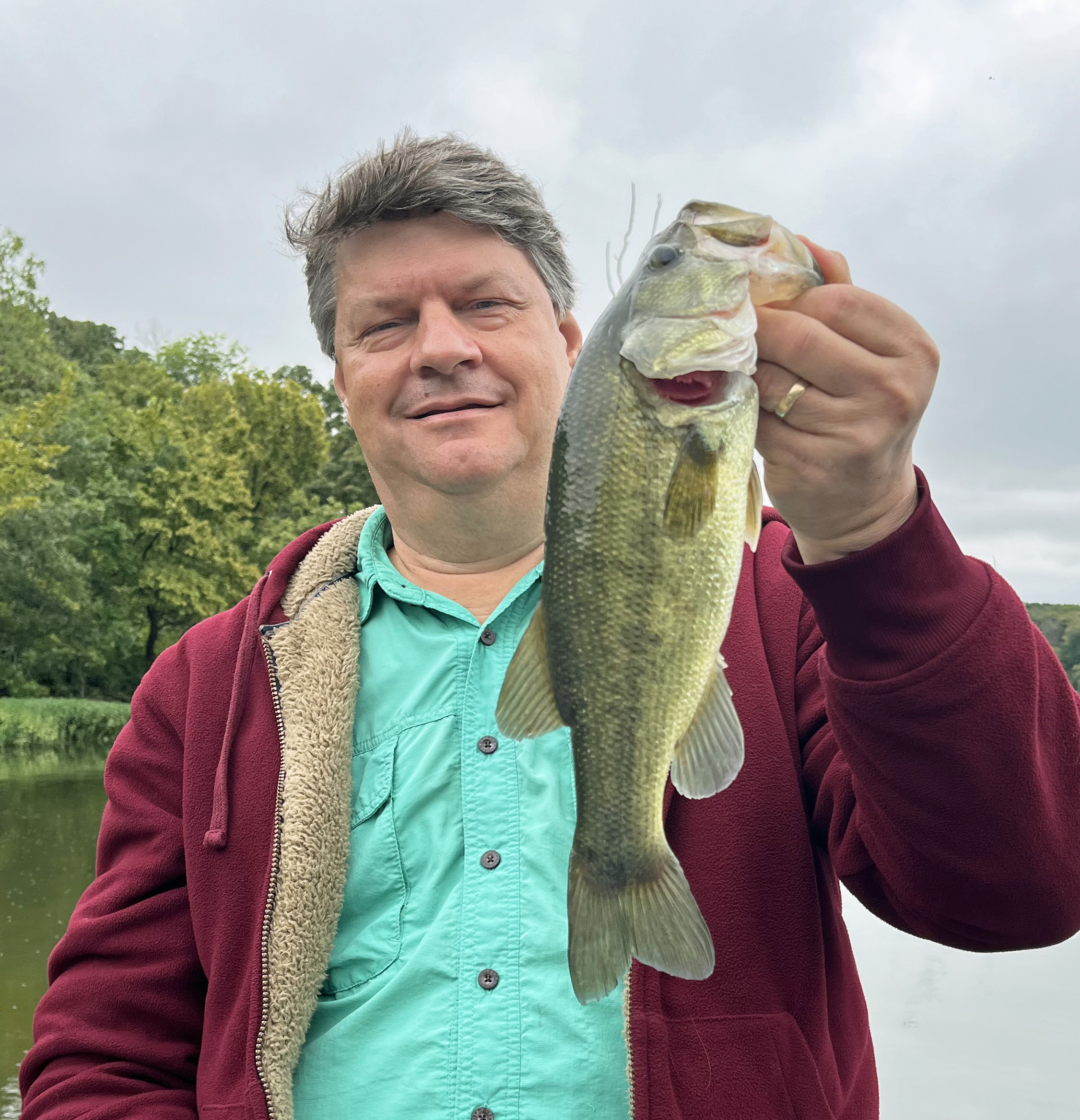
It was my turn next, although I didn’t know it until a bass grabbed my worm and took off at nearly full speed. I set the hook and saw a nice bass boil right at the surface. Another largemouth, and although it made a strong first run, it gave up fairly quickly and Jim netted it at the side of the boat. We snapped a couple photos and released this one, too.
This continued for some time as we worked around the standing timber and shoreline weeds. Thick stands of emergent weeds crept from the shoreline out to three or four feet of water, and largemouth bass seemed to like sitting right at the edge or even a foot or so back in the thick, green stuff. We each caught multiple bass from this area before moving on.
While fishing along a hard-bottomed shoreline later in the morning, I hooked two smallmouth bass. The first was only about 10 inches long, quickly released it. But then I hooked a much bigger smallmouth. This one ran straight toward the boat and jumped clear of the water only about 10 feet away from me. I could see that it would likely weigh 2 or 3 pounds. A nice smallmouth! Unfortunately, I was also able to see the lure fly out of its mouth when it came out of the water. Easy come, easy go!
If you decide to make your own trip to the Parsons, Kansas area (www.parsonschamber.org) or Labette County (www.labettecounty.com), rest assured that there are plenty of great things to do once you arrive. Fishing is always #1 on my list, and besides the bass fishing that we experienced on Big Hill Lake, there is excellent fishing for bass, catfish, panfish and rainbow trout in strip pits on the nearby Mined Land Wildlife Area (Google it).
For non-fishermen in the family, Labette County and the surrounding area has an abundance of museums, restaurants, state parks and other attractions. One must-see local attraction is Big Brutus, a gigantic, earth-moving machine that was used for coal mining here in the 1960s and 1970s. It is located about 20 miles east of Parsons. Check it out (www.bigbrutus.org).
Did you enjoy this post?
You can be among the first to get the latest info on where to go, what to use and how to use it!