
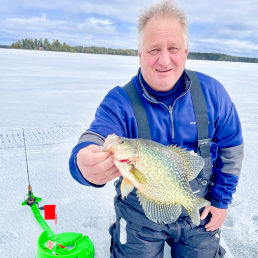
First Ice: The Northern Holiday
All lakes do not offer early fishing at the same time. Deep lakes take a lot longer to develop ice. So, our menu for early ice is based on shallow lakes providing the earliest opportunities for a chance to catch fish through the ice.
Upper Red Lake in northern Minnesota is a classic example. The basin is less than 20 feet deep. Early-ice walleyes are catchable in 6 to 10 feet of water, which is the primary break close to shore, reachable in a walkable distance. For a small access fee, resorts check ice, drill and mark stakes where anglers are able to walk safely.
There are hundreds of shallow bodies of water spread throughout northern, western and eastern Minnesota, so there are many early-ice options, but not all lakes are the same. Upper Red Lake offers easy-to catch, early-ice walleyes. Other shallow lakes may only have northern pike, perch and bass. Some may have a few walleyes or panfish. However, anglers are not exploring uncharted territory like decades ago. Most lakes today are listed in a database detailing fishing potential or have satellite images available on cell phone.
Before the ice
Part of the fun of pre-ice fishing is researching and creating a list of potential places to fish. I do most of this on my cell phone using One Boat Network, available in the app store. I mark spots on my cell phone which have LakeMaster maps to explore and zoom in, mark waypoints on spots, and potential access points with icons and symbols from waypoint storage. For example, a red icon meaning hot, green good, and yellow I will think about. Then, using Bluetooth to transfer date from the phone, I can easily download the info to my Humminbird Xplore GPS. With LakeMaster preloaded maps, all icons will be visible on the onscreen map.
On the lake, turn the unit’s screen to face the front of the tow sled to: 1) occasionally glance back at the screen map for orientation; and 2) plot a trail on your unit on your way out to the spot. Make sure to drill, test and measure ice thickness the entire way out. If a snow squall comes in and turns tracks and holes to a blank sheet, the GPS trail can be followed back to shore.
Bro Pro Tip: Ice fishing safety is paramount. How do you know if you can make it to a good fishing spot where there is a safe, four inches or more of clear, black ice? Drill and measure. Then drill and measure some more to keep safety protocols at the highest standard. There is a wealth of ice safety information online—but if you don’t know, don’t go.
Must-haves for first ice
Ice fishing is less complicated than open water. You don’t launch a boat and you don’t have trailer bearings to grease. It’s as simple as walking out on the ice. Here’s what you need:
• A bucket with St. Croix ice combos, a small box of tackle, micro RAZR pucks filled with wax worms, maggots and pre-cut minnow heads.
You can be among the first to get the latest info on where to go, what to use and how to use it!
• RAZR Synthetic Ultra Lite 6-inch auger on a 1/2-inch lithium hammer drill
• Humminbird Xplore with MEGA Live 2 on a Fish Armor Shuttle with Amped Outdoor 14.8V 32Ah lithium battery
• Small plastic sled with a long rope to pull the sled, and a throw cushion attached to a second rope via speed clips
• Ice picks around your neck and micro spikes on your boots
Keeping everything light, I have no problem walking for miles. And this whole setup for first ice costs less than one captain’s suspension chair in a boat. Ice fishing is easy and one of the less-expensive choices in outdoor activities.
For more insight and tips for fishing throughout the year, check out the articles in every issue of MidWest Outdoors, available by subscribing on our website.
MWO
SHARE THIS POST
Did you enjoy this post?
You can be among the first to get the latest info on where to go, what to use and how to use it!