
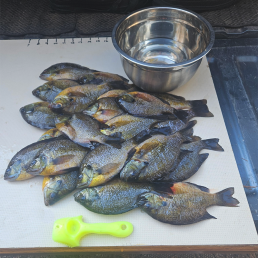
First-Ice Bluegills
Snow crunched under my boots as we headed out on a good six inches of clear ice. The two inches of snow on top made for non-slip walking as we headed for a drop-off near a small point of land. We knew from summer fishing that weed beds ended about 20 to 30 yards off the point, and bluegills hung out around the thick weed beds the year ‘round.
A spate of cold weather after the holidays had given us safe ice, and the first thing that came to mind was going after first-ice bluegills. First ice can be some of the most productive bluegill fishing of the winter.
We lined up with a few familiar landmarks and drilled the first hole. When we saw thick weeds, we knew we had to go out another 20 feet or so. Once on the edge of the weed bed, I sent a white and chartreuse teardrop jig with a wax worm attached down to within one foot of the bottom. While drilling my second hole, I noticed my spring bobber dipping slowly. Often, big slab bluegills will barely move the bobber, as they simply inhale the bait. This one was a smaller but ambitious fish. My first bluegill of the 2024 ice fishing season was released in favor of a larger version. With some local lakes now having a 10-fish limit, I tend to be a little pickier about the size of the fish I keep.
I favor wax worms, but a buddy who likes using spikes had just as many bites. As long as you got the bait anywhere from six inches to three feet off the bottom, hungry bluegills of various sizes would inhale the bait. We stayed well within our four-man limit, and everyone took home enough fish for a meal. It was one of those days you remember!
Here are a few tips to help you find bluegills during first ice conditions.
Look for drop-offs near weed beds, and the edges of weed lines. Fish on the deep-water edges. Points of land that have drop-offs and weed cover will hold fish all winter. Often, bluegills will also be on top of deeper weeds, or right in sparse weed cover.
You can be among the first to get the latest info on where to go, what to use and how to use it!
The trick to fishing in the weeds is to find the open spots. Weeds provide food and cover for bluegills and other panfish. Often, if you are catching fish and the bite suddenly shuts down, a predator fish like a large pike or bass has come through. Steep drop-offs will sometimes hold suspended fish. We have run into suspended crappies while looking for bluegills. This added a few bonus fish to our catch.
On a new lake, you can use contour maps to figure out where the drop-offs are. Sometimes, you can simply follow the crowd. Stay a reasonable distance away, but it gives you a general idea of where to set up.
When jigging, slowly raise and lower your bait, with pauses of about 3 to 4 seconds. This will give fish the impression that the bait is alive, and going to escape if they don’t grab it. I usually fish about an 18-inch zone where I slowly raise, pause, and slowly lower the lure. If the fish are hitting short and not getting hooked, slow down and use longer pauses. Also make sure your waxie or other bait is covering the point of the hook.
Scout for possible ice fishing spots when summer panfishing. We scouted out some of our best spots while panfishing in June. Yes, the January lull is a real thing, as blizzards and colder weather tend to shut down the fishing. Bluegills are a very prolific fish, so take home a limit to enjoy guilt-free.
For more insight and tips for fishing throughout the year, check out the articles in every issue of MidWest Outdoors, available by subscribing on our website.
MWO
SHARE THIS POST
Did you enjoy this post?
You can be among the first to get the latest info on where to go, what to use and how to use it!