
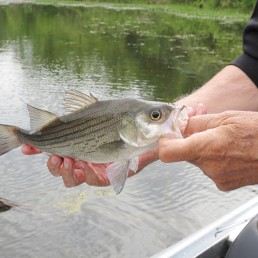
Fall Fishing for White Bass
Fall fishing for white bass is just the opposite of the spring pattern. In spring, they move to shallow staging areas, and then into the spawning areas of lakes and rivers.
As water temperatures begin to fall below the mid-50s at the end of summer, white bass seek deeper water. Generally, they suspend over structure or across the bottoms of creek channels. This is when vertical jigging comes into play.
White bass are a cousin of the saltwater striped bass, and as such have much of the savage instinct found in their brethren. They hit light tackle and give anglers more than they can handle.
The average size fish taken by anglers tends to run about 3/4-pound. Some can go over 2 pounds.
Catching white bass is easy. Finding them is the tough part. Good electronics and the ability to use them are vital.
White bass are active fish that feed constantly. Whites prefer to spend their time in water deeper than 10 feet. But they often move into shallows to feed. Their favorite meal is shad. If you can find large schools of shad, chances are white bass are nearby.
On warm days, they tend to feed on the surface. Concentrations of seagulls pinpoint their location for the fisherman. At close range, you can find them by spotting the splashing water caused by feeding fish breaking the surface as they chase the shad. At times, fish will stay up for 10 to 15 minutes. More often, they feed for only a minute or two and then dive back down to the safety of deep water. Usually, they surface again a short distance away.
You can be among the first to get the latest info on where to go, what to use and how to use it!
Later still, whites become more difficult to find. The easiest way to find them is to go where all the other boats are and join in the action. If you do not have someone else to follow, it is possible to find white bass by trolling small, deep-diving crankbaits. Begin in the mouth of a feeder creeks and work back up the creek arm until you find the fish. Once you find the white bass, dig out jig and minnow combinations.
Light tackle is a must for white bass. Small jigs are good, teamed with line in the 4- to 8-pound-test range. Small tube jigs tipped with plastic grubs do a good job. Grubs should have contrasting dark and light colors.
Perhaps the best rig at this time of year is the tandem rig used often by crappie anglers. Tie the main line to a three-way swivel. Next, tie leaders of different lengths to the other rungs of the swivel. Good lengths are 12 and 24 inches. To each of these leaders, tie a jig, perhaps with a small minnow attached. You can fish this rig on the bottom and just off the bottom at the same time. It also allows you to set the hook when a fish hits one jig and then wait for another white to hit the second jig. Astute anglers will notice the size of the bait fish and match their lure to that size.
Angling success tends to be dependent on year hatches. A year with incredible numbers can help carry the population over lean years. The best fishing in a particular body of water is likely to be about two years after a large hatch.
Get better results from the time you spend fishing. Use information from the pros found in every issue of MidWest Outdoors, available by subscribing on our website.
MWO
SHARE THIS POST
Did you enjoy this post?
You can be among the first to get the latest info on where to go, what to use and how to use it!