
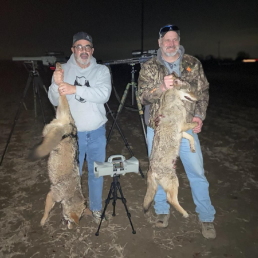
Hunting Eastern Coyotes
The eastern coyote (Canis latrans var.) is considered a descendent of western coyotes and wolves, eastern wolves and gray wolves. On average, it grows to a larger size than the coyotes living in western states. Perhaps a dose of wolf genes and hybrid vigor encourage the larger size. Some researchers call it the coywolf.
There are believed to be 19 subspecies of the eastern coyote, thus the qualifier (var.) in the scientific name, Latin for barking or howling dog. Scientists who study canines do not exactly agree on the specifics of the eastern coyote. Taxonomy, social structure, and ecological position are a few examples where an animal with such a varied ancestry can become difficult to place.
Exploiting just about any form of habitat and food source explains why the omnivore is so successful. Suburban food resources include pets, pet food, and food scraps in garbage. In agricultural areas, they eat livestock, when possible, especially sheep and chickens.
In more natural settings, they eat small mammals such as mice and rabbits. Any animal they come across is fair game. Their diet consists of whatever else they find through the course of a year: nuts, fruit, vegetables, and carrion at times. Canada goose goslings and white-tailed deer fawns are preyed upon annually. Coyote studies have revealed intense predation on fawns.
Coyote hunting is growing in popularity; the reasons vary among the hunters: It provides another opportunity to hunt, serves as a means of predator control, or it may be for the fur. Trapping interest reflects the value of the fur.
You can be among the first to get the latest info on where to go, what to use and how to use it!
According to Catherine Dennison, Wildlife Biologist, Ohio Division of Wildlife, it is difficult to accurately estimate the total harvest of coyotes in the state. Harvest effort and success is estimated through surveys of the fur takers. While many people with fur taker permits pursue coyotes, a fur taker permit is not required to hunt or trap coyotes, so a hunter survey provides additional insight into coyote harvest in the state. The surveys indicate that coyotes are harvested through both hunting and trapping, but most of the harvest is through hunting.
If you are interested in hunting, calling location is important. Although abundant, you still must find places where coyotes are established, namely farmland and mixed pasture/woodland habitat. A working farm may welcome coyote hunters as a means of protecting livestock. Landowners and those working the farm should be aware of coyote activity. Many farms have an ideal mix of pasture/woodland where coyotes can find ample rodents, livestock in some cases, and denning locations.
A farm is not the only option. Habitat in early stages of succession can support an ample prey for coyotes. Reclaimed coal land is an example. The pasture-like/woodland habitat is common in portions of the Midwest. State wildlife areas and other public hunting areas in some states often contain reclaimed land. As with any sit-and-wait hunting, thorough scouting is necessary to make the most of your hunting time. Walking the grassland and pastures or hay fields is an effective way to identify tracks, scat, and kill sites (scattered feathers, bits of rabbit fur), clues that a predator uses the area.
For more insight and tips on how to make the most of the time you spend hunting, check out the articles in every issue of MidWest Outdoors, available by subscribing on our website.
MWO
SHARE THIS POST
Did you enjoy this post?
You can be among the first to get the latest info on where to go, what to use and how to use it!
