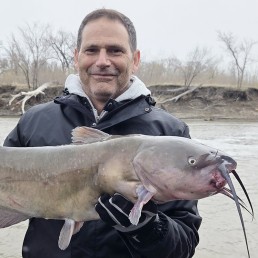
Downsize Catfish Rods in Cool Water Temps
In a normal season here in North Dakota, I plan to shut down guiding at the end of September or early October, when water temperatures are falling back as the days get shorter. It always seemed that the bite got very spotty about the time the water temperature reached 55 degrees and was backing off. It always felt like a good time to stop.
A little note about catfish: They are a warm-water fish. When the water temperature drops, so does their metabolism, causing them to slow down and get sluggish. This makes sense. You may notice that they bite lighter when water temperatures are cooler.
Another thing about sluggish catfish is that they don’t tend to make the huge runs that, in the heat of summer, would be very hard on your lighter gear. Instead, they pick up the bait and do not move very much. When they fight, they just try to swim down and roll.
A couple years back, I was walleye fishing and trying a new set line rod. Just for kicks, I put a piece of cut sucker on to see if a catfish would bite. One did… and so did many more. That got me thinking: This new rod was very light to detect a walleye pickup, but here I am pounding catfish. Last fall, the same scenario played out.
Spring 2026 was one that just never seemed to warm up. I remembered back to fall bites using the lighter rods and planned accordingly. I packed a few much lighter rods for a scouting run. What I found was very eye opening.
For two days with water temperature in the low 50s, I ran two of my regular catfish rods (Ugly Stik 7-foot Catfish) next to two lighter Ugly Stik Medium rods, all rigged with the same line and gear. All the rods would get bit right away and kind of shake, but the lighter rods were soft enough that the fish would pull the rod tip down enough to hook up. Over the course of a week, running the rods side by side, we saw a 40 to 50 percent better hook-up rate on the regular medium rod.
As the water warmed up more and the hits became more violent, it was clear that we could change back to normal catfish rods for the season.
This experiment proved what was happening in years past was that the catfish were slowing down due to water temperature, and many times when they did bite, they would pick up the bait and feel the tension of the rod. Sometimes, they would steal the bait without a hook up, and other times they would just crush the bait and move on.
Introducing lighter rods increased the hook-up rates because, when the fish picked up the bait, they did not feel the tension from the rod tip, and ate the bait, resulting in hook-ups.
You can be among the first to get the latest info on where to go, what to use and how to use it!
Lighter rods for channel cats
For well over 15 years, I have been preaching to channel catfish anglers that one size does not fit all. Back in the day, the choices for catfish rods were medium-heavy or heavy, because you need more horsepower to catch a catfish. This has been ingrained in many people: Bigger is always better.
Through the purchase of many dozens of rods and brands, it has become clear that with channel cats, you miss a lot of fish by using too heavy gear. Unfortunately, there is no standard in industry as to what is what in stiffness. Some companies’ medium is other companies’ medium-heavy.
A good channel catfish rod (when using circle hooks) is light enough for a 3-pound fish to hook up, and stout enough to handle a 20-pound fish. If you have too heavy rods, you miss the smaller fish, and the bigger ones that bite lightly will feel the pressure and spit out the hook before they take the bait.
One thing many are thinking right now is, “I need to be prepared for that huge, once-in-a-lifetime catfish.” This is where the right line and drag comes into play. It is topic for another article, but if the drag is allowed to do its job, the fish can run and the flex, in the rod will also help take the pressure off.
Channel catfish rods
My recommendation for rods for channel cats, or areas where the fish are going to be 3 to 25 pounds is an Ugly Stik Catfish or Catfish Special. Seven-foot is my personal favorite, but 8- foot works well, too. When the water temperature is cooling or colder (less than 55 degrees), I use and recommend the medium Ugly Stik 6’6” or 7-foot GX2, (the standard Ugly Stik that many anglers have lying around).
Rig them the same as you would for any seasonal condition. I have mine rigged with the same 30-pound monofilament line that I use all year long. I fish them with up to 4 ounces of weight and use the same hooks.
This downsize experiment was powerful enough that I have purchased more light rods to allow for a full changeover when the water temps drop this fall, allowing for an extended catfish season.
If you enjoy catfishing, you’ll find suggestions for locations and techniques in every issue of MidWest Outdoors, available by subscribing on our website.
MWO
SHARE THIS POST
Did you enjoy this post?
You can be among the first to get the latest info on where to go, what to use and how to use it!