
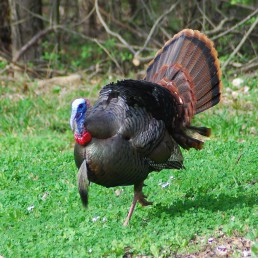
Dog Days Gobblers
Regardless of any negative environmental conditions, the tag-end of turkey season can be an exceptional opportunity. Surprisingly, this is still a productive time to tag a mature longbeard that beats all the odds. But, be prepared, because the warmth, insects and spooky gobblers can test your skills to the limit!
These obstacles can take their toll and reduce hunter confidence. Those who have spent most of their hunting during the first weeks of turkey season, and haven’t taken a gobbler, focus upon the last opportunity to shoot their turkey. Obviously, early-season turkeys are very active with their breeding cycle and expose themselves more often, even though they must try to avoid the onslaught of human hunting pressures. If a large number of hens are still breeding, the competition can be fierce, and toms often respond to just about any mimicking hen vocals.
Eventually, though, hunters are faced with their last chance during this last week. Hunting these elusive gobblers is exciting, challenging and very rewarding. But don’t overlook the fact that many harassed toms, or lucky gobblers, are still searching for hens. At this point during spring turkey season, tough ol’ gobblers have heard and seen everything that hunters have given them. Even though hunting pressure has diminished, leftover gobblers can almost become invincible. Therefore, we must remember that tagging a mature gobbler can be a real challenge. But harvesting a mature bird is achievable.
Where do you find warm weather gobblers? Begin at roost sites before dawn. Then, work the woodlands and scour the edges of field openings to search for isolated gobblers. Gobblers are travelers now and you should be, too. Patience is the rule.
Finding turkeys can be a chore because they don’t gather in large numbers. Flocks broke up after breeding commenced. The available hens that have been bred disappear after they begin nesting. Toms also become loners, but they still look for hens. This is the perfect time too solicit the sighting of landowners who often spot lone gobblers using their properties. Equally, road-scouting from your vehicle can help you locate loafing gobblers and save lots of walking.
Is afternoon hunting effective? Absolutely! Last year, I was walking the edge of a two-track road within public hunting lands. It appeared that most hunters had left the woods for the day because I hadn’t seen another hunter since 11:30 am.
At 3:25 in the afternoon, I heard a tom gobble as if it was early morning. The temperature had already peaked at 74 degrees. I was close to this very vocal tom and he gobbled hard! Quickly, I sat down within an oak tree deadfall. I had dressed in too many clothes, and I frequently had to wipe sweat from my brow. As the tom played cat and mouse, a single hen intervened. She began calling, and eventually swept him away from my chances for an afternoon gobbler. Remarkably, this pair of turkeys vocalized with an intensity that reminded me of early-season breeding excitement.
Toms revert to feeding more often after intense breeding. And, they will seek high-protein foods such as insects. That’s one reason turkeys are fond of open fields, aside from the fact they can spot danger from any direction. Also, foliage is much thicker during late season. You probably won’t hear as much gobbling, either.
Plan to dress in lightweight camo clothing. It will likely be hot, dry and windy. Ticks, mosquitoes and biting flies are abundant now, too. Carry an effective bug spray and use a full-face headnet to counter insect assaults.
Whenever you hunt late-season gobblers, you will likely encounter toms that have seen and heard it all. Patience and stealth are your biggest assets. Find a roosted gobbler and get on him early. Now’s the time to call to him and tease him before and after he leaves his morning roost.
You can be among the first to get the latest info on where to go, what to use and how to use it!
Basically, most hens have already been bred, and any “breeder” gobblers still alive are hen-starved. They will aggressively cruise open landscapes during any time of the day, gobbling frequently as they search for hens. But they can also be two-faced now. They are often silent as they roam about and view their habitats. Now, you must be a “slow” hunter, because patience is a “plus” that will help you outmaneuver a last-minute gobbler.
Afternoons are typically used by turkeys for feeding, resting, and loafing around. But here’s another ploy to use when hunting afternoon spring gobblers. Where birds roost with frequency, take a seat close to known roost trees during late afternoon. As turkey activities wind-down toward the end of the day, turkeys begin congregating closer to their evening roost sites. Find a concealing seat and wait with maximum patience.
Call occasionally as you hide close to potential roost sites. And, be very alert. Late afternoon toms remain cautious whenever they approach their roost locations. If you do call, keep it low-toned. Subtle clucks and occasional purrs are less likely to frighten toms with roosting hens.
During late season, prepare as if you’re on a safari. Consider that weather can change dramatically from a cooler, pre-dawn atmosphere, to late afternoon warmth. Be prepared for any type of fluctuating weather from cool mornings, occasional rain, to very warm afternoons. Rubber footwear and warmer clothing are the norm during early-morning hunting.
Clothing changes for warmer afternoons are often required. Footwear changes increase your comfort, too. Afternoons usually require leather boots and lightweight camo, especially if you walk long distances. You might also need to shed your jacket as you cover more ground. Carry bottled water, because you might be chasing breed-happy toms for long distances.
Obviously, nothing is etched in stone regarding a gobbler’s responses. That’s why hunters should try different hunting methods. Expand your opportunities. Try driving rural roads and scout for toms displaying during the afternoon. Binoculars are a valuable tool now.
Depending upon the intensity of their breeding cycle, gobblers might be doing just about anything. One distinctive landscape feature that attracts strutting gobblers is open pastures where they can display in full strut. Turkeys seem to favor using open fields during thunderstorms, too. But, when the sun becomes bright and intense, turkeys seek the shade of woodland acreage. And, if it’s hot, they will likely move close to a source of water, such as damp, wooded creek bottoms.
Dog days gobblers are encountered with less hunting pressure. If you don’t leave the turkey fields at noon, you may have opportunities that other hunters missed.
For more insight and tips on how to make the most of the time you spend hunting, check out the articles in every issue of MidWest Outdoors, available by subscribing on our website.
MWO
SHARE THIS POST
Did you enjoy this post?
You can be among the first to get the latest info on where to go, what to use and how to use it!
