
Does Your Catfish Rod Really Matter?
Many catfish anglers still think that having one or two stout rods for catfish is the best bet. Truth be told, to be very effective at catfishing and have more fun, catfish rods should not be one-size-fits-all if you are in an area where many species or size structure of catfish reside.
Tools for the job
A catfish rod is the most important tool for the job of catching catfish. Sure, one really heavy rod can get the job done, but is that rod always doing justice to the fight of the fish and your enjoyment.
When questioned further on the one-size-fits-all rod, many anglers will say that they know a lunker catfish is lurking in the depths and that they must be ready should it show itself. A perfect example of this is a lake somewhere in the Midwest where channel cats averaging two to three pounds are the norm, although you might catch a 30- or even 40-pound flathead once in your lifetime.
Do the math here. Are you willing to drag hundreds of small cats in with no fight or enjoyment should you catch that once-in-a-lifetime catfish?
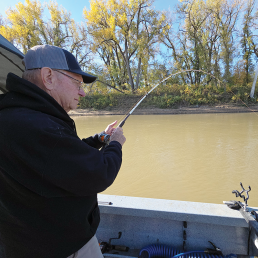
Even here on the Red River, where channel cats get big, I see many anglers running stout, medium-heavy or even heavy rods, should they catch that ever-elusive 30-pounder. I have yet to see that 30-pounder, by the way, and I fish every day.
Using the proper rod, rigged correctly, is critical for the job—and much more enjoyable. When rigged properly, it will have enough backbone to bring in Mr. Wonderful, should he grace you.
Here on the Red, I like to use a 7-foot, medium-heavy rod, or in the case of some brands, a medium. I rig it with a solid reel and good-quality line of at least 25-pound test. The other key here is, I keep the drag set properly, so the rod takes the brunt of the pressure, but the drag will go should the fish require.
Speaking of drag on the reel: If the rod is too heavy, when you do get a better fish on, it will pull drag, rather than letting the rod bend and do the work. That shortens the life of your reels.
After more than 20 years, and testing literally dozens of different rods, this is what I have come up with. The ideal rod has a soft tip to detect light pickups, but also allows a fish to take the bait without feeling the rod, allowing a circle hook to set.
If you fish a body of water that consistently has flatheads into the 30-pound-plus range, now you must upgrade to a heavier rod, so you have the fast-pulling backbone to fight the big guy. This is a perfect example of using a medium-heavy or heavy rod to match the need for the body of water you are fishing.
The same can be said for lakes or rivers where you will be catching 20- to 30-pound blue cats, with the rare shot at a 60-pound giant.
You can be among the first to get the latest info on where to go, what to use and how to use it!
Matching the time of year
I told you at the beginning that I have found the right rods for how I fish, and what I fish for, most of the time where I fish. Over the years, I have found that even a 7-foot rod with a fairly soft tip is sometimes too heavy for the conditions.
There are times in early spring when the catfish just aren’t quite in the mood to pull a rod down, and all you get is bouncing rods and frustration. The same can happen in late fall when the water is below 55 degrees.
One solution I found is to downsize even more to a medium or medium-heavy bass/walleye rod with a soft tip. I have found that the best rod for this is the old reliable Ugly Stik (the black one), known these days as the GX2. This rod is soft enough to detect the bites and set the hooks, and with the colder water making the fish slower, has all the pulling power needed to haul in a big fish.
The Dock Runner
I am not condoning the exclusive use of the Dock Runner (from Ugly Stik), but for mid-range sized fish it is an absolute blast to fight fish on. It is also a great option to keep in the car for a quick-stop-to-fish situation.
I bought one of these 36-inch rods for $20.00. I did upgrade the reel to one a little bigger and thought it would be fun to try to catch a catfish on it and see if these things were for real.
I kept the Dock Runner in the boat in 2025. It was meant to be a joke for a long-time customer, but over the summer, it became a hit to throw out as “an extra rod.” It fought numerous catfish from three to 19 pounds and was the talk of the boat all summer long. It made grown men giggle like little kids.
The example of the Dock Runner should prove the point that you do not need an overly heavy, stiff rod to catch average catfish.
Finding a catfish rod that will catch fish and reel them in is not very hard. There are many choices on the market and they all will do the job. Fishing is supposed to be fun, and matching the proper rod to the job will make your day more entertaining and fight the fish properly, neither towing it through the water at warp speed nor making it fight forever to the net.
Understand what you are fishing for, and what rod will do the job best for the conditions.
Get better results from the time you spend fishing. Use information from the pros found in every issue of MidWest Outdoors, available by subscribing on our website.
MWO
SHARE THIS POST
Did you enjoy this post?
You can be among the first to get the latest info on where to go, what to use and how to use it!