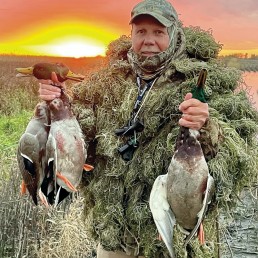
Adjusting to Waterfowl Challenges
When it comes to hunting waterfowl, every year has similarities, as well as new challenges. For this reason, we refer to our hunting philosophy as “monitor and adjust.” If what you are doing is not working, try something different.
Typically, we spend much of our time each fall chasing Canada geese. For some reason, geese were pretty much nonexistent last fall in the area we hunt. Because of this, we spent more time focusing on ducks.
That also became a problem when heavy rains created ponding water in the fields. The ducks that were working the ponds we usually hunt became more interested in the new feeding and loafing areas that were off grid from their normal haunts.
Instead of canoes and bags of decoys, we found ourselves walking substantial distances to where sheet-water ponds had formed. Carrying guns, ammo, a marsh chair and decoys was a problem. Having to wear waders and fighting mud added to the challenge.
We soon gave up on using multiple decoys and opted for just one motion decoy. The ripples created by the motion decoy on the quiet waters of the temporary ponds worked wonders.
We learned years ago how important motion can be when duck hunting. Windless mornings make decoy spreads look stagnant and fake. Having something that adds ripples to the flat water adds a degree of realism that ducks like.
Hunting small, sheet-water ponds was not something that could be done every day. On the larger ponds we hunt, we would have different ducks moving through every morning. On the sheet-water ponds, it seemed like the same birds came each day.
You can be among the first to get the latest info on where to go, what to use and how to use it!
After a morning hunt, the rain-filled depressions needed a couple of days to recuperate before they could be hunted again. This was another of those “monitor and adjust” situations. This forced us to scout and locate several temporary ponds to hunt.
Since the birds were done flying shortly after sunrise, we found ourselves spending more road time looking for jump shooting opportunities. We even located a few places for evening hunts where mallards came to rest just before sunset.
Aggressive calling was not effective on these off-the-grid birds. It seemed like they were either going to come or they weren’t. They did not circle and circle, trying to make up their minds. Wood duck whistles, feeding chatter, and short, quacking routines worked best.
Minimal calling is not that unusual for us. I believe that most duck hunters over-call and get too aggressive when they see birds. You don’t want to shout at ducks. You want to coax them in with contented, happy sounds.
For us, every waterfowl season is the same, yet always a little different. Experimenting and trying new things is always part of our routine. And this gets me back to where I started. Monitor and adjust is a good hunting philosophy.
If you want to try a hunting a different, exciting species or using a different technique, you’ll find plenty of suggestions in every issue of MidWest Outdoors. Subscribe on our website.
MWO
SHARE THIS POST
Did you enjoy this post?
You can be among the first to get the latest info on where to go, what to use and how to use it!