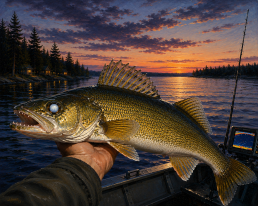
The Late-Fall Cisco Connection to Trophy Gamefish
Ciscoes are a group of cold-water, freshwater fish in the salmon family. They belong to the genus Coregonus and are closely related to whitefish. In North America, the best-known species is the lake herring Coregonus artedi, also called tullibee.
Ciscoes are found in cold, well-oxygenated lakes, including the Great Lakes and many sweep, cold inland lakes across Canada and the northern United States. They generally spend most of the year in deeper, cooler water before moving onto spawning shoals in late fall. When they do, monster gamefish that feed on them in open water during most of the year follow them into their shallow spawning areas, setting up a shooting gallery of patterns for catching big fish.
Physical characteristics
• Appearance: Ciscoes have a sleek, slender, and streamlined body shape optimized for open-water swimming.
• Coloring: Their bodies are primarily silver with pink and purple iridescent reflections, capped with a dark blue-green back and a white belly.
• Size: Adults typically average between 10 to 18 inches in length and can live up to about 10 years. Some lakes support smaller fish, locally called “dwarf” ciscoes, which are easier for gamefish with smaller mouths, like smallmouth bass, to eat.
• Anatomy: Unlike bottom-feeding whitefish, ciscoes have upper and lower jaws of equal length and a high number of long, thin, gill rakers. These rakers act as a sieve to strain tiny organisms from the water.
Diet and behavior
• Ciscoes are pelagic, meaning they inhabit open, offshore waters, rather than staying near the bottom. They form tight schools during the day to avoid predators, and scatter at night. They are specialized “zooplanktivores,” meaning their diet consists almost entirely of zooplankton and tiny aquatic larvae.
• Because they are highly sensitive to warm temperatures and low oxygen levels, they live in the deep, cold layers of lakes—frequently moving along the thermocline (the boundary layer separating warm surface water from cold deep water). Because of this sensitivity, biologists view them as an important “indicator species” for overall lake health.
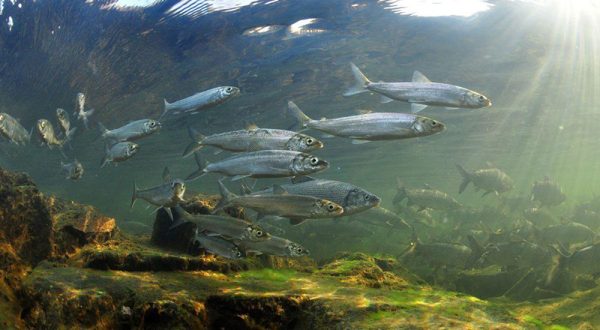 Large gamefish love to eat ciscoes
• Ecologically, ciscoes are a keystone forage fish. Having a very high fat and oil content, they act like a high-calorie energy source for large gamefish. Massive predators like walleyes, northern pike, muskies, and lake trout rely heavily on ciscoes to sustain their growth, making lakes with healthy cisco populations premier destinations for trophy Some deep, cold lakes have populations that spawn in winter or, more rarely, spring, but fall spawning is by far the most common.
• Historically, ciscoes were incredibly abundant across all of the North American Great Lakes. However, populations have suffered severe declines over the last century due to a combination of overfishing, invasive species (like sea lamprey and alewives), habitat destruction, and climate change.
Cisco spawning: when, where, and why it’s important
Ciscoes have an unusual spawning pattern compared with many freshwater fish that spawn in spring. Most populations spawn in late fall to early winter, when water temperatures drop to about 39–45°F.
• Typical timing: October through December, depending on latitude and local water temperatures.
• In northern lakes, spawning often peaks in November, with water temps from 34-43F.
Ciscoes typically spawn across:
• Shallow shoals with gravel, cobble, or rocky bottoms.
• Reefs and points exposed to wave action.
• Water typically 3 to 30 feet deep, although some populations spawn deeper in ultra-clear waters like the Great Lakes. Elsewhere, 2 to 10 feet is common.
• Females broadcast eggs over the substrate, and males fertilize them externally. The eggs settle into the spaces between rocks and develop over the winter, hatching in early spring after the ice melts.
You can be among the first to get the latest info on where to go, what to use and how to use it!
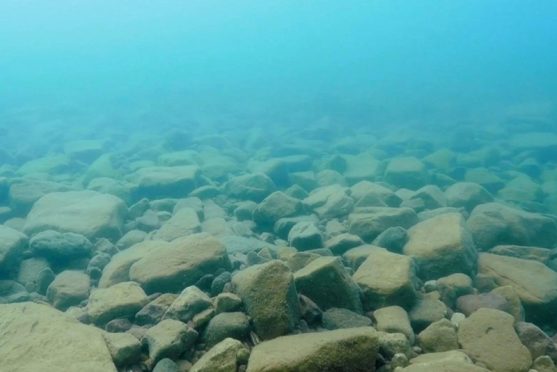 If you’re looking for ciscoes in autumn, focus on:
• Rocky shorelines and shallow, offshore reefs.
• Windswept points.
• Areas where deep water is adjacent to shallow spawning habitat.
• Large schools moving from deeper summer habitat onto spawning grounds after sunset.
Spawning behavior:
• Spawning usually takes place at night.
• Fish gather in schools over spawning areas.
• Females release eggs while males simultaneously release milt.
• The eggs are not guarded; they settle into spaces between rocks and gravel.
Why all of this is important…
The largest members of gamefish many species have a close predator-prey relationship with ciscoes. When ciscoes move toward their spawning areas during the day, and then into the shallows at night, the big kahunas will be close behind, if not mixed right in with them. Consider:
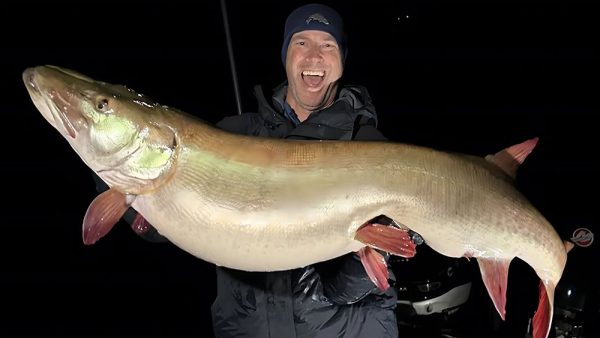 Muskies—The biggest muskies in any cisco-based lake birddog ciscoes like a cornerback on a wide receiver. In late fall, they suspend tight to sharp-offs from islands and shoreline structure—particularly those with shallow, rocky/cobble bottoms. Troll large, deep-diving crankbaits at the 10-to 20-foot range, just off of and parallel to the drop-off during the day. Continue this at night, with the potential to move up into the shallows atter dark, either casting or trolling shallower-running cranks, bucktails, or giant softbaits.
Is it any wonder that some of the largest muskies in North America are caught on Mille Lacs Lake, Minn., and Lake of the Woods, Ont., on this pattern every November? Numerous fish over 50 pounds annually prove the cisco connection to giant muskies.
Walleyes—Walleyes tend to use steep-dropping and offshore structures in fall. Steep drop-offs that border shallow, adjacent rock/cobble bottoms have the potential to attract both ciscoes and walleyes into the shallows at night. Longline troll shallow-running minnowbaits, or cast jig/softbait combos across shallow rocks after nightfall During the day, revert to fishing class, deep walleye presentations like livebait rigging with live chubs; or vertically jigging jig/minnow or jig/softbait combos, Jigging Rapalas, jigging spoons, etc., in depths of 25 to 50 feet of water.
Northern pike—Like muskies, 20-pound pike are apt to hang tight with ciscoes at this time of year. Catching big pike by trolling large lures should be no surprise. The surprise comes when some are caught in the rocky shallows at night, since pike are not typically caught after dark. The chance to chow down apparently overrides their tendencies to feed mostly during the day.
Lake trout— Lake trout share many of the same fall spawning grounds as ciscoes—just a month or so earlier. Season closures around Sept. 30/Oct. 1 prevent fishing for lake trout in Minnesota and most of Ontario at this time of year. But if you are able to legally fish for lake trout at this time, expect them to remain quite shallow, feeding on ciscoes after trout spawning has concluded. Casting a wide array of jigs, crankbaits, jig/softbait combos and other lures atop trout/cisco spawning areas. Hint: Trout spawning areas tend to be offshore, like on shallow humps, rather than along shorelines, so look for them there.
Smallmouth bass—Most smallmouths are in deep, wintering areas and relatively inactive by this time of year. However, some may move shallow to respond to the ciscoes’ inshore movement, particularly if the ciscoes are smaller (aka dwarf ciscoes) that provide a food source for larger smallmouths during the open-water season. It’s not a tried-and-true, productive pattern, but something to keep an eye out for.
The cisco connection
If you fish lakes in the far-northern U.S. or Canada where ciscoes provide forage for large gamefish, don’t miss out on this fabulous predator-prey relationship. When ciscoes come shallow to spawn in late fall, walleyes, muskies, northern pike, lake trout, and perhaps smallmouths and other species move shallow to feed on them, mostly at night. During the day, large gamefish may suspend just off steep breaks outside cisco spawning areas, where they may be vulnerable to being caught with trolling tactics.
The rest of the year, ciscoes roam deep, open basins. To catch fish feeding on them, you’re on your own. Plan on doing lots of open-water trolling next summer! They’re likely some of the largest gamefish in the lake.


Did you enjoy this post?
You can be among the first to get the latest info on where to go, what to use and how to use it!