
When Does Deer Hunting Begin?
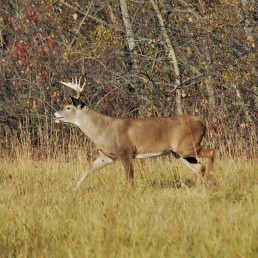
Deer hunters believe that prime bucks are most vulnerable during the peak of the “rut,” when bucks have locked up with as many does as possible. But, consider that before intense copulation occurs, there’s pre-breeding momentum described as the “chase phase.” What is the chase phase? Do we really understand internal sensations that activate it? How do bucks typically behave during the chase phase? It’s a critical time just before bucks mate with does, when free-ranging bucks can be vulnerable.
Just prior to deer season, hunters become antsy, spending as much time afield as possible. Bow hunters are ahead of the game because we are early hunters. Archery hunters are more likely to catch the opening of the chase phase, so they are aware of pre-rut deer actions. But whether it’s pre-rut, the intensity of the rut, or post-rut, the pre-rut “chase phase” is a pristine time to be stationed within whitetail habitats.
If every hunter could score 100 percent of the time, hunting would probably become boring. Thankfully, we humans aren’t perfectly masterful, and network our experiences and knowledge with help from others who share their successes with us. Here’s what I’ve deciphered from a culmination of other hunter’s experiences, observant landowners, and biologists’ careful studies.
Hunters eventually learn that there are days when bucks’ sexual desires cause them to be less conscious of outside interferences. This segment of breeding is defined as the “chase phase.” Studies reveal that the chase phase occurs when a buck’s testosterone begins to perk as their desires intensify the process of reproduction. Normally, pre-rut begins from early thru late-October. Although this can vary with region and year-to-year, it’s a fairly accurate time frame.
How do we know if the chase phase is escalating? Obviously, we must watch deer activities almost daily to determine if bucks are being motivated into the “chase.” Timing is everything. Therefore, from late September on, be watchful.
A buck’s reproductive role with does sometimes causes them to trip-up and make mistakes. But their arrogance and dominance won’t override their ability to be on full alert, regardless of how hunters interpret deer vulnerability. Although breeding bucks are on the move more often, their actual mating intensity can make them tougher to hunt. Buck senses remain fine-tuned, even when they are trying to copulate with estrus does.
It’s more difficult for hunters to outmaneuver bucks once they lock-up with a doe(s). Then, you’re faced with two sets of whitetail senses. And, does won’t hesitate to alert a buck that you’re close by. Therefore, it’s more beneficial to hunt bucks when they are by themselves.
Timing is everything, and we must study deer movements daily. Scouting is more important now than ever. You can’t join the excitement of the chase phase if you’re not hunting when it kicks off. Previously inconspicuous, bucks are on the go at any time of the night and day. Even with busy buck movements, early hunters must remain cautious and never scent-contaminate hunting spots. Nothing turns-off a buck more than human scent.
Careless hunters can cause deer to shift to nocturnal movements if deer are aware of human presence. Never forget that deer are intimately familiar with their home grounds. As they follow daily routines, deer constantly search their habitats with all their senses. Hypothetically, bucks travel thru hardwoods plateaus time-after-time. Then, one morning, there’s a human figure on a treestand, which wasn’t there previously. Also, during the unpredictability of the chase, any buck that smells you might not pass by your stand again.
Don’t just go to the woods a few days before you hunt. Be ahead of the game and blend with the woods weeks before hunting. This gives deer time to accept the appearance of your treestand.
You can be among the first to get the latest info on where to go, what to use and how to use it!
Don’t defeat your hunting results by not identifying the whitetail breeding phase. Whitetail breeding activities typically occur during a 7- to 18-day period prior to their actual breeding lock-up. The majority of does might not have progressed into estrus, but bucks are already induced with an overdose of hormones. They begin rubbing trees and ground-level foliage more aggressively. Earthen scrapes appear. And, bucks size-up each other, occasionally bumping heads. Bucks also pursue does with more frequency, monitoring for their first estrus odors. Whitetail activities change dramatically as bucks move more often, keeping tabs on all does.
Locating and staying close to does also ups your odds. After all, when bucks begin looking for does, you should be within the nucleus of their activities. Deer feed every day, and food sources are proven locations to set stands during the chase.
Also, find trails with lots of sign, especially paths leading to and from bedding lairs. Bucks have already begun creating scrapes. They will check them frequently during their search for does. Hunting near scrapes improves your chances of seeing wandering bucks.
During pursuit days, bucks often travel many acres and meet numerous does until they confirm receptive does. Bucks can instantly scent if a doe is escalating into her breeding cycle, and can also sense a doe’s readiness by her body postures. When a doe urinates, he will stop and smell her urine. If a doe isn’t responsive, he will move on, often covering much ground, looking for an appealing doe, checking several does throughout the day.
Whenever bucks are scent-inspecting does, they seldom stand still for long So, you must give him a reason to stop close to your stand. You can try to stop him within bow range by grabbing his nose through the use of scent products. Now is also the perfect time to use a doe bleat call, rattling racks, and buck grunt calls. Let him think there’s a doe close by, or that another buck is trying to steal one of his does.
When the chase phase is in high gear, be on stand all day. Why? Because once does begin to reek with estrus odors and are ready to mate, a buck and doe will usually slip-off together into isolated spots to breed. Coaxing a buck away from does that will breed with him is near impossible. That’s the prime reason to catch preoccupied bucks when they are on the move during their “chase phase,” when bucks are searching, before the does are ready to breed.
Throughout the chase phase, you’ll probably see bucks that you have never seen before. If you’re using a stand, hunt close to active ground scrapes. Also, create a few scent posts close to your stand, saturated with doe urine. If a buck passes, he’s not opposed to stopping and checking urine that you’ve sprayed on the ground.
Much of what humans understand about any wildlife species is learned from experience and study. Biologists monitor deer year-round. But hunters often have the upper hand because they are in the field watching deer for weeks on end. That’s why I rely on other hunters. Join with known deer hunting clubs to expand your deer hunting knowledge. Experienced deer hunters will mold you into a more proficient deer hunter. Even if you’re already an avid deer hunter, upgrade your potential.
For more insight and tips on how to make the most of the time you spend hunting, check out the articles in every issue of MidWest Outdoors, available by subscribing on our website.
MWO
SHARE THIS POST
Did you enjoy this post?
You can be among the first to get the latest info on where to go, what to use and how to use it!
