
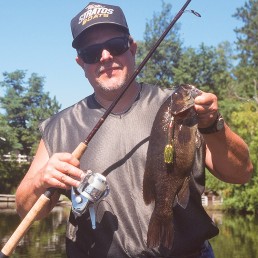
Skipping Docks for More Largemouths
Summer is a time of plenty for bass. There are lots of ways to take summer largemouths, but, sometimes, it seems like nothing works. Weeds, wood, reeds, riprap, man-made retaining walls, and the list goes on. Then you figure it out, and realize that you have been standing on the answer all along.
Boat docks! How many times have you stood on them, getting ready to hop in the boat and take off, giving no thought to actually fishing the dock itself.
Our summer vacations at a resort included a boat. Normally, it rested tied up at a dock in front of the cabin.
One day, my brother and I were getting ready to visit some productive spots down the lake. I was at the dock first, and while waiting for my brother, I was checking my fishhook, since I always keep a live bait rig in the boat. There was a piece of nightcrawler still on the hook, so I removed it and tossed it into the lake right next to the dock.
As it sunk, a largemouth bass zoomed out from under, grabbed the worm and headed right back to the shade of the dock.
I couldn’t believe it. When my brother arrived, I told him to put a piece of ‘crawler on his hook and let it sink right next to the dock. We both watched, and when the ‘crawler got about halfway to bottom, that bass zoomed right back out and inhaled the offering. Only this time, it got a mouthful of metal, too. My brother handlined it in and threw it back. And we discovered a new piece of structure to fish.
Since then, I have fished a lot of docks, but realized that not all of them hold bass. Over time, we figured it out. Start by looking where the docks are positioned.
Some docks are short, and some are long. The longer ones are in shallow water, and must be long because they need to reach out to find water deep enough to float the boat. Short ones, on the other hand, are a lot closer to deep water. The fact that there is deeper water nearby allows fish to get to the depths quickly if necessary. These are usually good ones. A bonus is any weeds or other cover close by that the fish can hide in and hunt from.
Some docks also branch out, extending right or left from the main dock, to allow more boats to tie up. More cover, and more shade, draws more fish.
You can be among the first to get the latest info on where to go, what to use and how to use it!
What the dock is made of also plays a role. Many modern ones have metal poles that hold the dock up. Some have wood, which is better. The wooden poles hold algae after time in the water. That allows smaller organisms to adhere to them. And it draws in smaller fish to feed on those organisms. Bass follow. Cast as close as you can to the wood pilings.
If there is a shorter distance from the dock top to the surface of the water, that also helps, as it creates favorable cover that lets the fish feel even safer. It is tougher to skip a bait up under it, but the results can be better because those fish are usually bigger.
Another type of dock is a floating one (raft) used by swimmers. They are usually deeper and are not affixed to poles. Swimming activity can stir up small bugs and other potential food for smaller fish. They come in, and so do the bass which suspend underneath.
Tackle is another choice. When skipping under docks, a fish can hit the bait and head right back to the shelter. It is best to try to power the fish out and away from the cover, so they don’t hang up and break off. Heavier fluorocarbon line is less visible and a good choice for a dock-skipping rod and reel. A lot of anglers use a monofilament or braided main line and a short fluorocarbon leader. A shorter rod can make it easier to get the bait up under the dock. A 6-foot or 6-foot, 6-inch usually works. Unless you can master using a baitcast setup, I suggest heavier spinning equipment.
Also, go with a Texas-rigged plastic to avoid hangups on wood. A Senko is a good choice because it can be rigged weedless. Since it is a little heavier, it makes it easier to cast. Jigs also work well. I usually go with 14-pound-test line. For floating docks, you can go lighter because there is less cover to get hung on. As mentioned earlier, you can connect a fluorocarbon leader to lighter line to make line less visible.
Good docks hold fish on a regular basis. If there is activity, let the area sit for a while after the people leave, and then fish it.
Always examine the shape of the dock and think about the options available before you move closer. And don’t forget to cast near any boats currently tied up. They offer cover just like the docks. Working in and around this cover is one more tactic to add to your bag of tricks come summer.
Get better results from the time you spend fishing. Use information from the pros found in every issue of MidWest Outdoors, available by subscribing on our website.
MWO
SHARE THIS POST
Did you enjoy this post?
You can be among the first to get the latest info on where to go, what to use and how to use it!