
Time Shared on Devils Lake
The wind comes off the Rocky Mountains, blowing east across the great American prairies with nothing to stop it until it hits the Mississippi River. If you spend any time in the Dakotas, you know the wind seems to never stop.
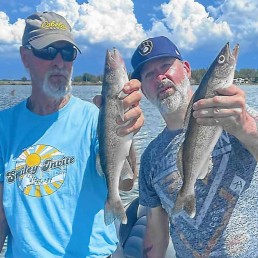
We were fishing Devils Lake in North Dakota, right in the middle of the prairie. Our group consisted of Bill Job of Little Chute, Wis., and his three sons, Shawn of Harrison, Wis., Erik from Maine, Daniel from Little Chute—and me. Bill and I have been friends since high school, fishing together for over 50 years.
Two days earlier, we arrived at our resort on Devils Lake. It was late afternoon and so windy that we didn’t go out. The next day, the sky was dark, and ugly clouds churned overhead with 20 to 30 mph sustained winds, but we went out anyway.
We were looking for walleyes and places to get out of the wind, but there was little relief from the winds. It was tough controlling the boats and fishing. I caught a 3-pound white bass early in the day, and Shawn picked up a big northern pike at the end of the day. We never saw a walleye. The wind roiled the water all day, and on the way back to the resort, waves splashed over the bow of our boats as we slowly motored across the lake.
The next morning when we woke up and looked down the hill, our cabin facing toward the marina with the lake behind it, the water was glass calm. This doesn’t happen often on Devils Lake. It was one of the rare days when the wind stops.
We hurried through breakfast, knowing it was going to be a great day. We launched my boat and readied the other rental boat. Pulling out of the landing, we pushed our throttles forward and skimmed across the water. It was far different from what we went through the day before.
Our two boats glided under a bridge of the road we came in on a couple days earlier, and we dropped anchors. The road was built over rocks which formed rows of riprap on both sides of the road. Bill and Daniel were in my boat and Shawn and Erik were in the other. Although we had a bucket of minnows, we were advised that leeches were the best bet for summer walleyes.
I started with minnows on a jig, casting it toward the riprap. After half an hour, I gave up on minnows and switched to a leech on a 1/4-ounce chartreuse jig.
Fifteen minutes later, I felt a tap on my jig and pulled back to set the hook. The tip of my spinning rod sprung alive as a fish pulled off. I quickly turned the fish and a moment later had it splashing next to the boat as Daniel netted it for me. It was a 15-inch walleye and went into the livewell—the beginning of our evening fish fry.
We heard a noise from the other boat and looked over to see Erik net a fish for Shawn. It was another walleye. A few minutes later, we saw a fish splashing alongside their boat as Shawn netted a walleye for Erik.
The history of Devils Lake is as unique as the weather around it. Water levels in the lake have gone up and down for decades. During the droughts and Dust Bowl of the 1930s, the lake decreased to a depth of only two feet. In the fall of 1993, heavy rains followed by heavy spring snows in 1994 caused the lake to rise over 5 feet in only six months. The rapid increase of water in the lake flooded the area, covering farms and homes, making the lake we see today. The lake is now over 126,000 acres, providing some of the best fishing in the Midwest.
It also is one of few lakes with freshwater shrimp, which have triggered an incredible fishery for yellow perch, as well has a great population of white bass in addition to northern pike and walleyes. Although we caught a large white bass and a big northern pike, it was the walleyes that brought our group to Devils Lake.
In relatively shallow water, we found a large flat crossed by power lines, and dropped anchor in about 12 feet of water. Bill and Daniel each put out two slip bobbers. Bill baited one with minnows and the other with leeches. Daniel had leeches on both of his rods. I put out a slip bobber with one rod and continued to cast a jig. I used leeches on both rods. Minnows were tough to find, but we were able to get some at our resort.
Within a few minutes, one of Bill’s slip bobbers sank. He grabbed his spinning rod, set the hook, and the rod bent in half as a fish took off. Daniel netted a keeper walleye that went into the livewell. Bill kept getting strikes all afternoon, catching fish with both leeches and minnows.
You can be among the first to get the latest info on where to go, what to use and how to use it!
I missed a couple strikes on a jig and leech. Daniel pulled one of his spinning rods and switched out the slip bobber for a bait rig. He cast it out and slowly moved it across the bottom. He did this a half-dozen times, then pulled back as the rod tip was plunging. Bill netted his fish—another walleye that was deposited in the livewell. It may have been a bit of an unusual presentation, but it worked.
I kept casting my jig with little success when I looked over to where my slip bobber had been floating. It wasn’t there. I noticed the tip on my spinning rod was bouncing. I lunged for my rod, and a moment later Daniel netted a walleye for me.
Shawn and Erik joined us, and shortly thereafter I saw Erick netting a fish for Shawn.
By late afternoon, as we crossed the lake back to the resort, we had seven walleyes in my livewell. Those fish plus Shawn’s fish became our fish fry.
The wind was howling the next morning on our last day of fishing on Devils Lake. White caps rolled on top of dark, gray waters. We came from so far to fish this lake, so we weren’t going to give up. Our boats rolled between the waves, spray breaking over the bow, washing over us as we crossed the lake. We were looking for someplace to get out of the wind.
We found one bay where it seemed there was less wind, and we dropped anchor. A few minutes later, Erik’s rod doubled over and Shawn was standing alongside with the net. The fish made a couple runs, and finally Erik got the fish next to the boat. As Shawn lifted the net from the water, we saw a big fish sagging in the mesh. It turned out to be a 22-inch walleye, the biggest of the trip.
Erik’s fish was the only strike that either boat had, so we moved across the lake back to the flat where we had found fish the day before. The lake surface was rolling, but it wasn’t as bad as the main lake. Shawn and Erik found a productive spot and started catching walleyes. In the next couple of hours, they picked up seven keeper walleyes and several more too small to keep.
Crossing the lake again, waves battered us as we slowly motored back to our cabin. It was some of the roughest waters I could ever remember having my boat on. We consulted the weather forecast for the rest of the day and it said that the winds were supposed to drop toward early evening.
We decided to have our fish fry early and wait out the wind. By the time we finished, the wind was dying, so we pushed out with the boats again.
We headed to the bridge that we fished first the day. As the sun was descending on the western side of the lake and the surface of the lake became a gentle roll, we picked up a couple more walleyes in the last daylight.
We left the next morning, and the wind was still blowing. We had a great fishing trip.
Thinking of trying a new fishing destination this year? You’ll find plenty of suggestions in every issue of MidWest Outdoors, available by subscribing on our website.
MWO
SHARE THIS POST
Did you enjoy this post?
You can be among the first to get the latest info on where to go, what to use and how to use it!