
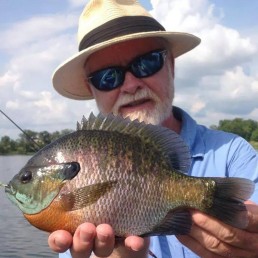
Shaded Basins and Bluegills
Bluegills have always been a favorite of mine. Like many anglers, they were one of the first fish I ever targeted, and they remain near the top of the list today. Light tackle, steady action, and consistent opportunity make them a staple of midsummer fishing.
According to panfish authority Greg Clusiau, bluegills are one of the most overlooked “trophy” fish in northern waters. I agree. Many lakes still produce 10-inch-plus fish, but success comes only when anglers intentionally target them rather than fishing for them incidentally.
July pattern structure
In July, bluegills become highly pattern-driven. On classic weed, sand, and rock lakes, fish typically break into three groups: shallow weed fish during low light; mid-depth weed line fish during transitions; and suspended basin fish during bright, midday conditions.
Finding them is the challenge. Once located, bluegills are rarely scattered; they group tightly and respond quickly to the right presentation.
Weed, sand, and rock edges
As a kid, I learned a lot about bluegills from the dock, peering through the openings between the boards. It quickly became clear that bluegills rarely moved far outside the shade to chase food, preferring to hold tight and let it come to them.
Growing up, my dad consistently used shaded edges in weed, sand, and rock lakes on classic systems to his advantage. He would position the boat on the sunny side of the weed line so it created a defined shadow over clean sand or rock transitions.
That shadow line consistently drew fish into the edge of the weeds.
In clear, northern waters, those transitions are critical. Weed-to-sand or weed-to-rock breaks create both feeding edges and light transitions that bluegills consistently relate to.
Shadow-edge presentation
A highly effective approach is a short, 2- to 3-foot ice rod or ultralight rod fished vertically along the weed edge. Small, 1/32- to 1/16-ounce feather- or rubber-bodied jigs, paired with 4-pound fluorocarbon, are ideal for detecting subtle bites. Fluorescent line can also help accentuate bites in low-light situations. A wax worm or a piece of nightcrawler finishes the presentation.
The key is subtle movement. Slow, lift-and-drop action combined with a light rod-tip shake keeps the bait in the strike zone. In cabbage or coontail shadows, that small amount of motion is often enough to pull fish tight and trigger strikes.
Small, compact bobbers can also be used along deeper weed edges when fish are slightly suspended, offering a more stationary approach when conditions call for it.
Midsummer basin movement
By midsummer, many of the better bluegills slide off the weed edge and into adjacent basin water. On weed, sand, and rock systems, fish often suspend over deep basin flats near structure such as points, inside turns, or weed line bends.
These fish are difficult to locate without electronics.
You can be among the first to get the latest info on where to go, what to use and how to use it!
We would cover water using long 10-foot spinning rods or cane poles positioned horizontally in rod holders to widen our trolling spread. Small, 1/16-ounce jigs on 4-pound fluorocarbon, tipped with twister tails or occasional nightcrawler pieces under a small float, were used while slowly moving basin edges.
The goal is simple: Locate fish, then slow down.
Electronics define midsummer success
Depth finders become critical in midsummer. Once schools of bluegills appear—often suspended over 20 to 35 feet above deeper basin water—we immediately focus efforts in that zone. This is where electronics separate searching from catching.
Bluegills are rarely isolated. Once a pod is located, additional fish are typically nearby at the same depth, or slightly offset along the basin contour.
Low-light surface action
During early morning and late evening low-light periods, bluegills often move shallow and feed near the surface along weed lines and adjacent flats. Small poppers or a fly on a fly rod become highly effective tools.
Surface activity often shows first as faint dimples or subtle rings, signaling fish feeding just below the surface on emerging insects or suspended forage.
When conditions align, a well-placed popper or fly can trigger immediate strikes. It is a short but highly visual bite window and often the most exciting fishing of the day.
Location over everything
While presentation matters, location is the deciding factor. A properly placed small jig will catch bluegills in nearly any situation.
In deeper water, small, tungsten jigs are especially effective because they reach depth quickly and maintain position in the strike zone longer. Once fish are located, efficiency becomes critical—getting back to them quickly and keeping the bait in front of the school often determines success.
Bluegills remain one of the most consistent and underappreciated summer species in the Midwest. The patterns are not complicated. The discipline is applying them consistently.
Looking for more ways to increase your catch rate? You’ll find plenty of suggestions in every issue of MidWest Outdoors. Subscribe on our website.
MWO
SHARE THIS POST
Did you enjoy this post?
You can be among the first to get the latest info on where to go, what to use and how to use it!
