
It’s Early Summer: Pick Your Poison
For all practical purposes, June opens the door to summer fishing. It’s great to have options, but that means using tackle and baits based on your approach.
For starters, bluegills may still be shallow, spawning. Usually, you can go with a light to ultralight rod, a small reel with 6-pound-test line, a small weight, a #6 hook and a bobber. Angle worms or ‘crawler pieces work as bait. Use a pencil-shaped bobber as it has less resistance going under with the bite. A slip bobber is preferred as it is easier to deal with when changing depth.
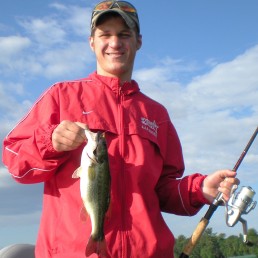
I usually check largemouth bass now, because they don’t move great distances from wintering areas.
The bass may be done spawning. And bluegills are one item on the summer menu, if the ‘gills are still shallow. Look for flats that bass can patrol until a “summer feel” sets in. The nearest areas to deeper water should be a good start. Flats with a variety of cover, like weeds, stumps, reeds, and rocks make them feel at home. Throw jerkbaits, bladebaits, spinnerbaits and stick worms around cover. A swing jig works near bottom cover, too. Tip it with a Berkley PowerBait MaxScent Creature Hawg. MaxScent baits release scent as soon as they are in the water, which can help bass zero in. Since you are searching now, any bait you can throw to cover could be the program on any given day.
A Senko fished along and in new weed growth is also a good bait to use in cover; it imparts a seductive wiggle as it sinks. Fish that may not chase a moving bait can be receptive to one that’s placed close to cover. And watch your line, as a lot of the strikes may not be hard ones.
Now, virtually any cover can draw bass as they begin moving to their preferred summer structure.
Deeper weed lines tend to draw the most bass. That means starting at the surface and finishing 20 or more feet deeper, where the deep weed line ends.
Here are a several different setups to combat bass. In other words, “How do we love the weeds? Ah, let me count the ways.”
Shallow slop weeds that either grow to the surface or keep growing and fold over at the surface are fairly shallow.
You can be among the first to get the latest info on where to go, what to use and how to use it!
Start there. Slop usually requires heavy equipment and strong line: a 6’6” to 7’2” medium-heavy or heavy rod. For this type of fishing, I go with the big stuff. Sixty-pound braid tied directly to a hollow-body frog can shine. Buzzbaits on edges or in pockets can enrage bass close to the edge. Drop a Texas-rigged plastic into any holes in the weeds as you go past to tempt fish that aren’t up and chasing.
Surface baits like a PopR will call fish. Be especially aware of any surface activity in early to mid-June. That’s the “summer peak,” when most bass in an area move back to the shallows to gorge for a week or so. Surface baits are key for this event. I like my PopR to have mylar or feathers on the back hook. It seems to keep the fish looking. Pop it once and there might be a big explosion.
Next, I’d go with a Rat-L-Trap, jerkbait or crankbait that can run the gamut as the water deepens. As the water eventually deepens, light penetration diminishes and weeds stop growing to create a deep weed edge. Know which baits run 3 feet, 6 to 8 feet deep, or deeper so you can keep a bait right in the faces of fish holding near the tops of mid-depth weeds. Use Texas-rigged plastics to probe if fish are holding tight.
Senkos can also be used at varying depths. As can a wacky-rigged worm. Stay alert. If your line twitches, it could mean a bass just grabbed your offering.
A basic worm like a 7-inch PowerBait rigged on a jigworm head lets you present your lure on the mid to deeper edge. Adjust your weight to conditions. Regular jigs, Carolina rigs and Free Run plastics rigs are also good baits for deeper fish.
Keep your eyes peeled when you are on the water. Retaining walls, riprap rock and piers can all hold fish now. Slow-rolling a spinnerbait or bladed jig, swimming a bass jig with a trailer, or working a tube or grub are other lure possibilities.
If, by chance, you can fish everything we’ve talked about here in one outing, you’re a better person than me. Pay attention to where you catch a bass and look for more areas like it.
For helpful bass fishing insight, check out the articles in every issue of MidWest Outdoors. Subscribe on our website.
MWO
SHARE THIS POST
Did you enjoy this post?
You can be among the first to get the latest info on where to go, what to use and how to use it!