
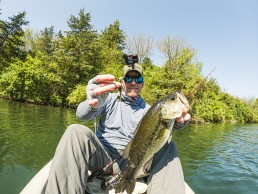
Fish the May Milk Run for Premium Illinois Bass Fishing
If I could only pick one month to fish in Illinois, it would be May.
The air smells like wet dirt and lilacs as you step out into the dewy, glistening grass. Spiderwebs are surprisingly beautiful as the light peeks over the treetops and reflects off the water droplets they suspend in space. The air is cool–not cold. Hands ache less as gear is prepped. The birds are alive and speaking to you again. The bugs? Present, but not overbearing. Small, moving clouds create an ethereal, swirling haze as you enjoy a slow, deep breath and soak it all in.
It’s time to go.
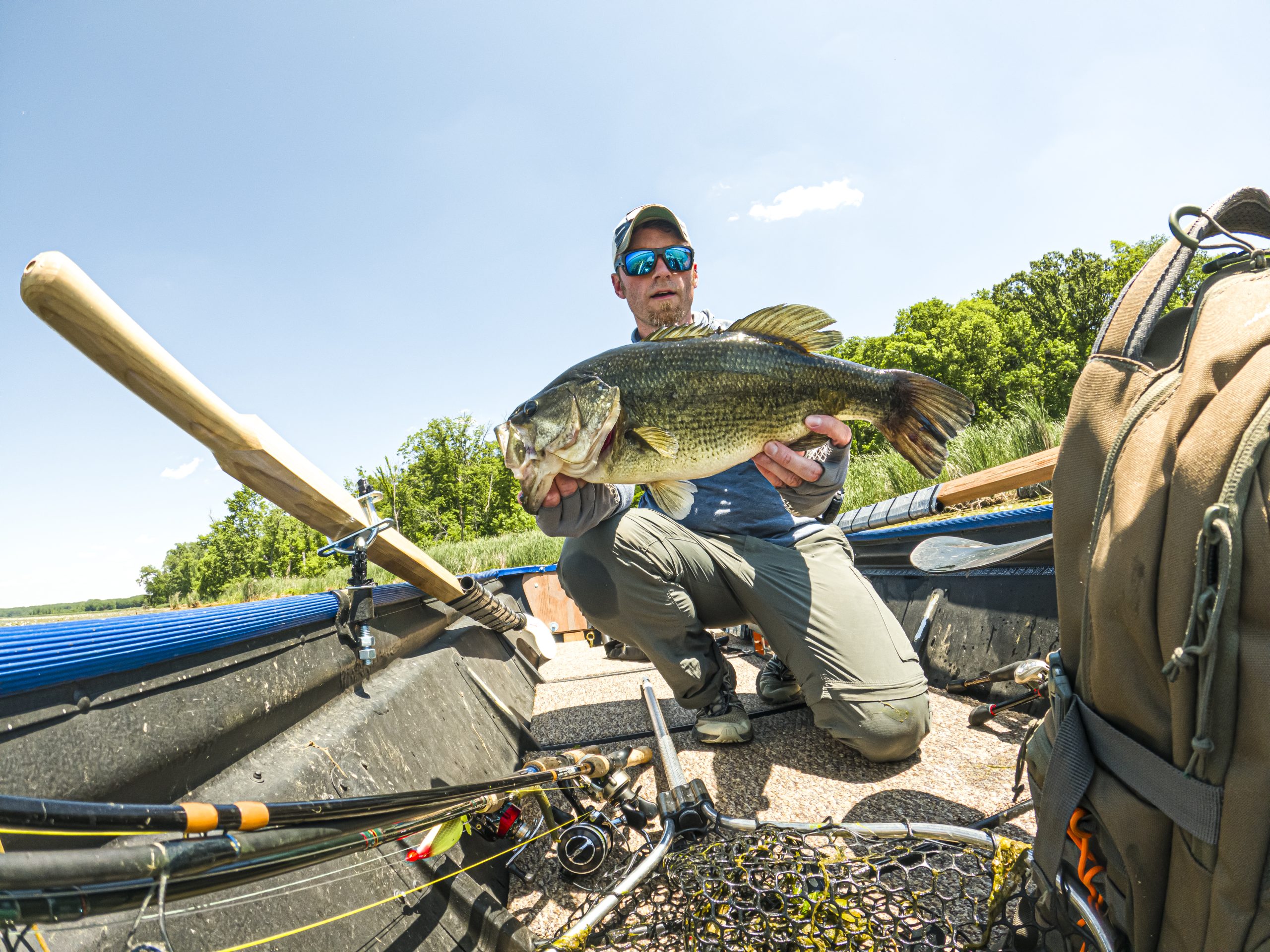
A backpack with a Base Box, 2 rods—no more—some plastics, and a small, lightweight kayak. Minimalist gear is all that’s required to take a crack at some giant bass.
Where to?
Maybe you’ll hop over to the creek if the rain has held off for a few days. If not, perhaps to a clear, deep lake. The weather has been warmer than usual, after all. Too crowded? No bother. An old borrow pit sounds like a great option if the boat ramp is packed. Too windy? Ah, a canal surrounded by thick trees on either side sounds like the perfect solution. Plus, our Illinois muck hasn’t completely filled in yet, so it will be loaded with holes and edges to poke and prod with topwater lures before the sun gets high in the sky, and you drop a bait deeper to fat, healthy fish sitting in the shade, waiting to ambush prey.
We have options, and if you have limited fishing time like I do, May isn’t just a good month. It’s the best month.
Why May fishing is so productive in northern Illinois
May feels like a merging of the seasons. Things overlap. Throughout the month, we’ll likely see air temperatures averaging 55° in the mornings climb to 80° in the afternoon. It’s usually comfortable. Manageable. The water temps will be increasing as well, often bouncing around between the low 60s to the low to mid 70s. These temps can fluctuate depending on the weather, and the depth of the body of water you choose to fish.
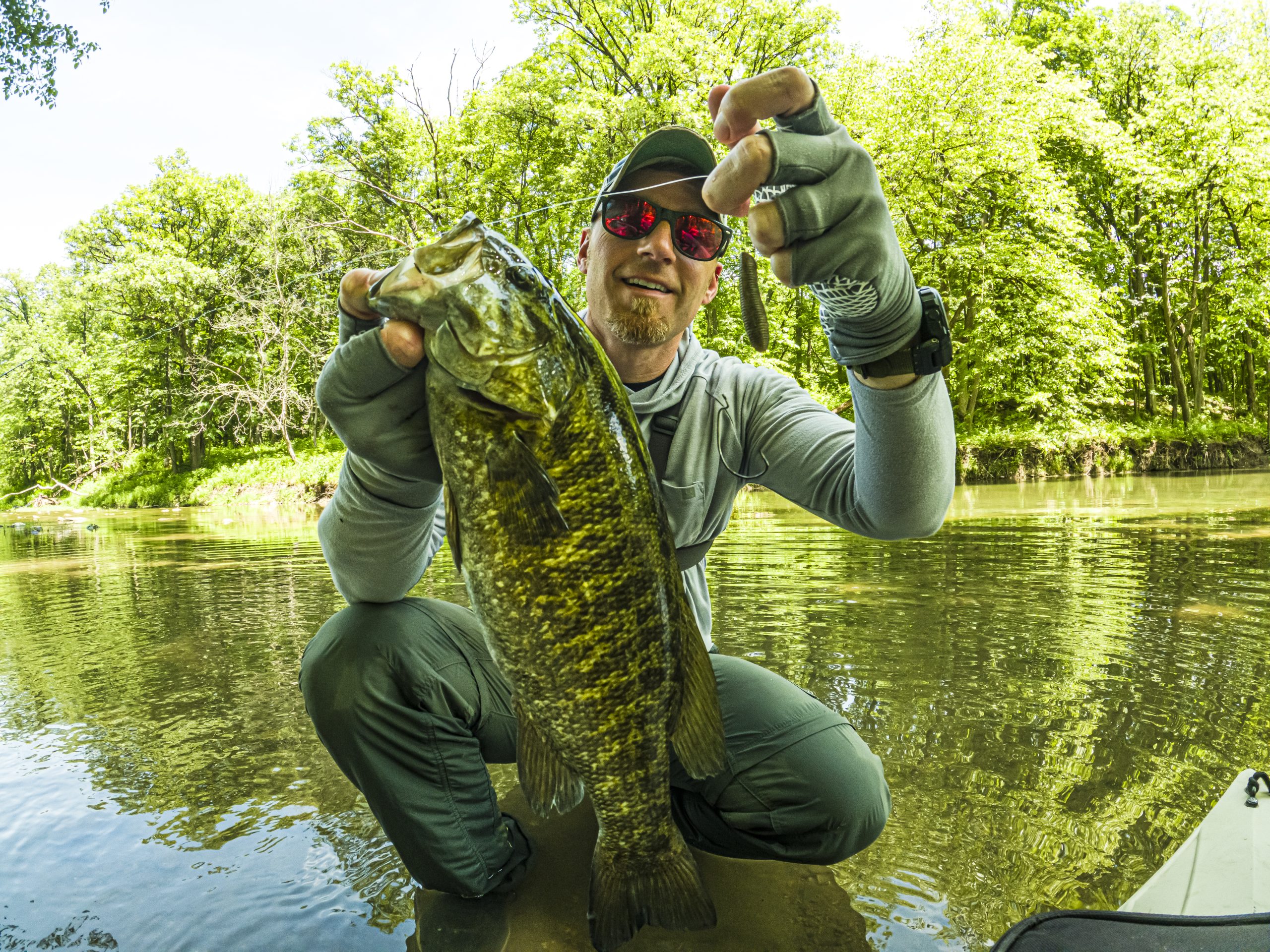
Shallow, tributary creeks can be dynamite for smallmouth bass, especially if the creek offers warmer, quieter, hard-bottom habitat. If there are good gravel runs and shallow flats with current breaks, or if the water is clearer and calmer than the main river, these areas become prime candidates for a spawning push, and a shot at some monster bronzebacks. These same creeks often empty out in the summer and fall.
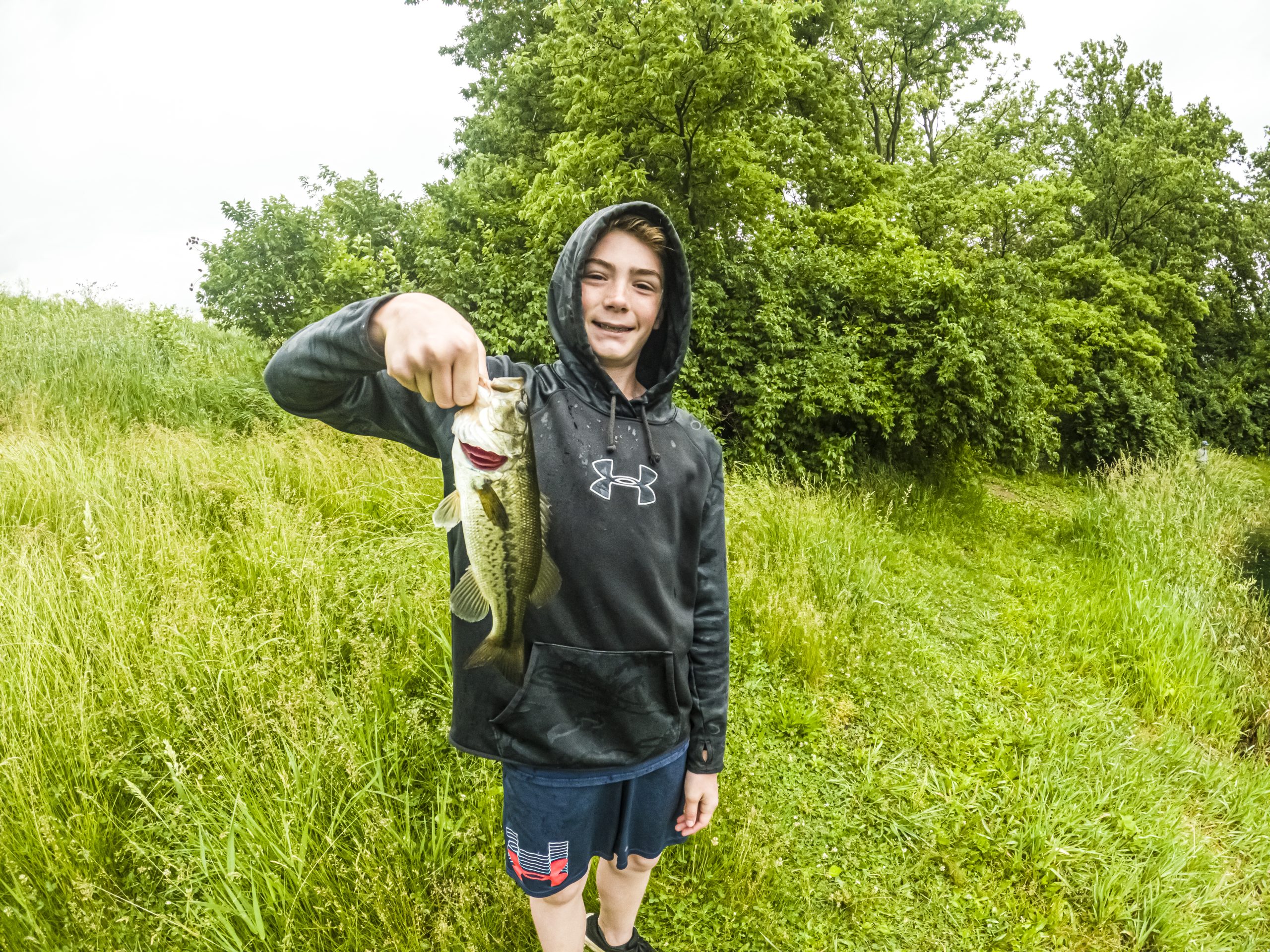
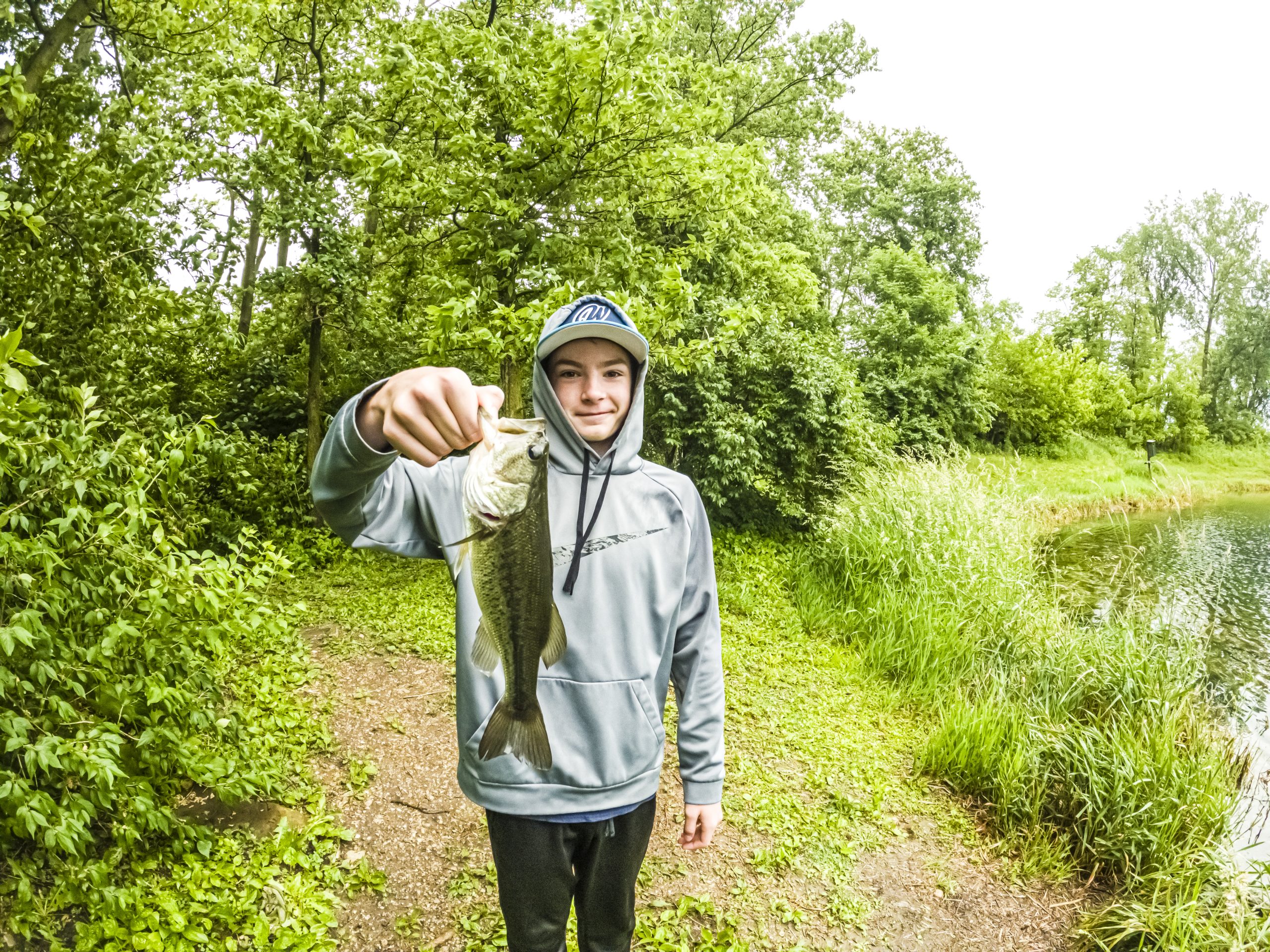
Largemouth bass in ponds, pits and lakes will be active and in multiple phases: pre-spawn, spawn, or post-spawn. You’ll have access to bigger fish without the need for excessive electronics, because many will push up shallow. If one group isn’t biting, change your location. Chances are, you’ll find some that will.
This is one of the reasons that I talk about creating a fishing portfolio. It’s a collection of different locations, different kinds of water with different kinds of fish, usually in different phases and affected by weather in different ways. It gives you options and the ability to adapt, so when the good Lord blesses you with a window of time to fish, you can always make the most of it.
In May, it feels like you simply get to pick what you prefer. Nothing is guaranteed, but you have many options. Here are a few more opportunities that you’ll be able to take advantage of this month.
Milk run stop #1—protected pockets and hidden bays
As the sport of fishing grows, we see more people on the water. There are pros and cons to this, which is a topic for another day, but it’s made me realize just how much I love the solitude of fishing. Not always, but sometimes. In May, it’s the perfect time to look for hidden bays and pockets that are part of the main lake or pit you’ve chosen to fish, or if you’re lucky, connected to the main lake by a small trickling stream. Investigating clues like this, or looking for little, hidden areas where other fishermen fear to tread, can be incredibly rewarding in terms of scenery and unpressured fish.
Often, protected pockets and hidden bays warm up faster than the main lake. Even a few degrees difference can mean more activity. They are great places to investigate at this time of year. Fish the mouth, then work your way in. Most others will skip that second part.
You can be among the first to get the latest info on where to go, what to use and how to use it!
Milk run stop #2—windblown banks and riprap
Riprap is a cafeteria for hungry bass. The rocks hold all sorts of minnows, panfish, insects and crayfish. It’s a smorgasbord, and as the water and weather warm, algae grows on and around the rocks. The algae pulls in all of the creatures that eat it, and bass follow.
The rocks can hold heat from the sun, and provide ambush points if they’re chunky enough.
Combine all of these elements with some incoming wind (which can help to concentrate the food and stir up the ecosystem) and you have a perfect combination to potentially produce fish all day long.
Milk run stop #3—shallow canals and muck mats
Some of the healthiest bass I’ve ever held have come from the most disgusting areas. Thick, snotty, stinking muck mats loaded with dead rotting… well, I’m not sure what that was… dead somethings surrounded by insects that crawl in your nose and eyes. These mats smell like a science project that got left on the bus, but they can hide the biggest, beefiest bass you’ve ever laid eyes on. And why not? The bass have food, great overhead cover and protection from predators above and the sun. But in May, you have access, because much of the duckweed and super-thick stuff hasn’t quite filled in yet.
The muck mats in Illinois ponds, lakes and canals are full of clear edges and openings; the perfect places to run a topwater or pitch something that will get down below the surface. At times, the topwater bite will not only be the best producer of quantity and quality; it may also work all day long.
Milk run stop #4—shallow creeks and tributaries
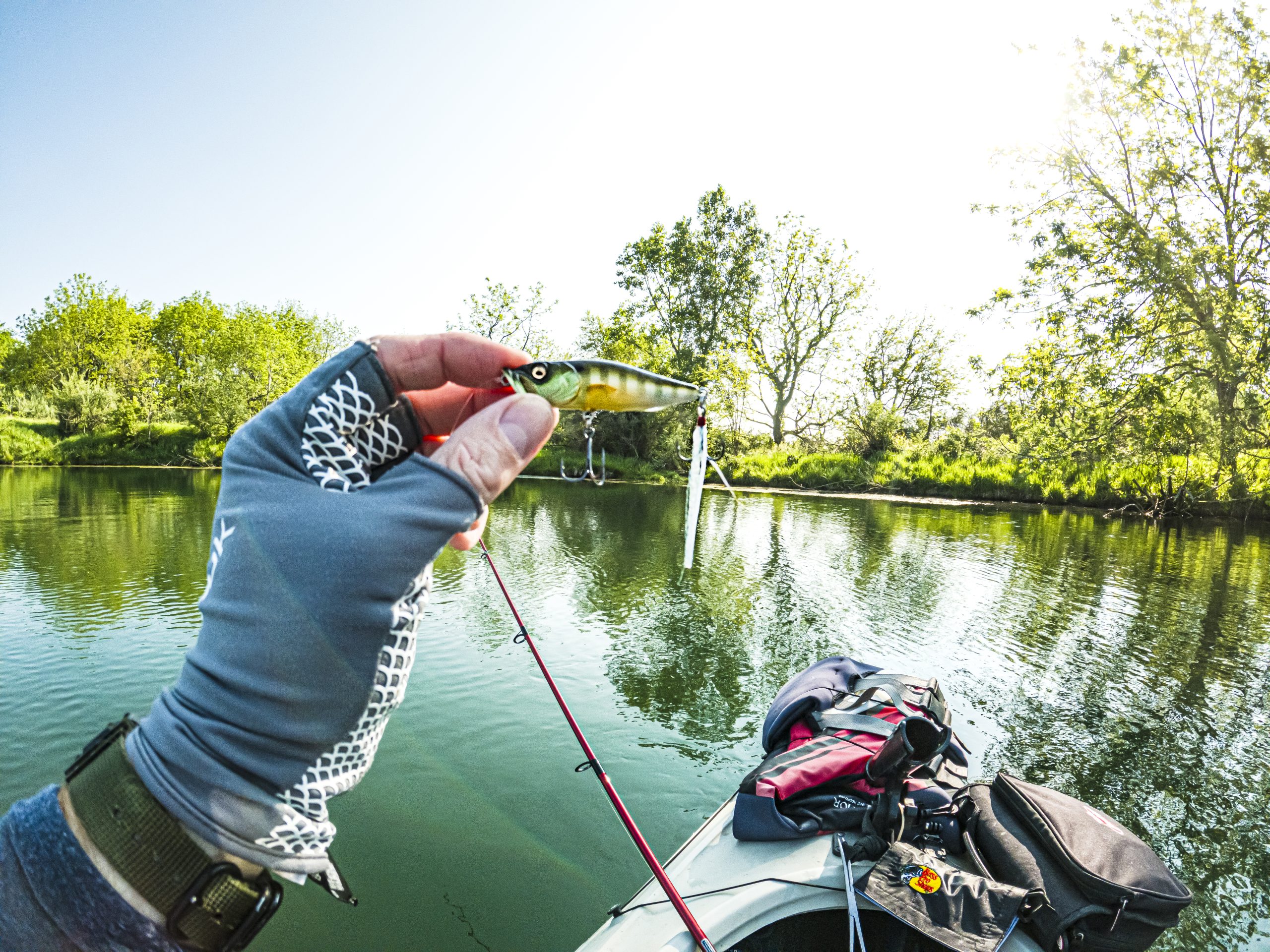
As mentioned, creeks that warm up and have good runs filled with gravel have the potential to be more productive during the month of May than any other time of the year. Small topwaters like poppers, jerkbaits, swimbaits, flukes, shaky heads, Ned rigs and any assortment of baits can work on hungry smallmouth bass that have moved in for a while.
Match your presentation style and color to the water conditions and local forage. If you notice loads of bugs on top of the water and hear commotion in the distance, definitely spend some extra time twitching on top. If you see a lot of bends holding logs and deeper water, pick them apart with something that you can drift through the area, or pop a heavier weight on, to inspect the holes.
Creeks can hold all sorts of fish, and you never know what you’re going to catch.
Make a plan, and plan to fish
Nothing in life is guaranteed, but I guarantee this: May is the month when I try to make more time than any other month to fish. It is also the perfect opportunity to take the little ones out, because they’ll have a shot at more activity and potentially a trophy that will whet their appetite for years to come. The most important thing is to just make sure that you’re on the water. Whether you love fishing yourself, or you love the idea of passing down the best aspects of the sport that is second to none, May is the perfect month for experiencing premium Illinois fishing.
Did you enjoy this post?
You can be among the first to get the latest info on where to go, what to use and how to use it!
