
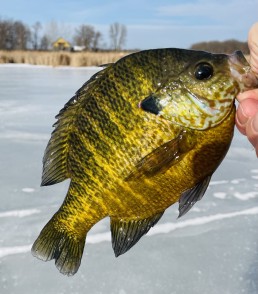
Late-Ice Panfish
The definition of “late ice” is a little ambiguous. It is actually a fishing period that can change quite rapidly and is very weather dependent. Some springs, it lasts quite a long time, and others, it can be over quickly.
Late ice is a time of change and transition on frozen lakes. It starts to happen when the snow is melting on the lakes and the sun is high enough, and powerful enough, to penetrate the ice to start weed growth.
On many lakes, this starts a migration of fish from deep-water basins to shallow flats. The flats I fish are usually in the 8- to 12-foot range. An underwater camera can be very helpful in identifying areas of good weed growth. Forward-facing sonar will do the same.
When working flats for panfish, I believe it is necessary to drill a lot of holes, as fish tend to be scattered and moving. This creates the need to do some serious hole hopping.
Because of the weed growth that may be present, it can be necessary to drop a jig down each hole to see what materializes. If fish come in to look, I spend time to trying to get them to bite. If nothing shows up, I move to a different hole.
When fishing areas of scattered weeds, it is often possible to see fish on your electronics before you drop a jig. There are days when I have found plenty of fish on flats even with little weed growth.
Not all fish will move shallow. I have had some excellent, deep-basin fishing during late ice. Don’t be afraid to look in deep water.
You can be among the first to get the latest info on where to go, what to use and how to use it!
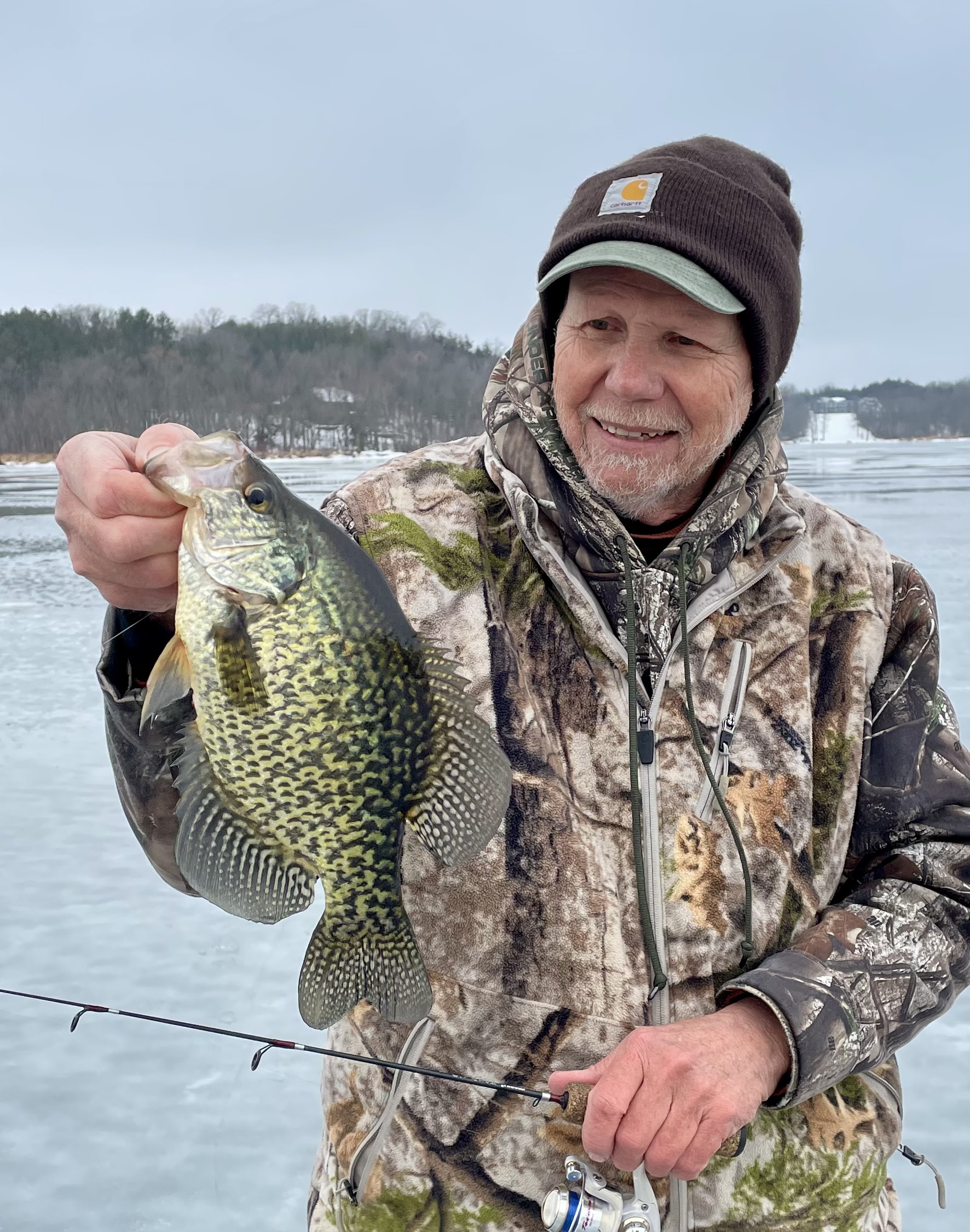
Eventually, water atop the ice will start to seep through cracks and holes. Sometimes, these drain holes can be substantial and travel hazards if you are on a machine.
The drain holes are pouring fresh water full of oxygen into the lake. Fishing in or near a drain hole can be productive.
The new water going into the lake creates an increase in invertebrate activity. It is not unusual to see little bugs swimming around in your ice hole. When this happens, it can bring panfish right up under the ice to pick off these invertebrates. I have had a few times when fishing just under the ice was very productive.
Sight fishing can also work during the late-ice period. If you pull a darkened portable fish house up around you, you can easily see under the ice. Watching fish bite is quite interesting.
The late-ice period can be productive, but also tricky. Fish are active and often on the move. This movement can vary greatly from lake to lake. Success can require lots of looking and hole drilling. However, when you put a pattern together, the end results can be quite impressive.

Did you enjoy this post?
You can be among the first to get the latest info on where to go, what to use and how to use it!