
Visit North Alabama’s Spectacular Cathedral Caverns
Tired of the cold weather here in the Midwest? Consider making a road trip down south to Alabama. I recently planned a fishing trip to northern Alabama and had a great time. But fishing wasn’t the only thing on my to-do list. I also visited a truly remarkable cave system while in the area.
I enjoy exploring caves. The sense of mystery and adventure never gets old, and I think the unusual cave formations that take thousands of years to form are very interesting. Add the darkness, the bats and the eerie silence, and it’s enough to give anyone a thrill. Year-round cool cave temperatures are a welcome side benefit whether you are trying to escape frigid winter temps up north or hot summer temperatures later in the year.
Over the years, I have visited many caves and caverns throughout the United States. The Cave of the Winds in Colorado was the first of many caves I explored back when I was a youngster, and evidently, I have never outgrown them. The enormous cave system at Mammoth Cave National Park in Kentucky is great. I also enjoyed visiting Big Wyandotte Cave in southern Indiana. with its interesting formations and its impressive subterranean Monument Mountain. Those are just a few of my favorite caves.
However, I now have a new favorite cave after making a trip to northern Alabama. That cave system is named Cathedral Caverns, located within Cathedral Caverns State Park near expansive Lake Guntersville in northern Alabama. The cave formations inside are incredible, and in 1972, Cathedral Caverns was designated as a National Natural Landmark.
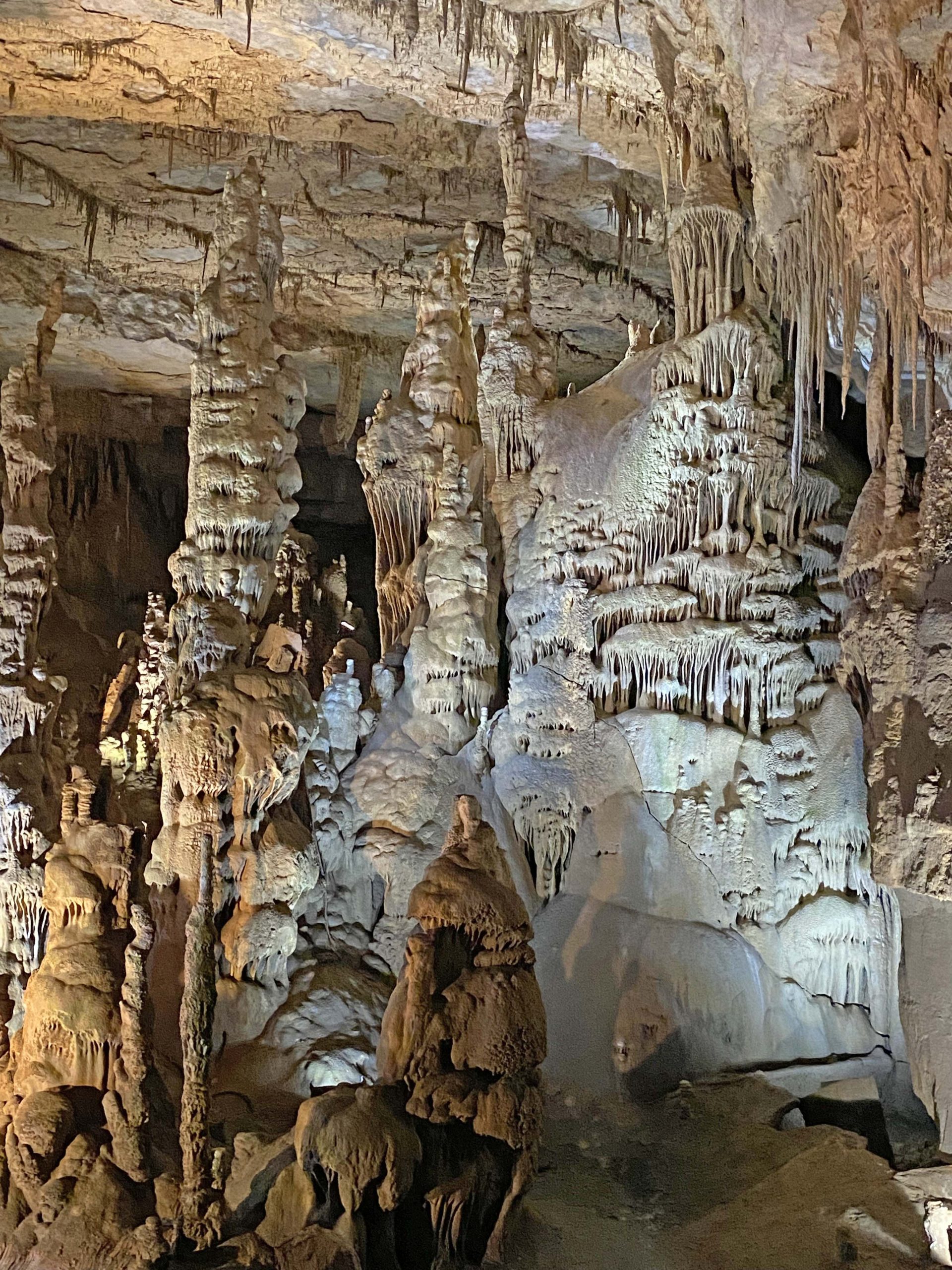
The cave was not always called Cathedral Caverns, though. Since there were many bats living inside the cave when it was first discovered, it was named Bat Cave when it was opened to the public as a tourist attraction in the 1950s. The name was changed to Cathedral Caverns when the full extent of the subterranean formations was discovered. The awe-inspiring columns, stalactites and stalagmites looked like the inside of a breath-taking cathedral!
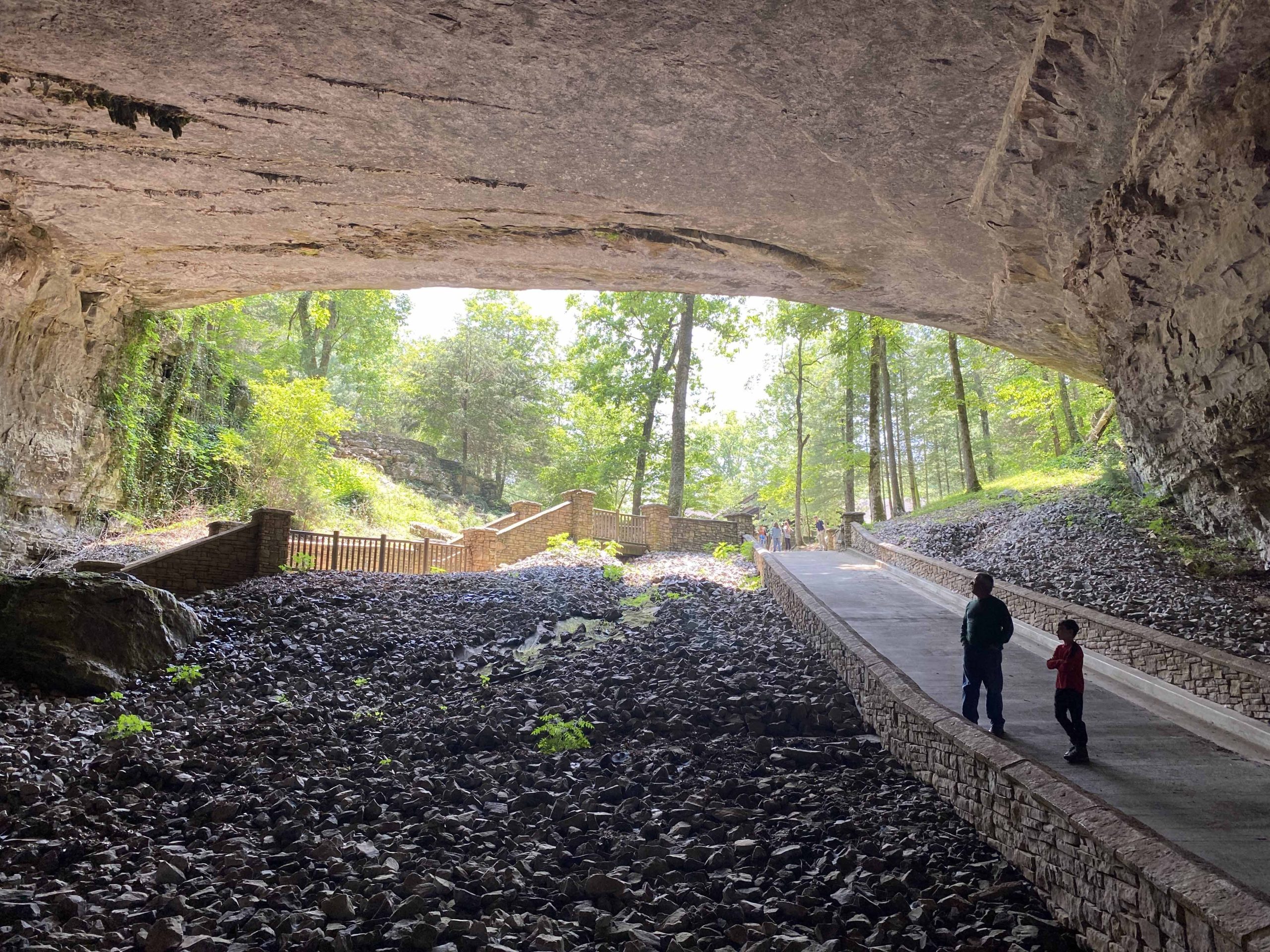
The first thing that visitors see when entering Cathedral Caverns is the gigantic entrance. It is truly enormous. The cave opening is 25 feet tall and an amazing 126 feet wide. Modern stairs and a smooth concrete walkway make it easy for visitors to get in and out of the cave. Much of it is wheelchair-accessible, too. There is plenty of light near the entrance, but that changes quickly.
You can be among the first to get the latest info on where to go, what to use and how to use it!
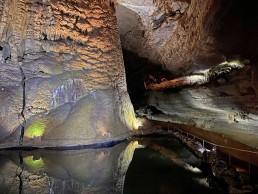
The cave would be very dark if it were not for the artificial lighting installed to illuminate the walkways and highlight the beautiful formations. One of the largest stalagmites in the world can be found here, measuring 45 feet tall and a massive 243 feet in circumference at its base. It is named “Goliath,” and the name fits!
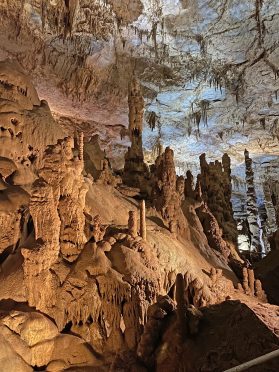
There is also a large stalagmite forest near the end of the caverns that is absolutely spectacular. The path meanders through three levels of stalagmite formations that rise from the floor of the cave and reach nearly to the ceiling. Actually, some of them do reach the ceiling, and those are called columns. There are also too many stalactites hanging down from the ceiling to count. One incredible stalagmite measures 27 feet tall and is only three inches wide. It is amazing that it was never broken off over the eons.
One area of the cave is known as Boulder Boulevard. It is a huge room with giant boulders strewn everywhere. The room itself is 550 feet long, 100 feet wide and an amazing 123 feet tall. The sheer size of the room is almost enough to take your breath away. The size of the boulders and huge broken rocks is remarkable, too.
The flowstone formations inside the cave are incredible. Not far from the entrance is a huge formation called Stalagmite Mountain. This flowstone feature is a 500,000-cubic-foot column of solid calcite which is wonderful to see. Of course, flowstone formations can be seen in many areas of the cave; farther down the path, there is a large “frozen waterfall” where water trickles over a massive section of flowstone (32 feet tall and 135 feet long) to the rocks below. There is even a “Flowstone Wall” beyond that where different shapes can be seen in the shadowy light.
The sheer number and beauty of the formations inside Cathedral Caverns made a lasting impression on me. If I find myself in northern Alabama again in the future, I will visit Cathedral Caverns again without hesitation. It was an experience that I will never forget. If you like caves and have never seen this one, you need to add it to your bucket list!
For more information on Cathedral Caverns State Park, please visit www.alapark.com/parks/cathedral-caverns-state-park. The website provides plenty of information about cave tours (including tour times and prices) and other activities in the park. Cathedral Caverns is also within easy driving distance of Lake Guntersville State Park, the Marshall Space Flight Center in Huntsville, Monte Sano State Park, and several other state parks.
While you are in northern Alabama, check out some of the other great things to do in the area, too. The Alabama Mountain Lakes Tourist Association maintains a great website which has ideas for all sorts of cool places to visit and fun things to do (www.northalabama.org). Besides caves, the nearby state parks have great hiking trails, fishing lakes, beautiful waterfalls and more. And when you get hungry, don’t forget about the North Alabama Barbecue Trail. Alabama BBQ is hard to beat!


Did you enjoy this post?
You can be among the first to get the latest info on where to go, what to use and how to use it!