
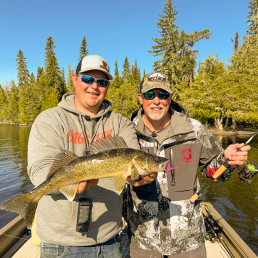
A Road Map to Ontario Spring Walleyes
To some anglers, traveling to unknown fisheries is a scary experience. For others, it’s what fishing adventure is all about.
What many avid anglers enjoy most about fishing isn’t just catching the fish. Rather, it’s the overall process involved in learning a body of water, finding fish, figuring out a productive presentation, and ultimately catching a few.
Those of us who live in the Upper Great Lakes region are blessed to have Ontario as our neighbor to the north. Traveling to Ontario could not be easier, and the fishing you can expect could not be better.
Early spring, right after the walleye season opens on the third Saturday in May, is one of most productive times to head north. Just a few days after the ice melts from local lakes and rivers, walleyes can be as predictable as daffodils poking up in perennial gardens.
Understanding how and where walleyes spawn helps paint a clear picture of where they are likely to be found in early spring. Walleyes begin staging in their preferred spawning areas weeks before the ice melts. The spring spawning ritual can actually start before the ice is completely melted and routinely runs for several weeks.
Adult females show up and spawn quickly, usually under the cover of darkness. Immediately after spawning, larger, adult-class walleyes abandon spawning areas to turn their attention toward finding food.
Meanwhile, males tend to remain fixated on the spawning ritual and grounds much longer. Because not all female walleyes spawn at the same time, males hang out, waiting on more females to ripen and move onto the spawning grounds.
Across Ontario, walleyes are most likely to spawn in tributary streams, below waterfalls and spillways, in the delta areas where rivers flow into lakes, and along windward shorelines that enjoy plenty of wave action. Current, either in flowing rivers or created by wind-pushed water, is important to successful walleye spawning. It helps keep walleye eggs well-oxygenated and free from sediment that can suffocate them.
Walleyes broadcast their eggs and milt, and fertilized eggs are left to fend for themselves. Bottom substrates that incorporate small to medium-sized rocks, a few boulders, and plenty of gravel provide the ideal crevices for fertilized eggs to settle into and remain safe until they hatch into free-swimming fry.
You can be among the first to get the latest info on where to go, what to use and how to use it!
In most years, there are plenty of “eating-sized” male walleyes on the spawning grounds from opening weekend right through early to mid-June. These fish are often very competitive, aggressive, and will strike a variety of lures.
Larger female walleyes are not as predictable as males, but they show up in select places that offer them the comforts of warmer water and readily available forage. Places where rivers or smaller tributary streams dump into the main lake are especially good spots to find hungry, post-spawn walleyes. These places benefit from being somewhat warmer water than the main-lake basin, and the flowing water tends to attract and hold a steady stream of food in the vicinity.
Post-spawn walleyes also start slipping into shallow bays that feature a soft, organic bottom makeup. Dark-bottom bays, especially those that face south and receive good sun exposure, warm up quicker than the main lake, attracting not only a wealth of minnow species, but also crayfish that emerge from winter hibernation about this time of year. Water depths in the 4- to 8-foot range tend to concentrate the most fish. Gradually, these fish slide out into slightly deeper, 8- to 15-foot depths as the water temperature slowly warms.
The closer the back bays are to primary spawning areas, the more fish they are likely to attract and hold post-spawn walleyes. The water is barely 40 degrees, and while hungry, walleyes are still a little lethargic at this point. Once the water temperature rises into the upper 40s and low 50s, a post-spawn bite kicks in that needs to be experienced to be fully appreciated.
The mythical “100 fish days” that so many fishing camps brag about typically happen when post-spawn walleyes find the right combination of water temperature and available forage. Often, areas that produce fish one year produce similar results year after year.
Across Ontario, countless walleye destinations harbor some of the best fishing opportunities in North America. The third Saturday in May is walleye opening day on most of Ontario’s lakes and rivers. Technically, it’s not a holiday, but for those who enjoy catching and eating walleyes, it should be.
Thinking of trying a new fishing destination this year? You’ll find plenty of suggestions in every issue of MidWest Outdoors, available by subscribing on our website.
MWO
SHARE THIS POST
Did you enjoy this post?
You can be among the first to get the latest info on where to go, what to use and how to use it!
