
Well, the Weather Outside is Frightful
But your fishing tackle might be worse off! So, this winter, on a day you wanted to fish or hunt—but with 34 degrees and sideways sleet from gale force winds—consider a change in gameplan.
Spend that same amount of time tending your tackle that may have been neglected this past season. It can be a productive use of free time that pays off next year.
Much has been written about maintenance of reels, rods, line and other equipment, so this discussion will focus on what often gets less attention yet is just as important: your lure collection.
Maintenance of soft plastic types is straightforward; it’s mainly replacing them as needed during the year, or at the end of the season. So instead, let’s get into less-obvious care that provides lasting benefits: Care and improvements to more durable lures.
Hard body help
Hard-body baits, be they crankbaits, jerkbaits, topwaters or others, may appear to need no maintenance. But they do, especially if you use them much. Even when new, some have weak hooks—maybe split rings, too—that can be upgraded. It’s a bummer, considering the high cost of lures these days. Yet it’s not as depressing as a poor-quality hook bending out to lose your best smallmouth of the season, as your humble author experienced last year.
Whether it’s upgrading new hooks or replacing worn-out models, there are many premium-quality replacements to choose from. Gamakatsu, Owner, VMC, Mustad and Eagle Claw all offer great hooks, though if using their more entry-level versions, a rating of at least “2X” in strength helps manage the risks of bending out too readily.
On a related note, once an even high-quality hook has been bent back after a fish or snag, it has lost significant strength, and more bending weakens it even more. Therefore, despite the hassle and expense, replacing these worn hooks is recommended—and weakened split rings, too.
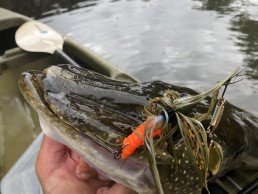
Consider additional hook improvements beyond simple replacements or upgrades. Three trebles on body baits can bring hook tangles and more of a “Bird Cage” effect when harder-mouthed fish like pike strike, impeding hook ups. Three trebles can also make unhooking fish a chore, increasing the odds of you getting hooked, too.
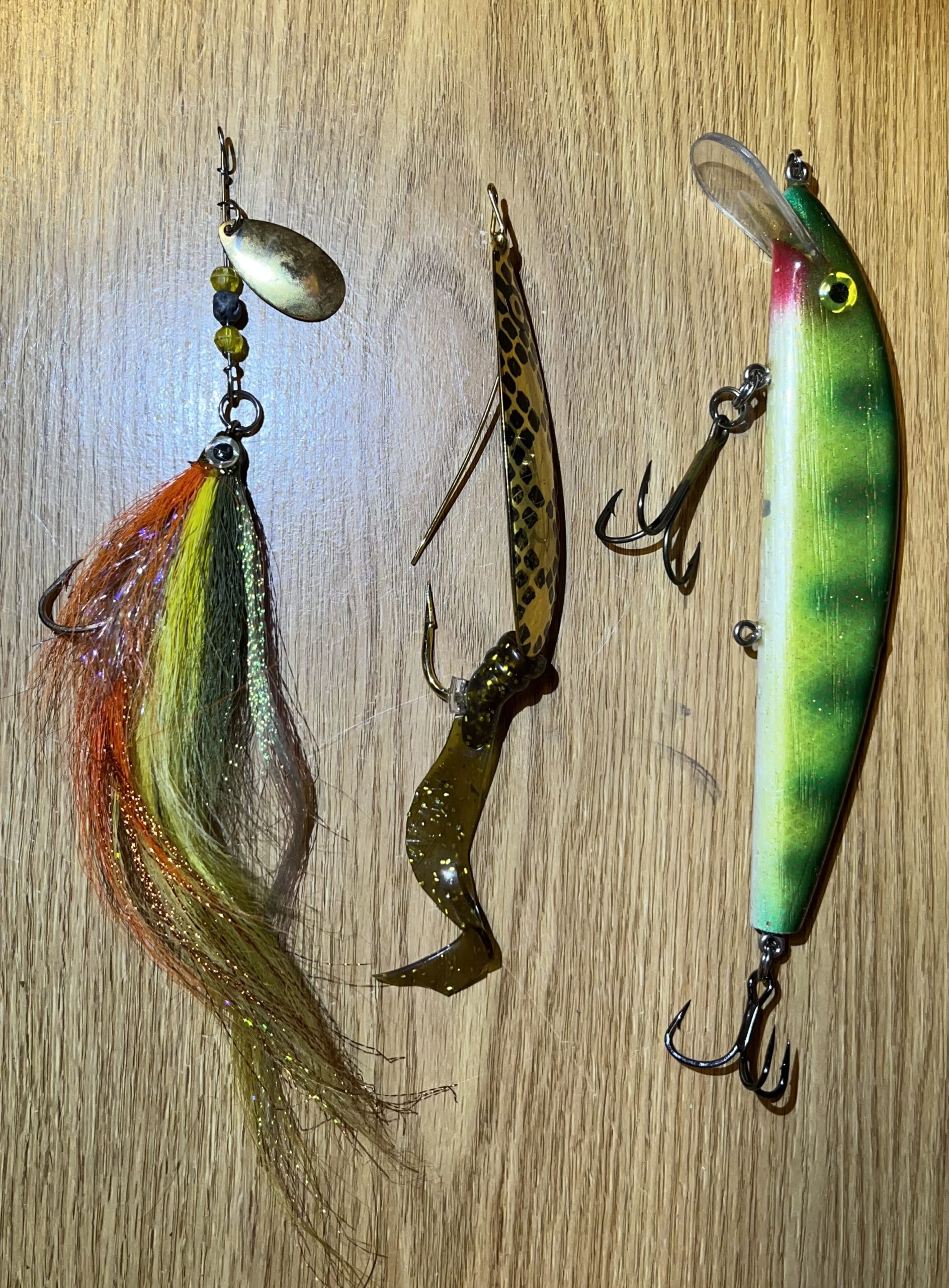
Instead, you can remove the middle treble and use a front treble that’s one size larger, or the same size in a wider-gapped and/or longer-shanked model, to help pin fish. Depending on lure size, two successive split rings can be used to provide more separation from the lure body, and more coverage if there’s a concern of too much space between the front and rear treble. Or if you need to strengthen your connection, add a second, smaller or larger split ring inside or outside the existing one.
Making a “T” with the first treble on body baits can help, and not just for pike and muskies. This involves some bending, so it’s only advised on strong hooks. Note that bending the gap itself is not involved, which results the weakening. Instead, it’s turning two hook tines toward a “T” shape, so the tines aren’t resting along the body as the lure moves forward.
Other body bait modifications consist of paint touchup or changes, epoxy coating to restore wood or foam body finishes, and possibly weighting. Fingernail polish or permanent markers work for paint touchups, and when the clear coat on wood or foam bodies gets too worn out, an epoxy like Envirotex helps. Weighting to gain a slower rise or suspending effect on floating models can be achieved with Suspend-Strips, weighted hooks, or by inserting weights on large, buoyant, wooden lures.
A helpful spoonful
Maintenance and improvements to spoons mainly centers on hooks, with much of the previous discussion on body baits being applicable, such as replacing weakened hooks, or upgrades to larger or wider-gapped models. Spoon hooks bring an added consideration, however, in that most are improved by a trailer.
You can be among the first to get the latest info on where to go, what to use and how to use it!
Silicone strands through the hook eye are an easy upgrade to a spoon’s appeal, secured with a piece of clear PVC tubing pushed past the hook eye, over the strands. Too many strands can hinder performance and bring too much lift, so about a dozen thin strands work well depending on spoon size.
Soft plastic grubs threaded onto a spoon’s hook adds enticement, though the curly-tailed versions can tangle with tines a lot, at least on treble hooks. Thin, twin-tailed grubs can work better, undulating behind the spoon with fewer drawbacks.
However, with single-hook spoons, such as weedless versions (like the Johnson Silver Minnow), a curly grub helps trigger strikes. A drawback of most of these is that their design doesn’t include a molded peg to help hold a trailer. A bit of super glue can help, but a piece of clear PVC tubing works better. It’s not threaded on; the hook is punched through both sides of the tubing which is then pushed tight against the grub.
Consider a variety of other spoon tweaks, like paint touchups. With smooth spoons, decals can be used where there’s not too much curvature. Subtle tweaks can also be helpful, such as inserting a treble into the split ring so two tines ride down toward the hump side of the spoon body for better hook-ups, or cutting off a tine with the remaining two facing upward for fewer snags.
A case can also be made for a single, wide-gapped hook working better than a treble for solid hookups. Some anglers rig a small swivel between two split rings, then the single hook, for a rotating effect to help pin fish.
Spin it to win it
Spinnerbaits and in-line spinners offer a host of maintenance and improvement considerations as well. As with other lure types, they are rarely at their best right out of the package.
Most spinnerbaits have an open eyelet—an annoyance when using snaps or leaders with snaps. A variety of hacks can close the eyelet. Perhaps the easiest involves PVC tubing. Stock a couple of different-sized versions with a small inside diameter to choose from, depending on the spinnerbait involved; suitable size pushes snugly over the eyelet.
Trailer hooks are recommended, in multiple sizes, with a 2/0 fitting most spinnerbaits well. PVC tubing is used. Punch the main hook through it above the trailer hook, not using the tubing over the eye of the trailer hook, but punching the main hook through it. You want the trailer to swing freely for better hook ups.
Soft plastic trailers enhance spinnerbaits, too, with many designs having a peg or holding contour to help secure the soft plastic. Curly grubs can tangle with the trailer hook when rigged on the main hook, so they are best rigged on the trailer hook itself. For a main hook/plastic add-on, thin, twin trailers pulsate well; jerk shad types do, too, with the added benefit of more body mass to not tear as readily where they are secured.
Consider even more spinnerbait tweaks, such as smaller blades for more depth. But we have to get to in-line spinners too, right? These are less easily tweaked depending on their design, but still offer significant adjustments.
As with other lures, the first consideration is the hook, especially if attached via a split ring. An upgrade in hook quality, size and/or gap width is often worthwhile. Some great models (like Mepps) feature a dressed treble that’s not attached with a split ring, requiring that it be cut off for a hook change. These can be used productively until the dressing is worn down, then cut off to employ a split ring for future hook use. Another consideration is buying undressed versions for when you cut off the treble and add a split ring to allow for larger dressed trebles, or other changes like single hooks, flies or streamers.
A couple of other In-line spinner adjustments include adding weight if there’s enough space on the wire shaft, or bending the shaft past the eyelet, again if there’s enough wire space, to reduce line twist. A bend of about 45 degrees is usually enough and doesn’t weaken the wire if done just once.
Hopefully these lure care tips help you out this year. Why not take a break from an awful weather day and give them a try?

Did you enjoy this post?
You can be among the first to get the latest info on where to go, what to use and how to use it!
