
Open-Water Winter Crappie Rigs
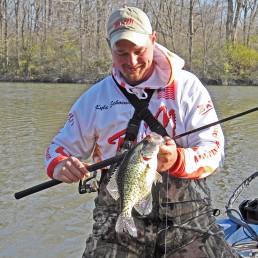
Moving ever so slowly, guiding the boat using electronics, the combination of side scanning and depth location technology presents a picture of the bottom structure. On the bow, I watch the B‘n’M poles mounted in a spider rig for any sign of movement. As the bait rig bounces off the side of a deep channel, a crappie sucks in the minnow.
This deep-water, double-minnow rig for fishing cover is a killer.
The rig comes at the end of heavier line not usually associated with crappie fishing. But heavy line is necessary to straighten out light-wire hooks when they hang up. The hooks are long, shad, wire hooks that straighten out easily. You can bend damaged ones back to the original shape when retrieved.
The main line ties to a three-way swivel. To one of the other eyes, attach a drop line about 6 inches in length, terminating with a wire hook and minnow. The third line is 30 inches in length with a 1/2-ounce egg sinker about a foot up from another wire hook and minnow.
In the water, guide the lower hook/minnow/sinker combination to the bottom. Then raise it off the bottom two turns of the reel. The rig moves around and into any structure that shows up on the electronics. It is important to move very slowly, which helps to bounce the rig off any structure found.
You can be among the first to get the latest info on where to go, what to use and how to use it!
This is a very effective trolling rig for crappies. Anglers sometimes feel the use of a trolling motor scares fish away from structure. Fish do not seem to react to the continuous use of the motor. Or at least they react less to the continuous use of the motor. Avoid intermittent use of the motor, as that does seem to stimulate a reaction by crappies. Very slow and continuous use of a trolling motor is best.
The deep-water trolling rig for fishing cover is particularly effective in channels. As the depth changes from the sides of the channel to the deepest part, lift and drop the rig to keep it the same distance off the bottom. When trolling channels, bang the rig off the sides of the channels. Most of the bites come as the rig bounces off the side of the channel wall.
For more fishing insight from the pros who know, check out the next issue of MidWest Outdoors, available by subscribing on our website.
MWO
SHARE THIS POST
Did you enjoy this post?
You can be among the first to get the latest info on where to go, what to use and how to use it!