
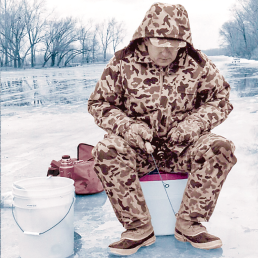
The Jigging Spoon: A Wintertime Favorite
Although a variety of baits and lures work, the jigging spoon is a wintertime favorite. Jig the little spoons vertically over weed beds and off points located near deep water.
During cold fronts, deep-water fish may be more active than those in shallow water. Weather and barometric changes do not affect deep-water fish as much.
A variety of manufacturers produce jigging spoons. Made of lead, tungsten, other metals or a combination, jigging spoons offer flash and a darting motion that makes them very productive. Most spoons are long and narrow, resulting in a straight, fast drop and a tight wobble. This allows them to drop in specific structure more accurately.
Spoon bodies with concave, convex or bent shapes offer the most action and flash. The variety of body styles increase the level of effectiveness to winter fishing approaches. They introduce an entirely new level of pleasure to ice fishing.
In cold water, a slow lift-drop fluttering pattern with long pauses is often best. Fish will strike a slow-moving shad-like lure fluttering in front of them. This kind of fishing requires working by feel. Always maintain contact with the lure, because most strikes occur when the lure is on the fall. If you have a slack line, you could miss the strike.
Rod action imparts action to the lure as you pull upward several inches and then let it fall freely. It flutters just like a wounded shad. Predator fish see it as an easy meal.
In cases of slow action on the part of the fish, tip the hooks of a jigging spoon with minnows, grubs, or worms to make it more attractive. The flash of the spoon attracts the attention of fish, and the scent of the bait is just too much to resist.
For larger fish, a 1/4- to 1-ounce spoon is best. Crappies and bluegills will take spoons weighing 1/8-ounce or less. Most of the time, anglers prefer the silver-colored lures.
You can be among the first to get the latest info on where to go, what to use and how to use it!
It is advisable to not tie the fishing line directly to a jigging spoon. Add a barrel swivel between the line and lure to reduce line twist. Heavy line also affects the action of a spoon. It tends to inhibit the fluttering action of the lure as it falls. Line of 10- to 14-pound test is good for gamefish like pike and walleyes.
When fished straight up and down, jigging spoons allow you to work structure and schooling fish with pinpoint accuracy.
Anglers fishing with a jigging spoon need to know the structural layout they are working. Use a fish locator to spot the fish and the structure. A good quality unit displays structure, signs of fish and baitfish, as well as fish activity nearby.
In cold weather, reservoir fish tend to hold in and around creek channels. Some good locations include shoals on the inside of the creek channel curve; the end of bluffs associated with the channel; and points dropping into the channel.
Fishing with jigging spoons may have its up and downs, but they are excellent, off-season lures for colder months. Fish love them, and so do anglers.
Looking for some new fishing techniques to try this season? You’ll find plenty of suggestions in every issue of MidWest Outdoors. Subscribe on our website.
MWO
SHARE THIS POST
Did you enjoy this post?
You can be among the first to get the latest info on where to go, what to use and how to use it!